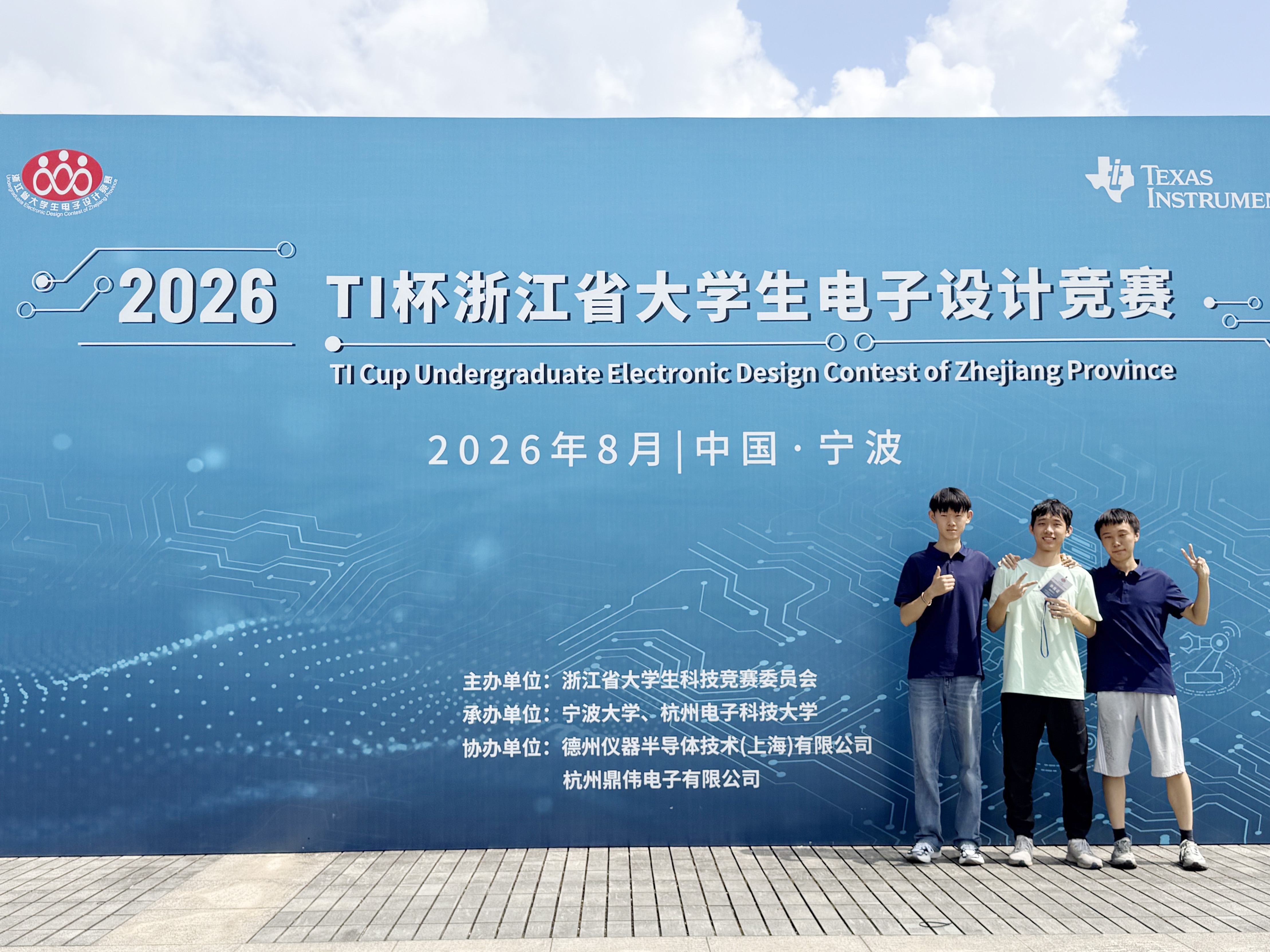
The 2026 TI Cup Undergraduate Electronic Design Contest of Zhejiang Province was held at Ningbo University. This year, the competition attracted 1,081 teams and 3,237 students from 69 universities and colleges across the province.
Following project development and expert evaluation, the competition awarded 103 First Prizes, 158 Second Prizes, 274 Third Prizes, and 413 Successful Participation Awards.
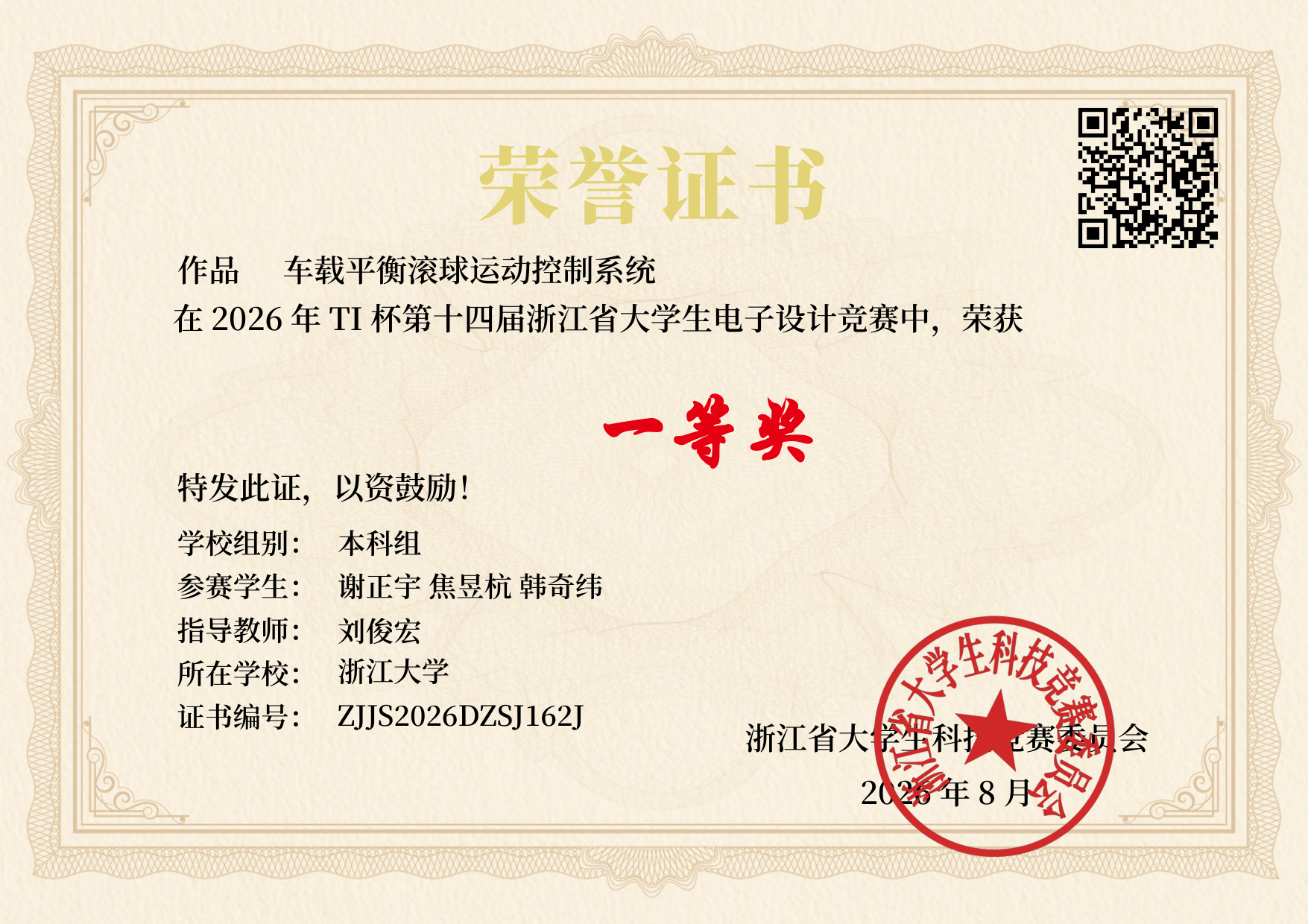
Among the awardees, Xie Zhengyu, class of 2029 in Electrical Engineering; Jiao Yuhang, class of 2029 in Computer Engineering; and Han Qiwei, class of 2029 in Mechanical Engineering, teamed up and won the First Prize in Zhejiang Province.
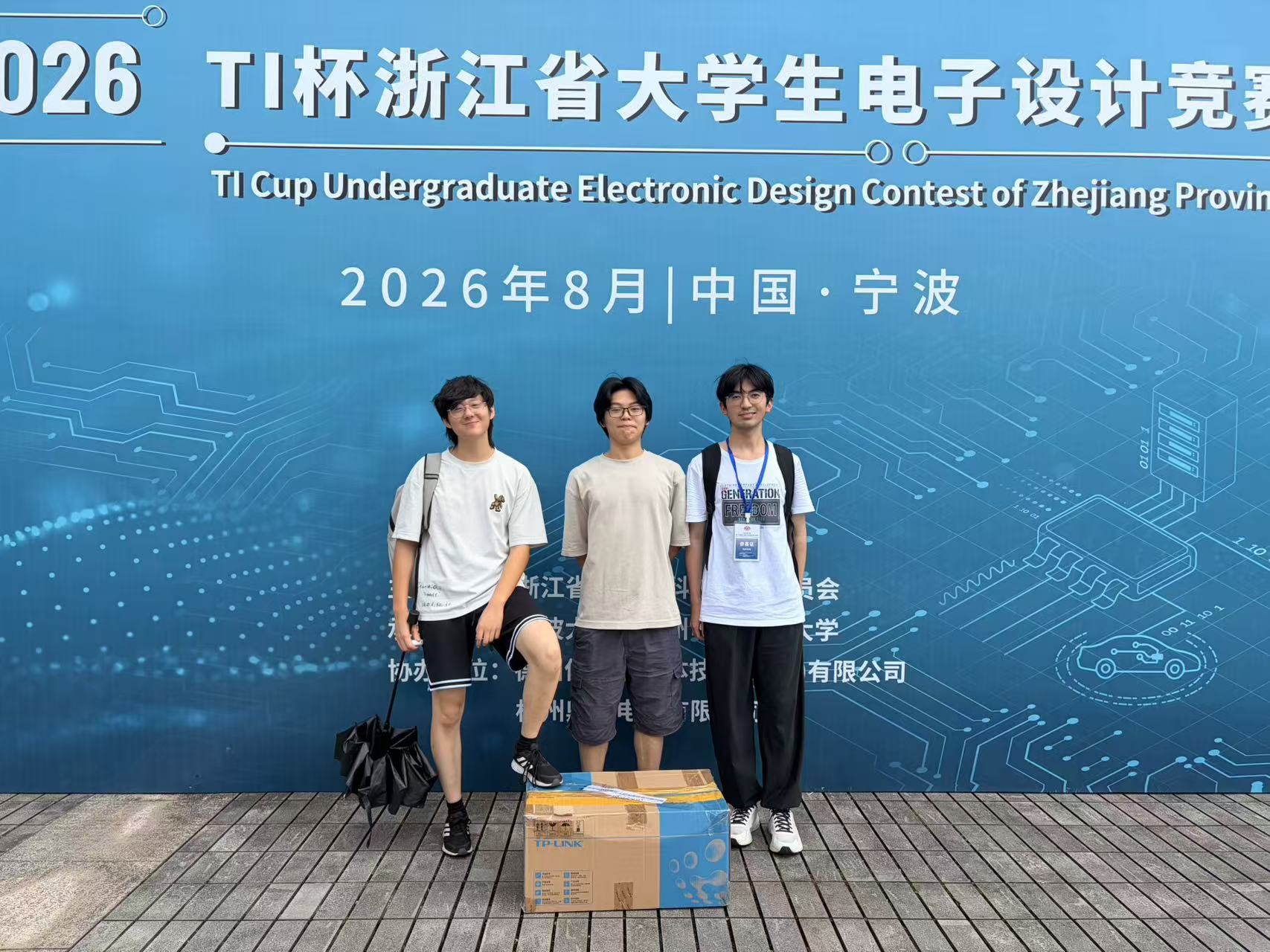
Another team comprising Ou Rui, Zeng Yong, and Yu Feiyang, all class of 2029 in Electrical Engineering, received a Successful Participation Award.
This year's competition featured eight problems, labeled A through H, spanning several technical domains: power electronics, sensing and low-power design, unmanned aerial vehicles, motion control, analog signal processing, instrumentation and measurement, and mechatronics. The problem set was closely tied to several of Zhejiang's key industries, including the digital economy, the low-altitude economy, new energy, and the power Internet of Things.
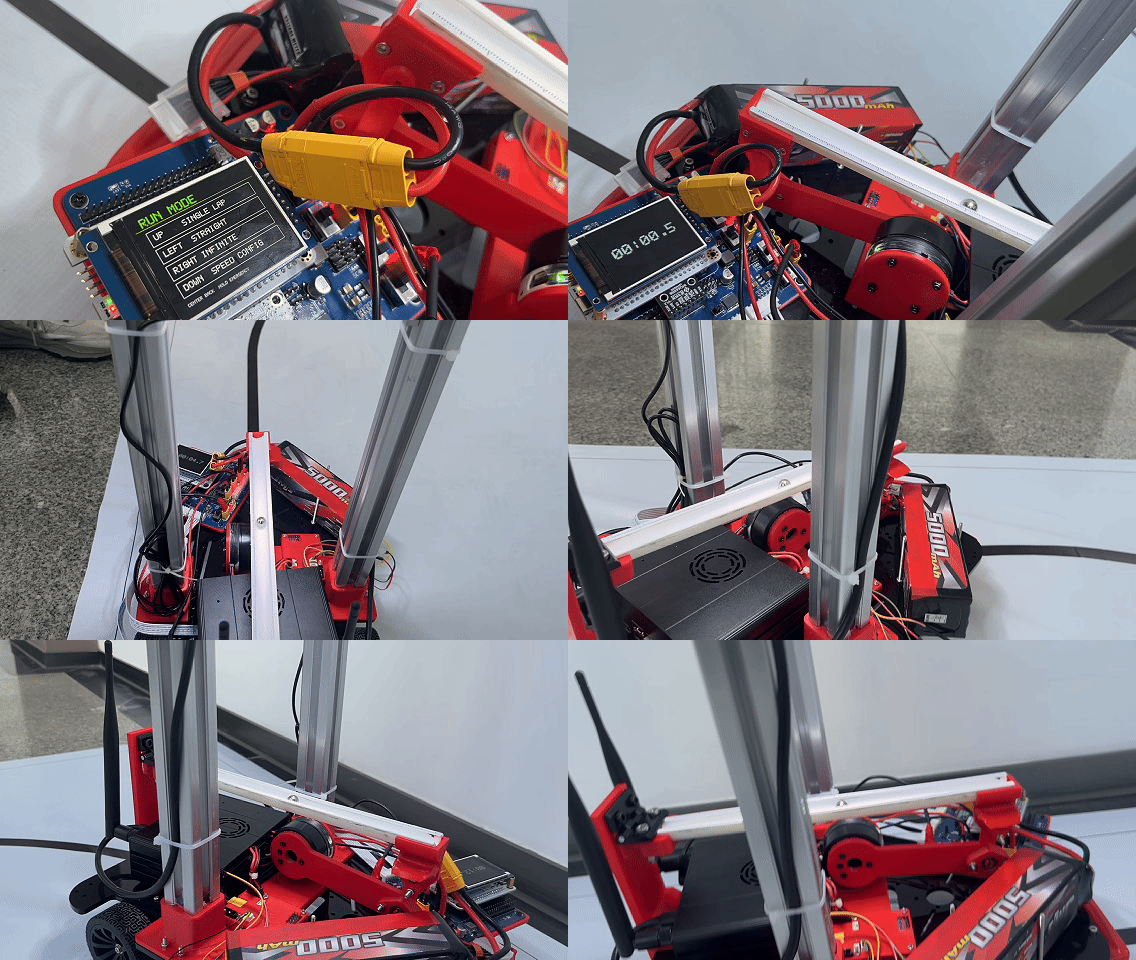
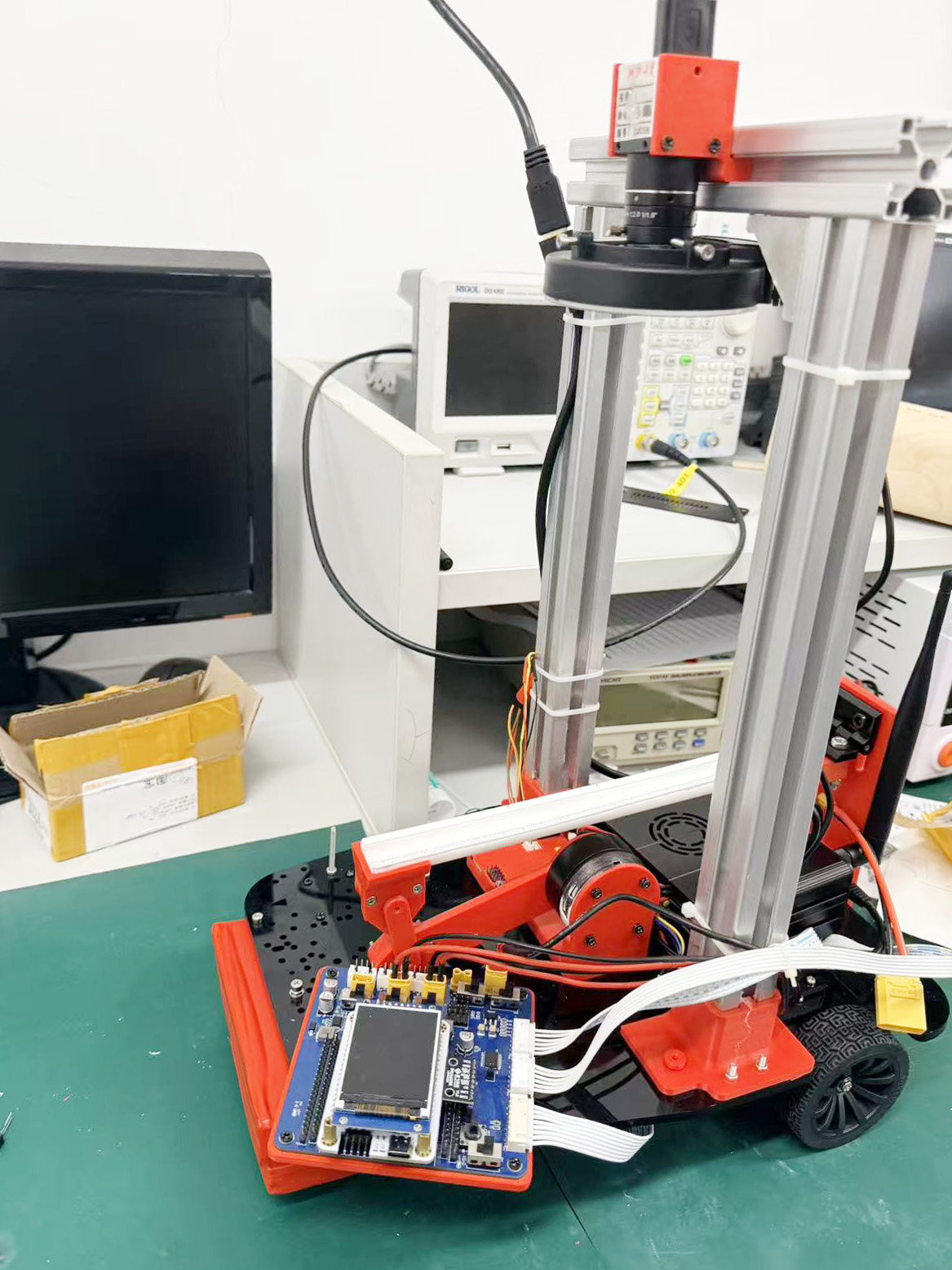
Xie Zhengyu, Jiao Yuhang, and Han Qiwei took on Problem H, building an onboard ball-balancing motion control system. The system integrates line-following, computer vision, and ball-balancing control, allowing the vehicle to navigate a set course while simultaneously tracking a steel ball in real time and holding it near a target position. Their strong overall performance earned the team first prize at the provincial level.
According to the team, the challenge lay in full-system integration. Modules that performed reliably on their own did not always work as expected once assembled, a reminder of how tightly mechanical design, sensors, vision, and control algorithms are interconnected.
By redesigning the transmission mechanism, adding active lighting, refining vision algorithms, and repeatedly tuning parameters, the team steadily improved system stability. During the official evaluation, the vehicle outperformed pre-competition expectations and completed most of its intended functions.
The students also credited ZJUI coursework, including ECE 110 Introduction to Electronics, ECE 220 Computer Systems & Programming, and ME 170 Computer-Aided Design, with laying a solid foundation in circuit design, programming, and mechanical modeling for them. Through the competition, the team honed practical skills across circuit design, embedded systems, PID control, computer vision, CAD modeling, and mechanical assembly, while deepening their understanding of teamwork and systems thinking in engineering practice.