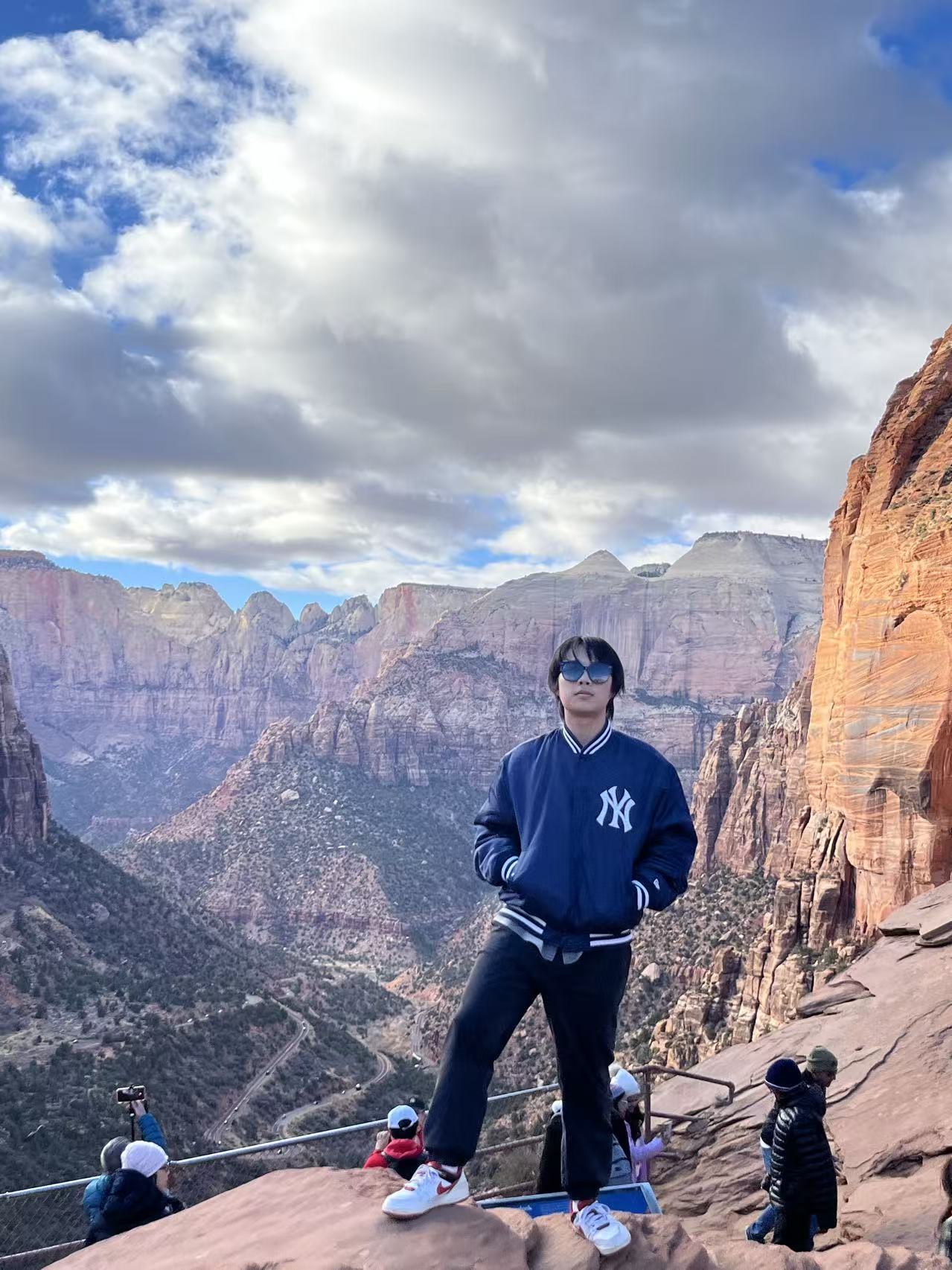
Huang Zhanyu, Class of 2026 in Civil Engineering at ZJUI, has been admitted to the M.S. program in Civil and Environmental Engineering at the University of California, Berkeley. He has also received offers from Stanford University, the University of Illinois Urbana-Champaign, Carnegie Mellon University, and Northwestern University. Huang described his undergraduate journey as one of trying, adjusting, and gradually discovering what genuinely inspires him.
When Huang first arrived at ZJUI, his approach to learning was still largely shaped by test-oriented habits, he focused more on solving problems than on grasping the reasoning behind each method. ZJUI’s problem-driven pedagogy, however, gradually reshaped that mindset. Through examining flawed solutions and the limitations of existing approaches, ZJUI professors encouraged students to understand not just how a method works, but why and when to apply it. Over time, his coursework in mechanics, materials science, and mathematics began to cohere into a solid intellectual foundation.
Unsure of his future path, Huang proactively reached out to professors and senior students, and actively sought research opportunities. These experiences taught him that trial and error is never wasted. Even when an attempt doesn't yield the expected outcome, it can make the next decision more informed.
His research journey started in structural engineering. He first joined ZJUI Assistant Professor Yasutaka Narazaki on a computer vision-based structural health monitoring project, where he gained hands-on experience in drone scanning, 3D point-cloud modeling, and finite-element analysis.
Later, he worked with ZJUI Associate Professor Li Binbin’s group on a long-term structural health study of a covered bridge. Using two years of vibration data, Huang helped correct synchronization errors and developed an automated pipeline for processing large datasets. The project honed his technical skills, but its greatest impact was on how he approaches research.
“Sometimes you think your reasoning is already airtight,” Huang said. “But if you keep probing, you may still find gaps.”
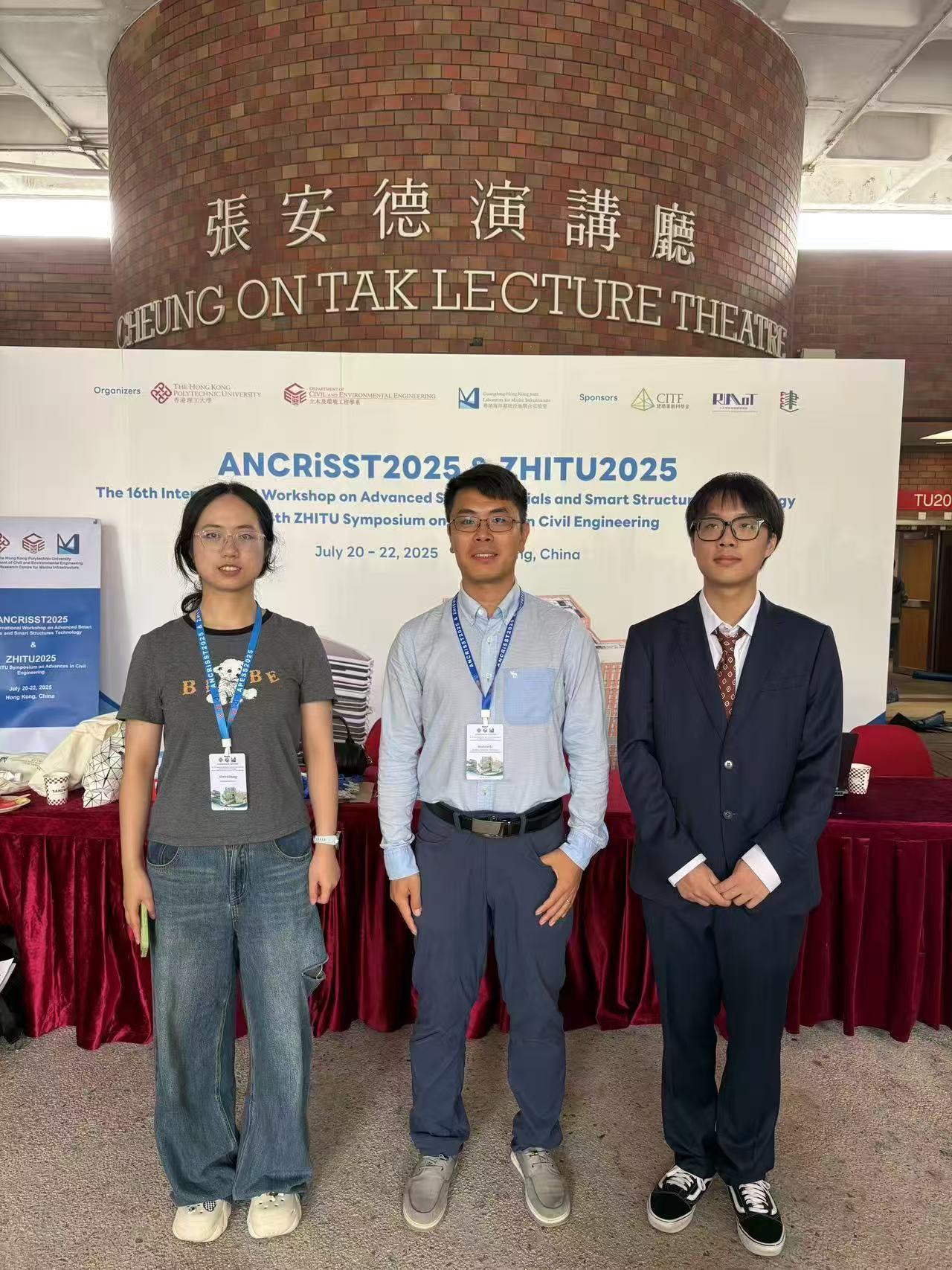
He later brought the project to the 16th International Workshop on Advanced Smart Materials and Smart Structures Technology (ANCRiSST 2025), where he shared the findings with an international academic audience for the first time.
▲
The turning point came during his overseas exchange semester. In CEE 310 Transportation Engineering, taught by Assistant Professor Lewis J. Lehe, Huang saw how analytical models could be tied directly to commuting, public transit, and urban development.
“The formulas became much more vivid once I could connect them to real transportation patterns,” he recalled.
Discussions of transportation history, including San Francisco’s cable car system, further illustrated how infrastructure can shape a city. After riding the cable cars himself, Huang knew with certainty that transportation engineering was the field he wanted to pursue. Upon returning to ZJUI, he continued to explore his interest in transportation, studying machine learning and transportation systems.
Huang doesn't view his earlier work in structural engineering as a detour. It taught him how to analyze data, test methods, and question conclusions, while transportation engineering gave those skills a direction that felt personally meaningful.
▲
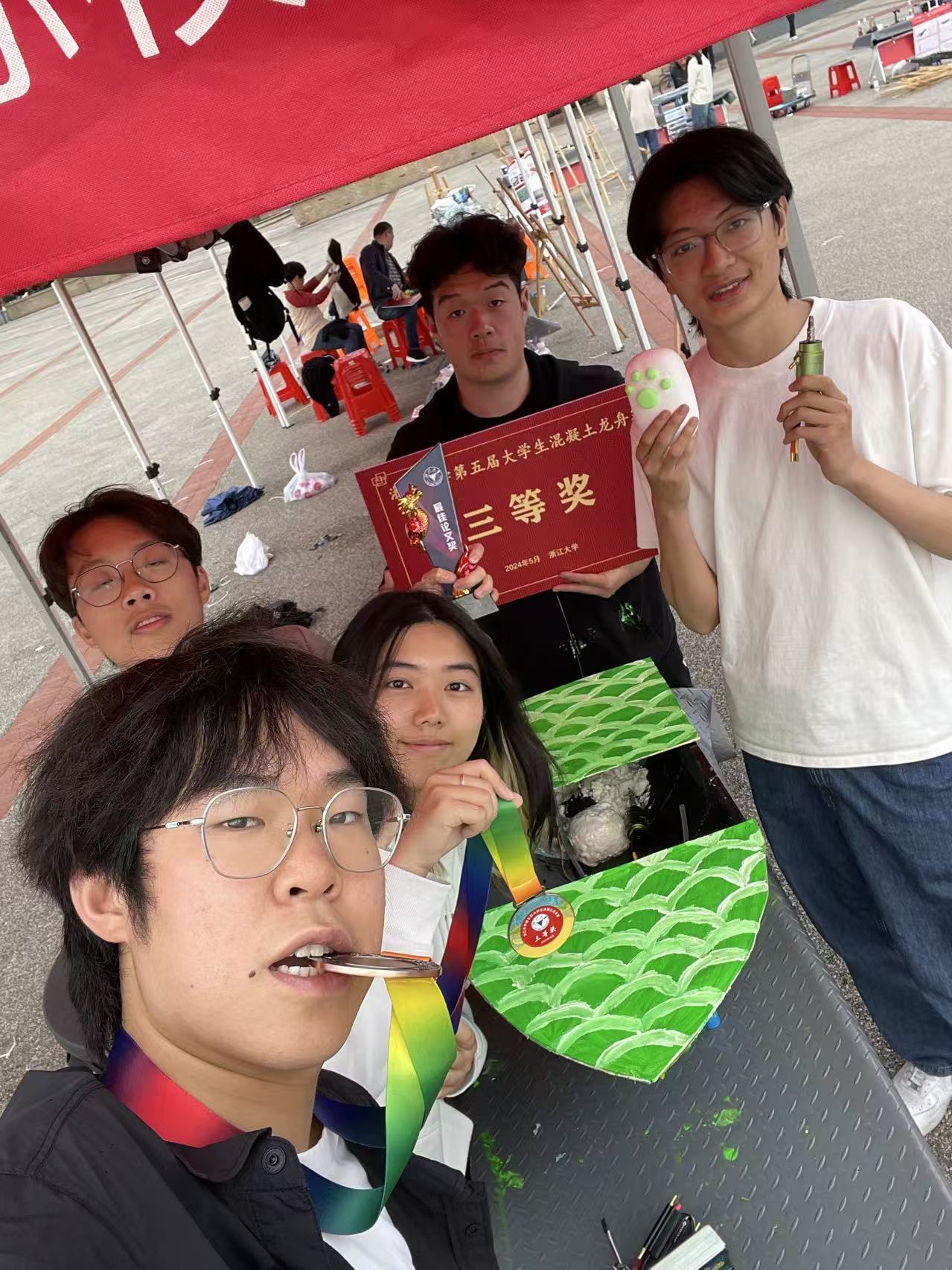
Outside the lab, Huang participated in the Zhejiang University 5th Concrete Dragon Boat Competition, contributing to the concrete mix design and the technical paper, and the team won Third Prize and the Best Paper Award. The experience showed him that complex engineering problems often demand cross-disciplinary collaboration.
He also served as a teaching assistant for RHET 101 and TAM 211, helping first-year students adjust to rigorous academic writing and solidify their understanding of course materials. Also, he mentored newly-enrolled students, offering advice on course planning and research opportunities. For Huang, helping others learn has sharpened his own understanding, as explaining concepts often reveals what he has yet to fully grasp.
Beyond academics, Huang is an avid stargazer. One night, observing from a lawn, he caught a clear view of Jupiter's bands through a telescope.
“It felt like a connection across an immense distance,” he recalled. “It brought a sense of calm and perspective.” Stargazing has taught him patience and helped him keep everyday setbacks in perspective.
After graduation, Huang will head to the University of California, Berkeley, to continue his studies in transportation engineering. Looking back, he believes growth doesn't follow a single prescribed path, it takes shape through trial, reflection, and the willingness to change. Every turn, he feels, has brought him closer to the field he truly wants to pursue.