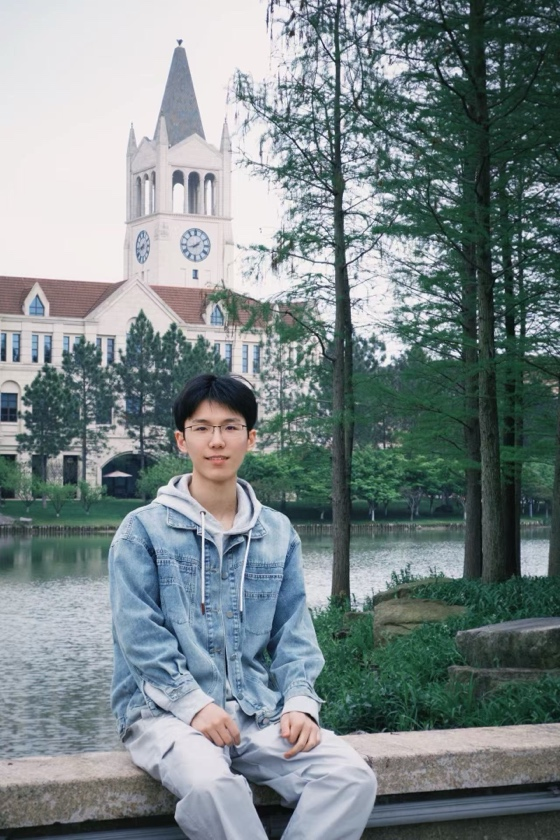
Ye Chengze, Class of 2026 in Civil Engineering at ZJUI, has built an undergraduate journey marked by academic excellence, interdisciplinary research, and well-rounded personal growth, progressing from ZJUI to a direct-entry PhD in Geotechnical Engineering at Hong Kong Polytechnic University.
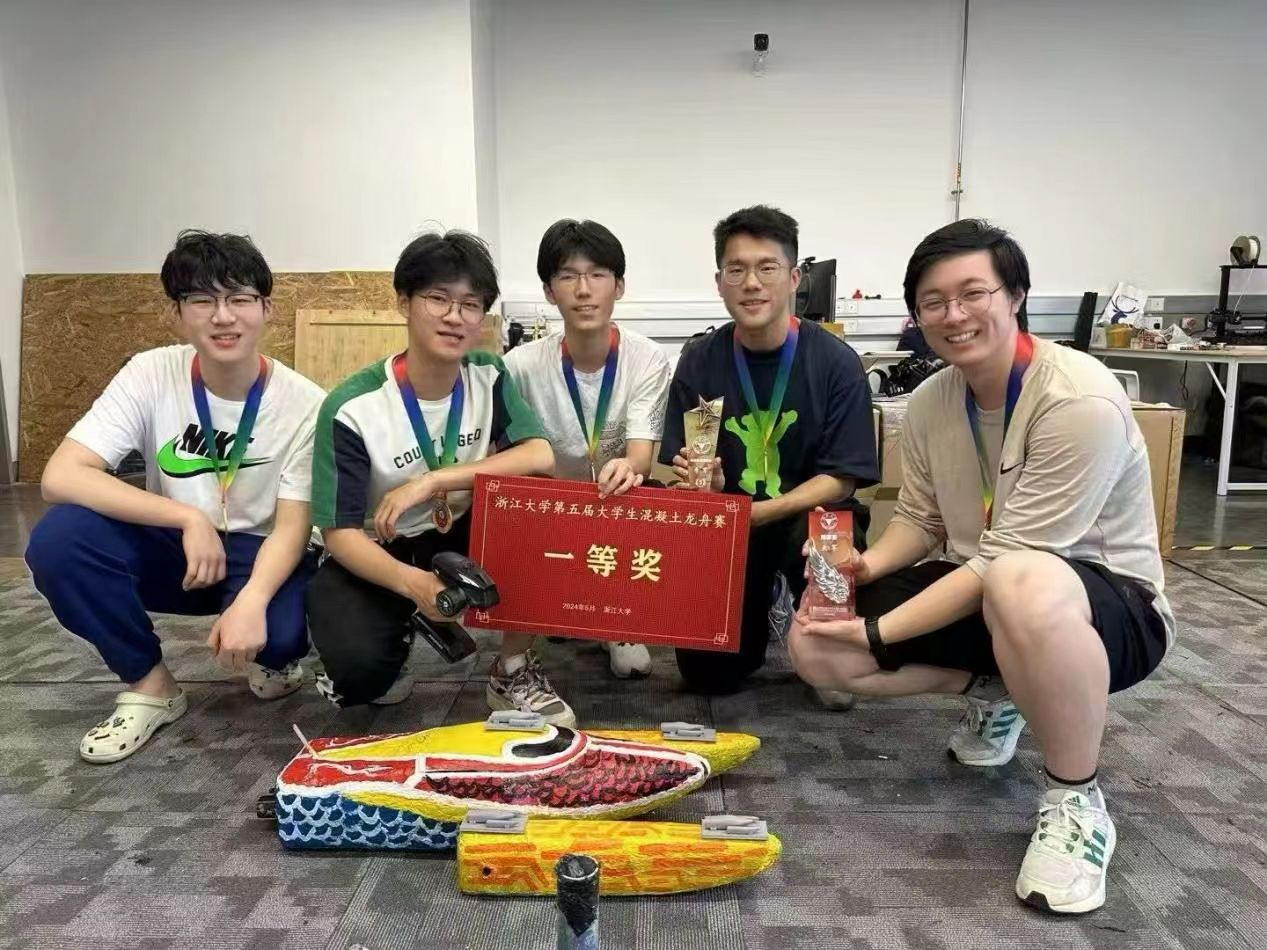
During his four years at ZJUI, Ye received the National Scholarship and Zhejiang University Second-class Scholarship, and was named an Outstanding Graduate of Zhejiang Province. He also led teams to win first-prize in the Zhejiang Provincial University Students’ Intelligent Construction and Management Innovation Competition and the Zhejiang University Concrete Dragon Boat Competition.
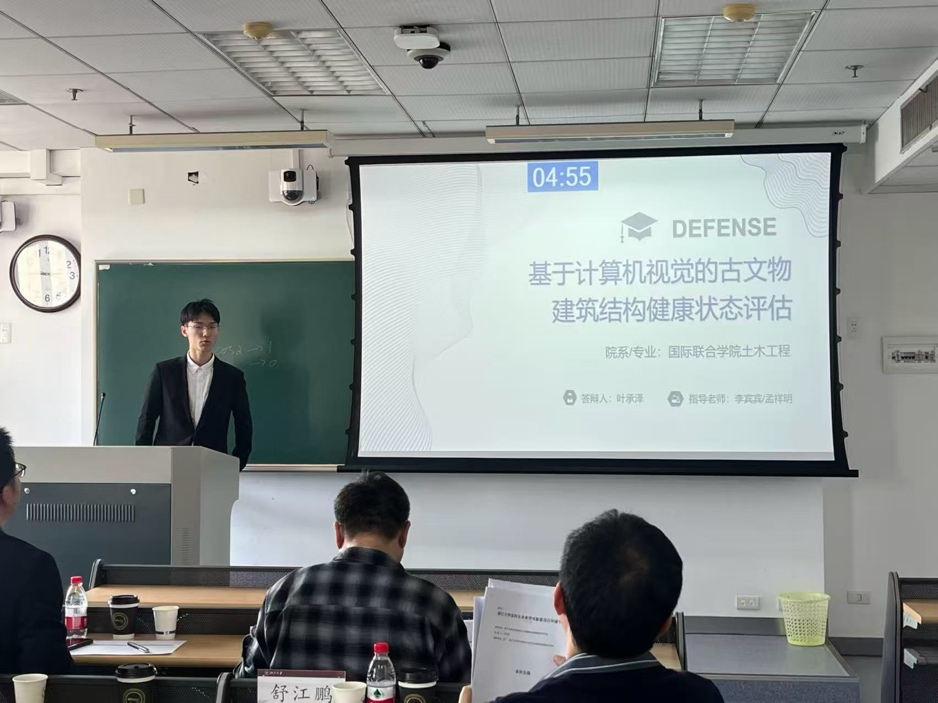
His research began with Zhejiang University’s Student Research Training Program, where he explored how computer vision could support the preservation of historic buildings. Using Jiangzhuang near Hangzhou’s West Lake as a case study, he tracked structural cracks over time through repeated imaging, data modeling, and intelligent recognition. The project earned him a place in Zhejiang University’s Undergraduate Future Academic Star Program.
To tackle technical hurdles across his research, he practically made the lab his second home. By day, he conducted field data collection at heritage buildings around West Lake in Hangzhou. By night, he returned to the library and lab to study core textbooks in fields like Computer Vision and Finite Element Analysis, filling thick lab notebooks with detailed notes on every experiment and line of thinking.
As his work progressed, he extended his technical pipeline from basic data collection to 3D reconstruction and model analysis, and deeper research brought key challenges to light. Motion blur and lighting noise in early drone footage caused large deviations in 3D reconstruction, failing to meet the precision standards for heritage building inspection. Meanwhile, his deep learning model for crack detection frequently suffered from overfitting, holding back accuracy gains.
▲
He addressed these issues through data acquisition and algorithm optimization. He adjusted the drone’s flight height and speed to improve raw image quality, and fine-tuned core training parameters like learning rate and batch size, and benchmarked multiple algorithms. After reviewing extensive computer vision research, testing various denoising techniques and refining post-processing workflows, he steadily improved both 3D reconstruction precision and crack detection performance.
Through constant trial and reflection, he mastered a complete set of interdisciplinary research methods covering data collection, image processing, model training and structural analysis. He also built strong ability to independently identify problems, conduct systematic analysis and deliver creative solutions.
In 2025, a paper based on his interim findings was rejected by several journals. With guidance from ZJUI Associate Professor Li Binbin, he reassessed the study, strengthened its argument and experimental design, and eventually published the revised work as first author in Journal of Infrastructure Intelligence and Resilience.
▲
Beyond research, Ye actively explored different dimensions of university life. His curiosity about whether a concrete boat could truly float led him to the Zhejiang University Concrete Dragon Boat Competition. After winning second prize in his first attempt, he returned with his teammates, improved the design, and went on to win first prize. The experience deepened his appreciation for interdisciplinary problem-solving while strengthening his teamwork and coordination skills.
Aside from his competitive endeavors, badminton has become a vital outlet for him to strike a healthy rhythm amid the rigors of intensive studies and research, infusing his college life with welcome ease and vitality. When he hits a wall in his research, a session on the badminton court reliably helps him step away from stress temporarily, clear his head, and reset his focus.
Although he received an offer from Stanford University’s master’s program in Structural Engineering, Ye ultimately chose to pursue a direct-entry PhD in Geotechnical Engineering under Professor Yin Zhenyu at Hong Kong Polytechnic University. He hopes to continue combining civil engineering with computer vision, 3D reconstruction, and intelligent structural analysis, applying research to the preservation of historic buildings and other real-world engineering challenges.