Xiang Yiqin, Class of 2026 in Electrical Engineering at ZJUI, has dedicated his undergraduate research to neural equalizers for high-speed circuits and spiking neural network-based vision algorithms. He has authored or co-authored four papers published in the proceedings of leading international conferences, including the IEEE International Symposium on Electromagnetic Compatibility, Signal & Power Integrity (EMC+SIPI) and the IEEE International Symposium on Embedded Multicore/Many-core Systems-on-Chip (MCSoC).
In 2025, he undertook a research internship at the Singapore University of Technology and Design (SUTD). Later that year, he attended the 2025 IEEE MCSoC conference, where he chaired the session on "Embedded, Cyber-Physical, and IoT Systems." His groundbreaking work on neural equalizers earned him the prestigious 2026 IEEE MTT-S Undergraduate/Pre-graduate Scholarship, one of only ten recipients worldwide. He has also received the Zhejiang University Outstanding Student, Scholarship and multiple other honors.
Over his four years at ZJUI, Xiang Yiqin’s intellectual journey extended from the classroom to the laboratory and gradually onto the broader international academic stage. At the center of this journey was his research on neural network equalizers for high-speed circuits and their practical hardware implementation.
His research direction began to take shape during his sophomore year, when Xiang joined ZJUI Assistant Professor Ma Hanzhi’s research group and began working on eye-diagram prediction for high-speed circuits. Under the guidance of Assistant Professor Ma and other lab members, he mastered the fundamentals of literature review, model building, coding, and experimental validation, marking his transition from classroom learning to independent research.
As his expertise in neural networks and equalizer design grew, he progressed from merely analyzing existing models to exploring ways to enhance their architectures. Neural network equalization involves coordinating multiple software platforms, reconciling incompatible data formats, and navigating complex co-simulation workflows. Xiang systematically closed these knowledge gaps by studying technical documentation, iteratively revising code, and repeating experiments until he understood not just how to fix a problem, but why it had arisen in the first place.
Over time, he developed the ability to independently diagnose unexpected experimental results. Rather than immediately turning to others for help, he learned to systematically examine data inputs, model architecture, parameter settings, and implementation details. This shift marked the emergence of his own distinct research methodology.
In his junior year, Xiang served as the student first author of the paper Neural Equalizer Design Based on Gated Recurrent Unit and its Variants, accepted by the 2025 IEEE EMC+SIPI conference. This marked the first time he had taken end-to-end responsibility for a complete research project, from defining the problem and designing models to running experiments and drafting the manuscript.
Academic writing proved to be another critical component of his research training. Under Assistant Professor Ma’s guidance, Xiang learned that a strong academic paper must do more than simply present results, it must clearly define the problem, explain why the proposed method works, and demonstrate how experimental evidence supports the conclusion.
Building on this foundation, Xiang shifted his focus to bridging the gap between algorithm design and real-world hardware deployment. While neural networks excel at modeling nonlinear signal distortion, their inherent complexity often makes practical implementation challenging. Xiang therefore dedicated himself to developing lightweight recurrent architectures that retain strong temporal modeling capabilities, rigorously evaluating his designs using physical channel models, eye diagrams, jitter measurements, and circuit-level simulations.
Rather than solely chasing superior experimental metrics, he prioritized balancing algorithm performance with implementation feasibility and cost. It was this sustained focus on hardware practicality that ultimately earned him the 2026 IEEE MTT-S Undergraduate/Pre-graduate Scholarship, making him one of only ten recipients worldwide that year.
With this research foundation in place, Xiang actively sought opportunities to step beyond familiar research settings, broadening his perspective through overseas research and international exchange. For him, presenting his work, engaging with scholars from different backgrounds, and contributing to the global academic community became important ways of understanding frontier research and the wider world of academia.
▲
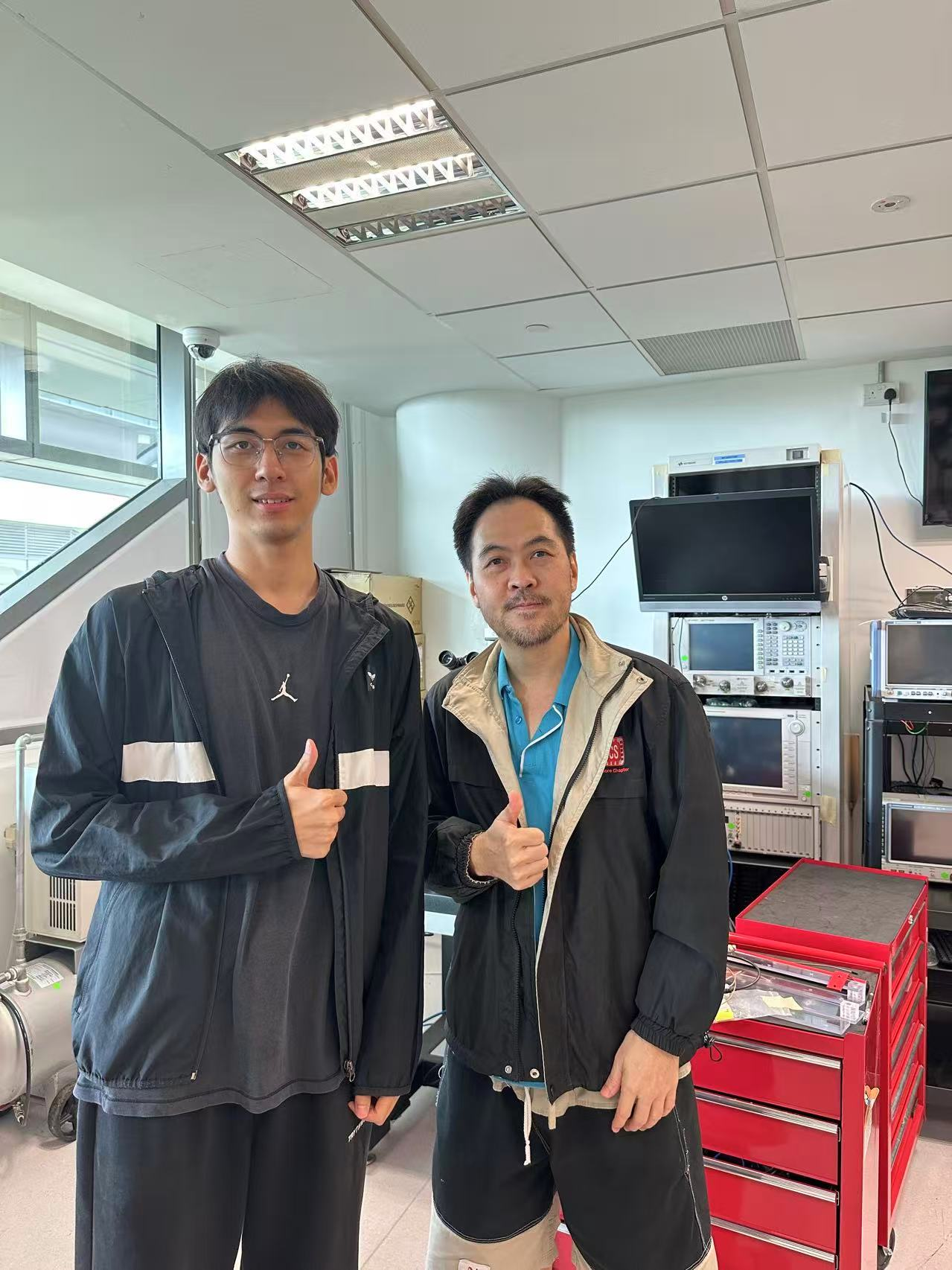
Xiang’s research interests also extend beyond high-speed circuits. During his SUTD internship in the summer of 2025, he collaborated with researchers including Professor Tee Hui Teo and Research Assistant Xiang Maoyang on spiking neural network vision algorithms and their hardware implementation. He wrote the first-author paper Vision Spiking Transformer for Image Classification, which was presented at the 2025 IEEE MCSoC conference.
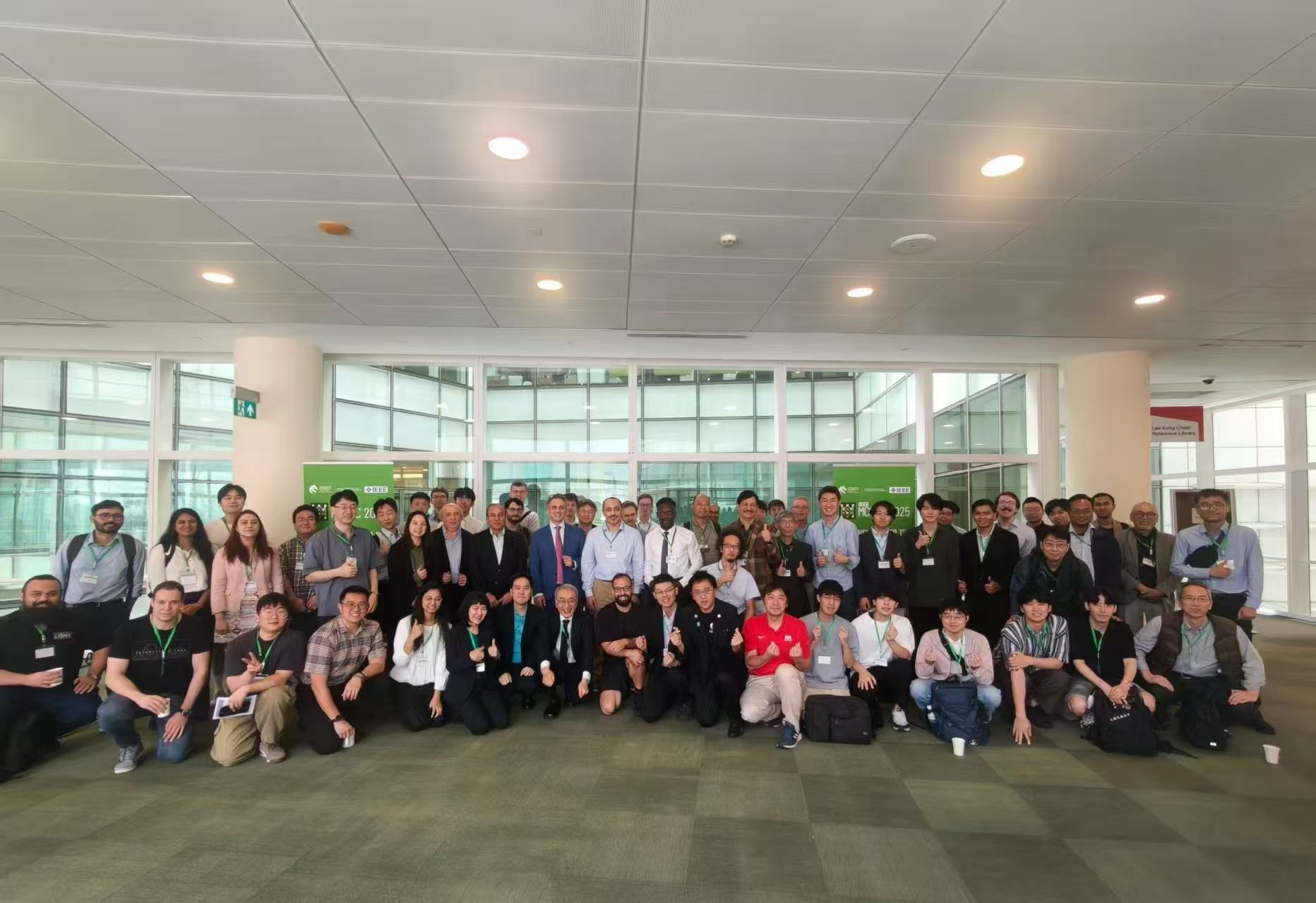
In December 2025, Xiang attended IEEE MCSoC, this time not only as a paper presenter but also as a session chair. Coordinating presentations and facilitating discussions among participants gave him a new appreciation for academic conferences—success depends not just on outstanding research, but also on clear communication, careful organization, and respect for the work of others.
▲
As his international engagement continued to deepen, Xiang began participating in academic activities in increasingly diverse roles. In June 2026, he served as a Student Ambassador at the IEEE MTT-S International Microwave Symposium (IMS) in the United States, where he assisted with conference operations and networked with researchers across the globe.
From presenting his own research to chairing a conference session and supporting international conference operations, Xiang gradually assumed a wider range of responsibilities within the academic community. Yet the confidence and perspective he brought to these international settings did not emerge overnight. Looking back over his undergraduate years, they were built through repeated attempts to step beyond his comfort zone and through the choices he made while exploring different academic and technical paths.
When Xiang first joined ZJUI, the Institute’s open-ended project-based learning and strong emphasis on hands-on practice gave him the freedom to explore diverse technical fields. Rather than committing to a narrow research direction early on, he participated in a wide range of technical and innovation projects, letting practical experience guide him toward his true academic interests.
A particularly formative experience came from an electronic design competition associated with his ECE 385 Digital Systems Laboratory course. Working on an on-chip acceleration algorithm and interface design, he quickly discovered that a promising idea was merely the starting point. Flaws in design logic, interface connections, and code implementation had to be systematically traced and resolved one by one. This experience taught him that excellent engineering depends equally on creativity, patience, and rigorous debugging—an engineering mindset that would later shape his entire approach to academic research.
Outside the laboratory, Xiang has volunteered at local hospitals, taught in online education programs, assisted with new-student orientation, and participated in multiple blood donation drives. To maintain a healthy work-life balance, he regularly exercises and enjoys music. The songs of Mayday, his favorite band, have accompanied him throughout his undergraduate years and helped him regain perspective during stressful periods.

▲
Four years after arriving at ZJUI, Xiang retains his innate curiosity about the unknown, but now approaches challenges with greater discipline and confidence. Faced with a difficult problem, he no longer seeks an immediate answer. Instead, he starts with empirical evidence, systematically explores possible causes, and advances through iterative testing and refinement.
Following graduation, Xiang will pursue a PhD at the College of Information Science and Electronic Engineering of Zhejiang University, where he will continue his research on emerging computing-in-memory chip architectures. Rather than imposing rigid boundaries on his future, he intends to follow the questions that intrigue him most and continue exploring uncharted territory in his field.