Deng Ruxi, class of 2026 in Computer Engineering of ZJUI, has received the National Scholarship, the Zhejiang Provincial Government Scholarship, and Zhejiang University’s First-Class Scholarship. He has also been recognized as an Outstanding Student of Zhejiang University and a Model Student for Academic Excellence and Arts & Sports.
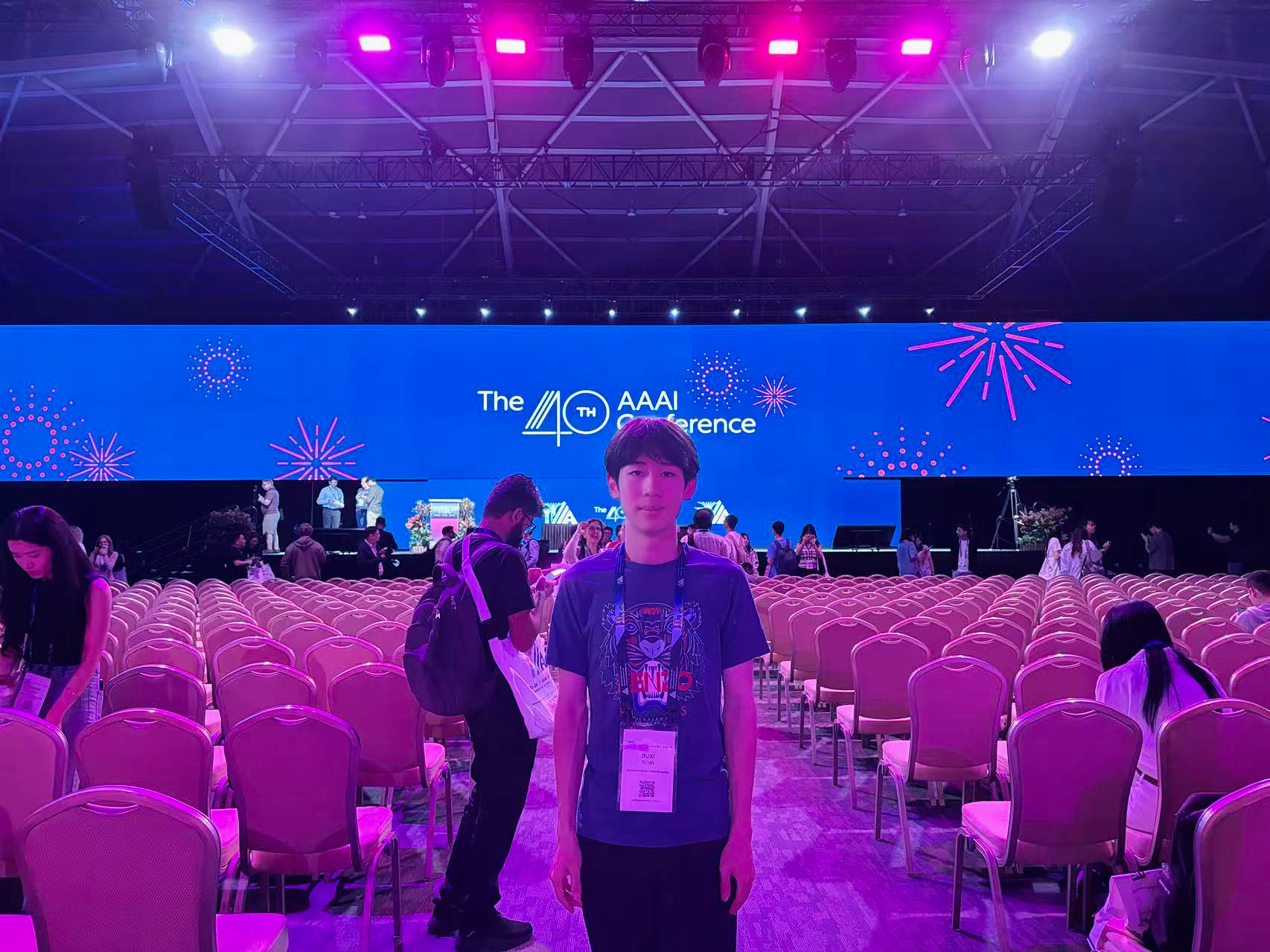
In research, he received the prestigious NeurIPS 2025 Scholar Award. His work has been presented at leading AI conferences, including AAAI, NeurIPS, and ICCV. As first author, he published Panda: Test-Time Adaptation with Negative Data Augmentation at AAAI 2026. He also co-first-authored Mint: A Simple Test-Time Adaptation of Vision-Language Models against Common Corruptions at NeurIPS 2025 and served as second author of Latte: Collaborative Test-Time Adaptation of Vision-Language Models in Federated Learning at ICCV 2025.
This summer, Deng secured 16 offers from top-tier universities worldwide, including Harvard University, the University of Oxford, California Institute of Technology, Carnegie Mellon University, Imperial College London, and ETH Zurich. He will pursue graduate studies in Computational Science and Engineering at Harvard University.
Deng’s research journey began in the spring semester of his freshman year, when he led a Student Research Training Program (SRTP) project supervised by ZJUI Assistant Professor Zhang Meng. The project focused on system development and efficient algorithm design for federated unlearning. As project leader, he oversaw team coordination, literature reviews, problem framing, and project execution. With only foundational coursework under his belt, he and his team had to build everything from scratch. Through this experience, he gained hands-on expertise in how research questions are formulated and how collaborative projects are executed.
His long-term research focus crystallized during a series of projects on test-time adaptation (TTA) for vision-language models (VLMs). Unlike many researchers who prioritize peak performance on clean benchmark datasets, Deng became fascinated by model robustness in real-world settings where corruptions like blur, noise, adverse weather, and distribution shifts often cause catastrophic failures.
His responsibilities grew exponentially with each project. His first work focused on federated TTA for VLMs, where he led baseline reproduction and core experimental validation, and this paper was published at ICCV 2025 with Deng as second author. Next, he delved into the root causes of model failure under corruptions. As co-first author of the NeurIPS 2025 paper, he took a leading role in algorithm design, experimental analysis, and iterative method refinement. Leveraging these insights, he later pioneered a novel negative augmentation framework that reduces corruption-induced prediction bias at a fraction of the computational cost of existing methods. This breakthrough work was published at AAAI 2026 with Deng as first author.
▲
Deng described his undergraduate journey as a relentless process of self-improvement. For him, growth was never defined by individual rankings or accolades, but rather by learning to find his footing in ZJUI’s rigorous academic environment.
“Learning is fundamentally a cycle of identifying gaps, addressing them, and iteratively improving,” he said. “I don’t strive for perfection, but I always aim to be better today than I was yesterday.”
This insight translated into a structured daily study routine. Deng began approaching each course holistically, mapping out its overall framework, core research questions, and assessment priorities before diving into details. He also learned to break complex tasks into manageable steps and tackle them one at a time. As he refined his study system, his academic performance climbed steadily.
Looking back, Deng attributed his academic success not to luck, but to consistent effort. ZJUI’s rigorous curriculum, whole-process evaluation system, and immersive English environment forced him to master time management, problem decomposition, and rapid adaptation. What started as a struggle to adapt evolved into a disciplined, sustainable approach to learning.
▲
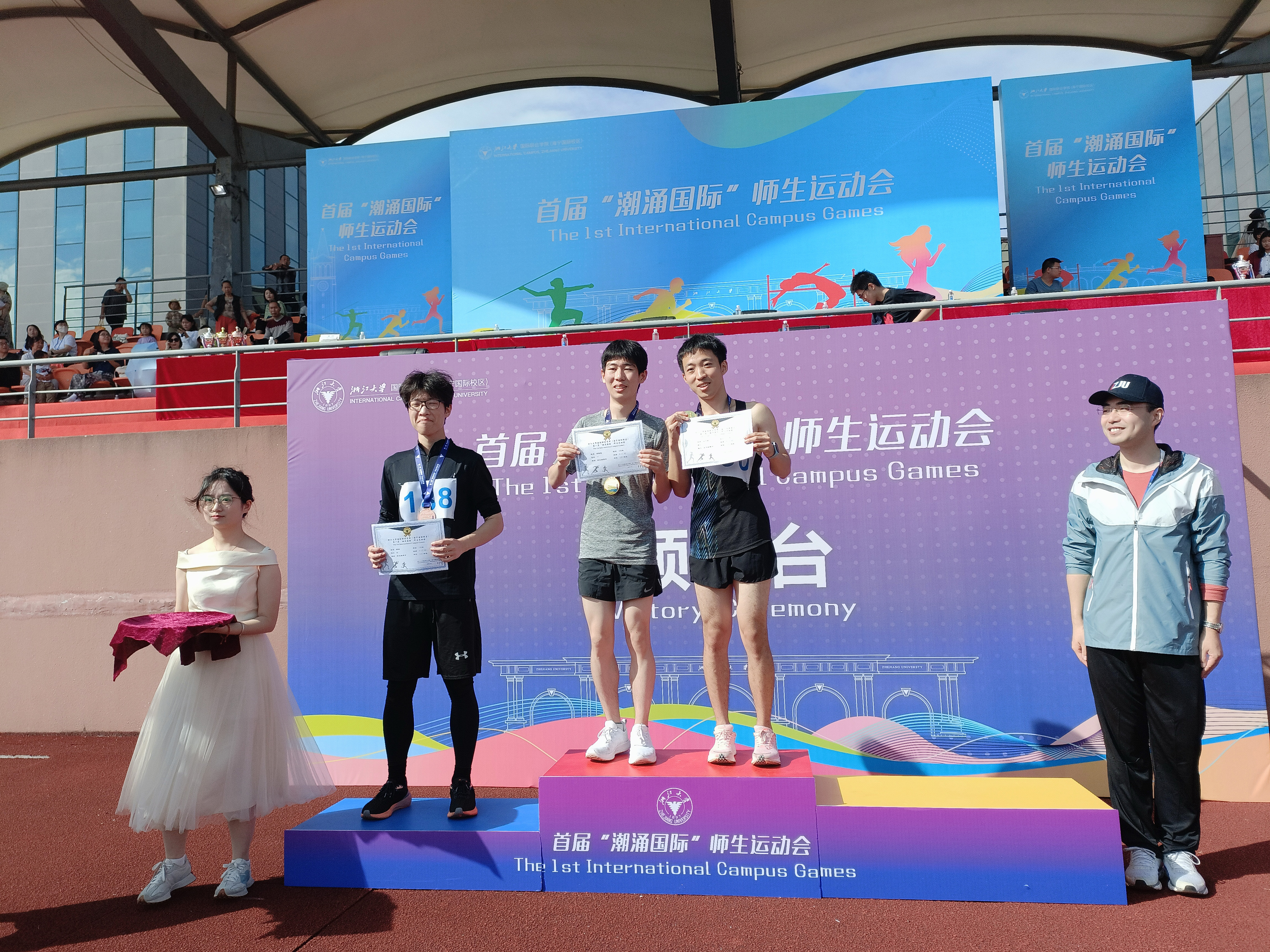
Athletics played an equally vital role in his undergraduate experience, helping him stay focused and build mental resilience. Deng doesn’t believe there’s a direct correlation between athletic ability and academic success, but he sees the consistent training as foundational to mental toughness. “Sports teach you how to perform under pressure, how to bounce back from setbacks, and how to stay disciplined over the long term,” he said. This mindset proved invaluable during high-stakes moments like midterms, research deadlines, and graduate school applications.
Beyond academics and athletics, Deng has dedicated himself to volunteer service and hands-on activities. He volunteered at major events like Open Day, guiding prospective students and parents through campus and introducing them to ZJUI’s unique programs. As a teaching assistant for two core undergraduate writing courses, Rhetoric 101 Principles of Writing and Rhetoric 102 Principles of Research, he held weekly office hours, provided detailed feedback on writing projects, and communicated student progress to instructors. These experiences honed his communication, leadership, and interpersonal skills, adding depth and breadth to his undergraduate journey.
Over four transformative years, Deng embraced every challenge as an opportunity to grow. As he embarks on his next chapter at Harvard University, Deng resists the urge to box himself into a predefined path. For him, growth is never a linear journey to a fixed destination. It is about embracing lifelong learning, pushing his limits, and remaining curious about all the possibilities that lie ahead.