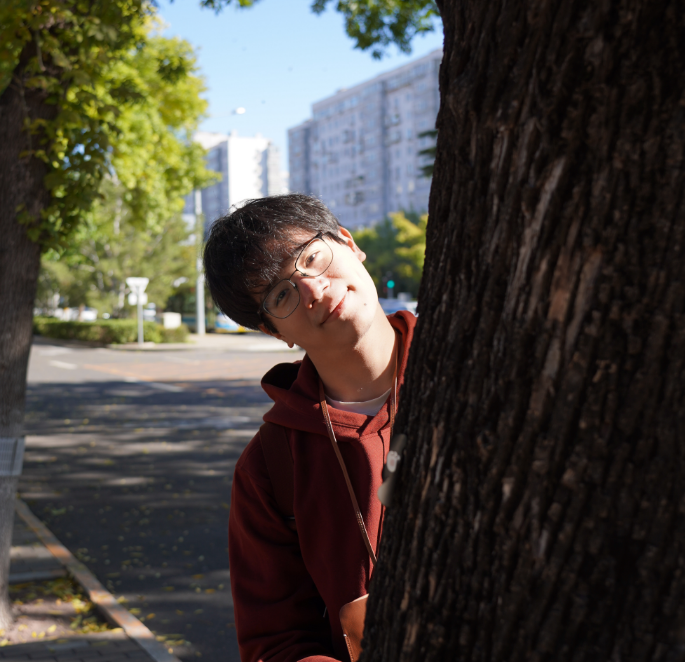
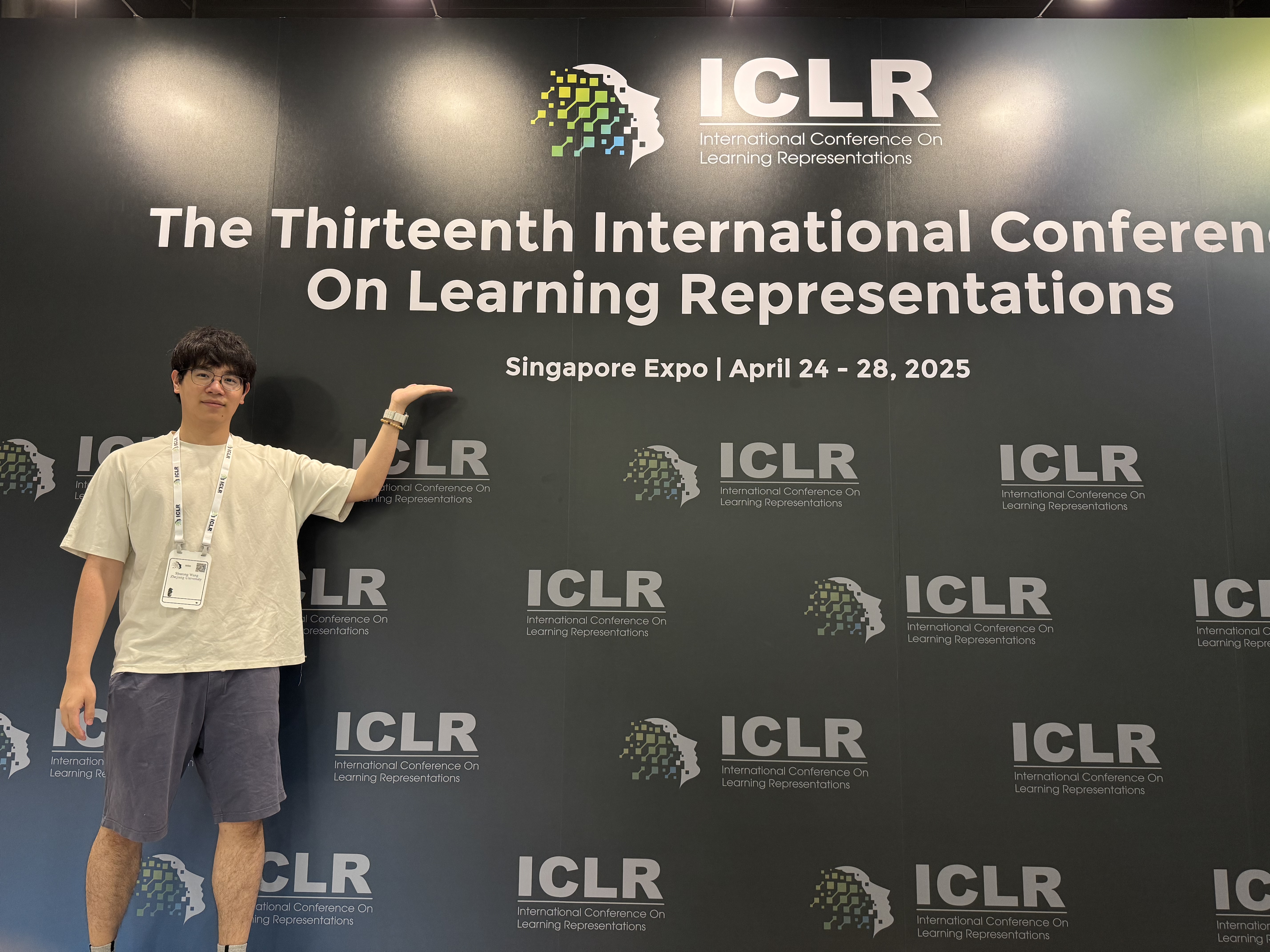
Wang Shurong, class of 2026 in Computer Engineering at ZJUI. Over the past four years, he has published a total of 6 academic papers, including 3 first-author papers at top-tier international conferences such as ICLR 2025 and ICLR 2026. He has secured RMB 160,000 in research funding, including the National Natural Science Foundation of China (NSFC) Undergraduate Project and the Zhejiang University Natural Science Cultivation Project. Additionally, he has been invited to serve as a reviewer for leading conferences including the International Conference on Machine Learning (ICML 2026) and the Fortieth Annual Conference on Neural Information Processing Systems (NeurIPS 2026), as well as the IEEE Transactions on Network Science and Engineering (TNSE) journal. A recipient of numerous scholarships and awards, he has been admitted to the University of Chinese Academy of Sciences for a direct-entry PhD program in brain-inspired intelligence.
"ZJUI gives us unparalleled academic freedom, and anything is possible here," Wang said. Building on his strong math and algorithm foundation from high school, he took full advantage of ZJUI’s flexible curriculum, completing sophomore and junior core courses in his first year and senior-level courses as a sophomore, which allowed him to dedicate two full years to research. ZJUI’s fully English-medium instruction also laid a strong foundation for his international academic career. He developed fluency in reading cutting-edge research papers and writing academic manuscripts in English, a skill that remains a significant challenge for many students at even the most prestigious Chinese universities.
Under the guidance of ZJUI Professor Wang Hongwei and Assistant Professor Zhang Meng, Wang Shurong embarked on a systematic journey of scientific exploration during his freshman year. “Professors at ZJUI never spoon-feed me instructions on how to run experiments or write papers. Instead, they guide me to identify problems independently, design experiments, and validate my own ideas.” Wang told us.
▲
Wang’s research journey was not without setbacks. His first paper was rejected after a rushed one-week submission, a failure that taught him "great research is polished, not rushed." He began setting aside a full month to refine manuscripts after experiments, leading to the acceptance of that revised paper at the IEEE International Conference on Systems, Man, and Cybernetics (IEEE SMC 2024). Building on this momentum, he went on to complete two additional research projects, both of which were accepted upon their first submission to the top-tier conference International Conference on Learning Representations (ICLR) in 2025 and 2026, respectively.
The most formidable academic challenge he faced was applying for the NSFC Undergraduate Research Grant, a fiercely competitive program that awards only 130 grants to undergraduates nationwide each year. After an underwhelming first pre-defense, he completely overhauled his research proposal and presentation under the guidance of Professor Wang Hongwei, ultimately earning a spot as one of just 15 successful recipients from Zhejiang University.
His award-winning project, "Large Model Knowledge Editing Based on Associative Memory," addresses a critical pain point in intelligence technology: the difficulty of updating knowledge in pre-trained models. His innovative approach uses an external associative memory module to edit knowledge at less than 1% of the computational cost of traditional methods, while enabling full traceability of changes.
▲
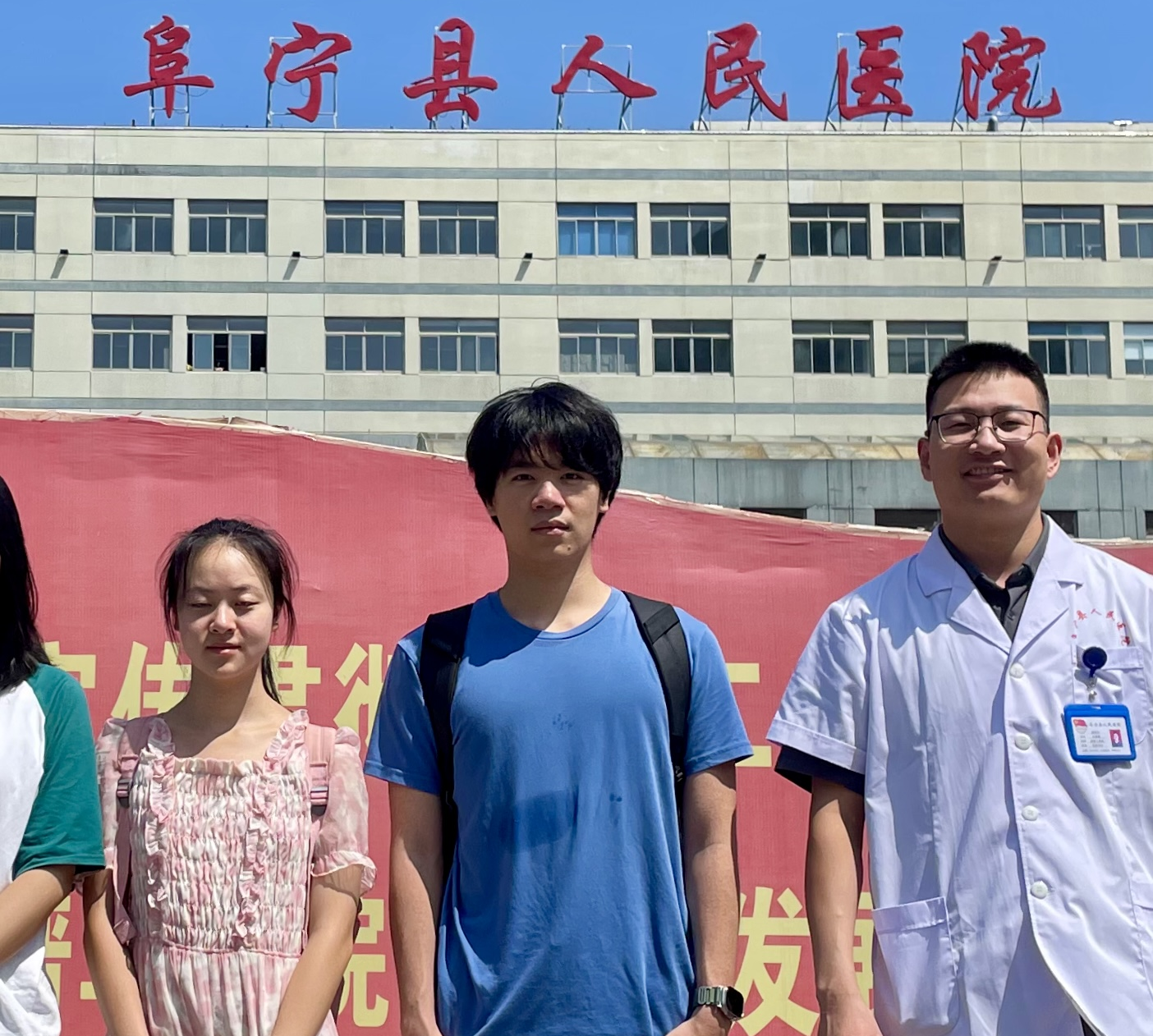
Wang excels not only in academics but also in leadership and service. As class representative, he regularly organized study resources, shared course and research tips, and helped build a collaborative learning environment in his class. He also led a two-week research team comparing new first-tier cities and participated in a rural revitalization project in Jiangsu, using his digital skills to support local farmers.
"Staying in the lab forever only shows you a tiny corner of the world. You need to step out, connect with different people, and engage with real life to see the full picture." These experiences have also constantly reminded him that technology must ultimately respond to real-world needs and address concrete problems.
From ZJUI labs to the global academic stage, Wang Shurong shows that in a culture of academic freedom, when passion aligns with unwavering dedication, every effort will bear fruit. Moving forward, he will continue to delve deep into memory mechanisms in large language models, and we eagerly anticipate this rising research star shining even brighter in the broader world ahead, and writing more extraordinary chapters as a proud ZJUI alumni.