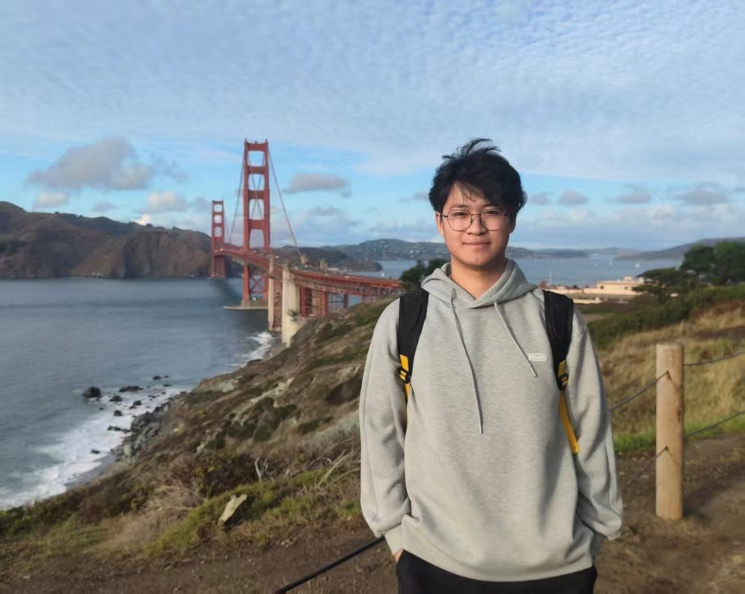
Zhang Yikai, Class of 2026 in Mechanical Engineering at ZJUI, has pursued a well-rounded path of development across academics, research, and public service. During his undergraduate years, he has been recognized with multiple honors from Zhejiang University, including “Academic Excellence Model Student”, "Innovation and Entrepreneurship Model Student", "Outstanding Student", and Five-Star Volunteer.
In competitions, Zhang served as a core team member in the development of a Bipolar Disorder-Assisted Assessment Kit, which won a Bronze Award at the 2024 Zhejiang International College Students’ Innovation Competition. He has also earned a Third Prize in the 16th Zhejiang University Dandelion Entrepreneurship Competition and a First Prize in the 5th Zhejiang University Concrete Dragon Boat Competition. Beyond coursework, Zhang previously served as the Head of the Student Arts and Sports Center at International Campus, Zhejiang University, where he played a leading organizational role in major campus events. As dedicated volleyball enthusiast, he led the team to a championship in the “Freshman Cup” Volleyball Competition and captained the International Campus Men’s Volleyball Team. In recognition of his overall performance, Zhang has been admitted to the Master's Program at the School of Mechanical Engineering, Zhejiang University, where he will continue his academic journey.
Reflecting on his undergraduate years, Zhang described this period as a journey of constant exploration. By walking through sample problems repeatedly and solidifying his grasp of knowledge through peer discussions, he gradually developed a set of efficient, consistent learning strategies. His overseas exchange experience, which immersed him in diverse cultural and academic environments, further transformed his way of thinking. Through in-class debates and hands-on projects, he shifted his focus away from the mere technical execution of tasks, evolving toward a more holistic, problem-driven, and socially grounded engineering mindset.
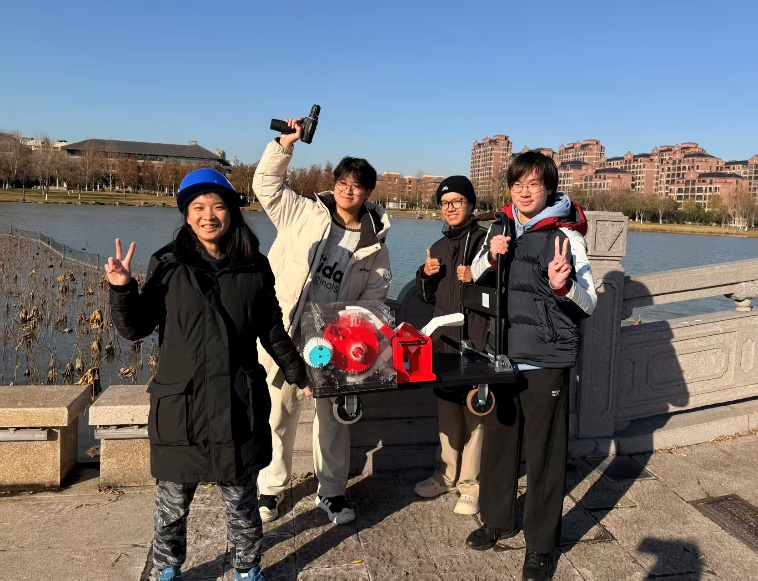
Zhang traced his initial interest in Mechanical Engineering back to childhood, when he spent hours building with LEGO bricks. The transition from following instructions to freely assembling and redesigning structures introduced him to the joy of engineering creativity. He noted that ZJUI’s curriculum, particularly its emphasis on integrating theory with hands-on practice, left a lasting impression. Courses such as Theoretical and Applied Mechanics (TAM) and the Mechanical Design played a pivotal role in teaching him how to translate abstract ideas into analyzable and realizable engineering components. In Mechanical Design II (ME371), he and his teammates designed a variable-speed, drill-powered vehicle. By systematically decomposing the system into mechanical models, motion constraints, and transmission structures, the team achieved the top performance in their group. This experience allowed Zhang to complete the full engineering cycle from concept to physical prototype, reinforcing his commitment to further exploration in Mechanical Engineering.
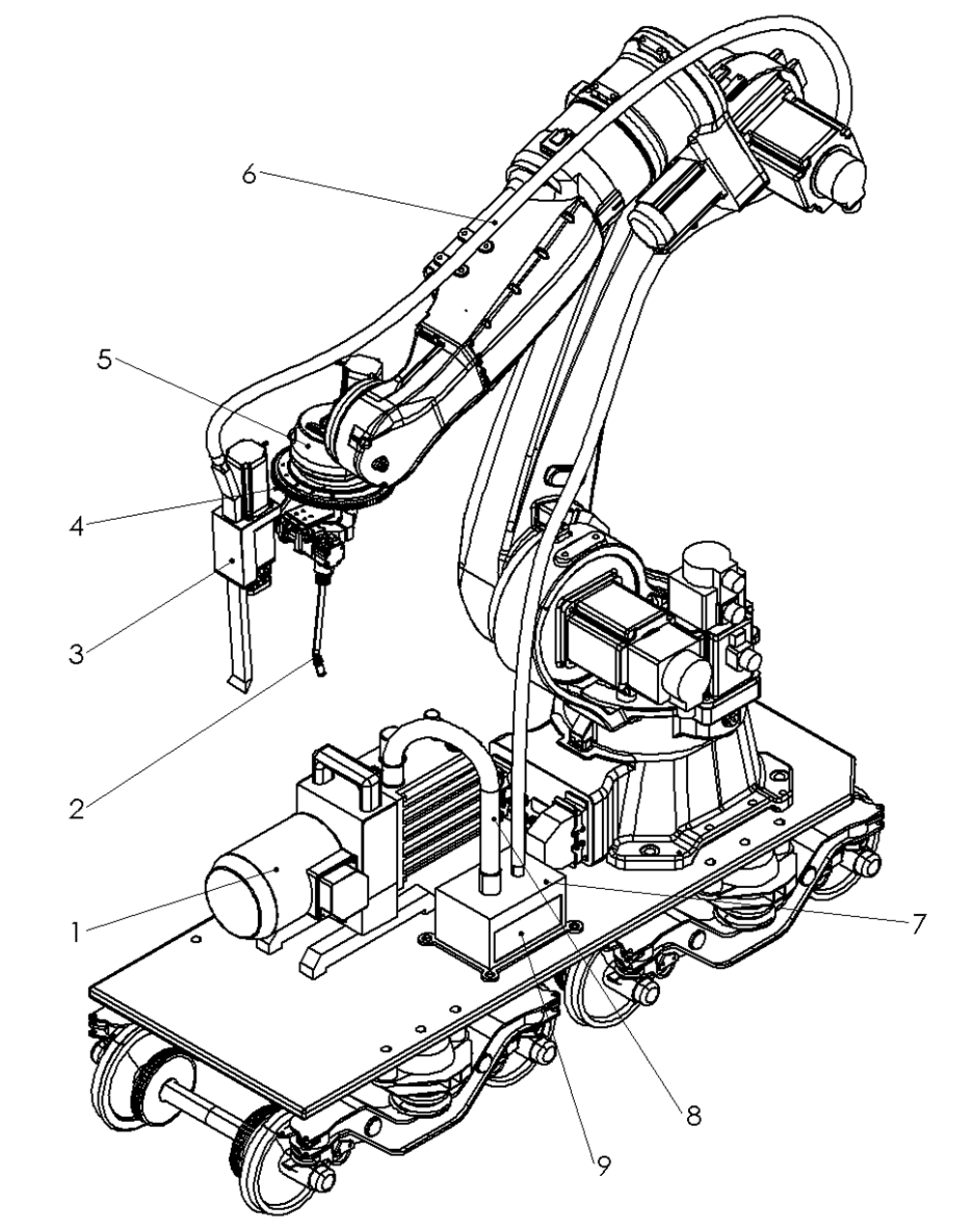
While coursework laid a solid foundation for his studies, research emerged as the proving ground where Zhang put his abilities to the test and confronted the unknown. In the summer of his sophomore year, he joined Prof. Wang Xuanyin’s research group at the School of Mechanical Engineering, Zhejiang University, focusing on vision-based deep learning algorithms for the forward and inverse kinematics of industrial robotic arms. As someone completely new to the field of robotics, he started largely from scratch, diving deep into the theories of robot kinematics and coordinate transformation. He devoted countless hours to reviewing lecture materials, deriving formulas, and clarifying core concepts. This rigorous learning process drove home a pivotal lesson: without a firm grasp of foundational principles, even the most cutting-edge algorithms will never translate into effective real-world applications.
▲
Building on this foundation, Zhang and his team completed the mechanical design, modeling, and patent application for a slag-collection device with visual feedback. They also developed a neural network model for solving inverse kinematics, exploring the application of data-driven methods in robotic motion problems. Through this research experience, Zhang gradually defined his research interests around the integrated framework of perception, planning, and control for industrial robotic arms.
During his junior year, he served as a core member of an interdisciplinary project spanning biomedical science and mechanical engineering—the development of an auxiliary diagnostic kit for bipolar disorder.
To address the limitations of traditional bipolar disorder assessment, which relies heavily on qualitative evaluations and often involves delayed or uncertain diagnoses, the team identified Hafnia alvei, a gut microbiota species, as a disease-specific biomarker and designed an early-screening solution with absolute quantitative detection. Zhang was primarily responsible for functional modeling and structural design. Focusing on reagent stability, he developed a smart thermal management system using insulated structures and miniature thermoelectric coolers, enabling precise separation between low-temperature reagent storage and room-temperature operation.
Finally, the project earned a Bronze Prize at the 2024 Zhejiang International College Students’ Innovation Competition. The experience not only translated engineering design into a real medical application but also deepened Zhang’s understanding of how engineering can respond to real-world needs through cross-disciplinary collaboration.
▲
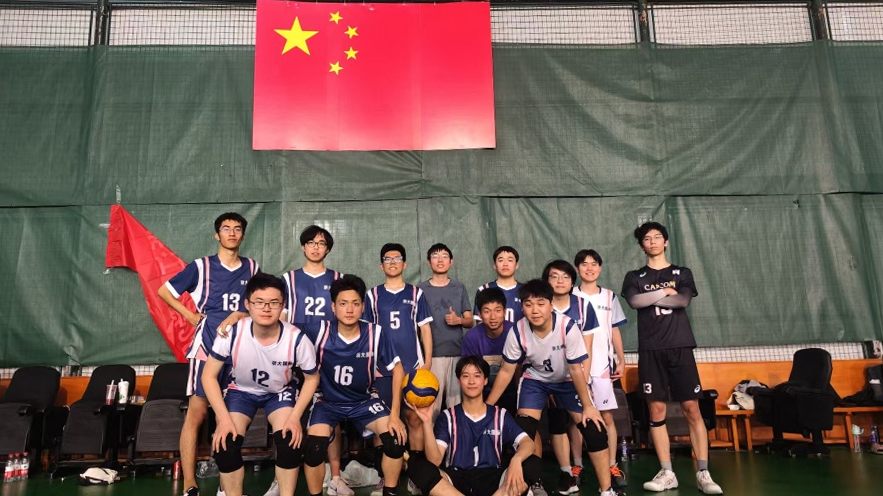
Beyond his academic pursuits, volleyball has been a sustained source of engagement for him. Shortly after enrolling at ZJUI, he joined peers in the “Freshman Cup” volleyball competition of the International Campus, Zhejiang University, where the team went on to claim the championship. The experience not only helped him integrate quickly into campus life, but also deepened his appreciation for teamwork, mutual trust, and shared responsibility.
He was later elected captain of the men’s volleyball team, a role through which he came to view the sport as a collective endeavor rather than an individual one. For Zhang, the most rewarding moments lie in witnessing the team’s steady progress through disciplined training and competition.
Drawing on the organizational skills and collaborative mindset developed through sports, Zhang served as head of the Student Arts and Sports Center at International Campus, Zhejiang University, contributing to the planning and coordination of major student events. From team captain to student organizer, he has continued to expand his role across different settings, further strengthening his leadership and sense of responsibility.
▲
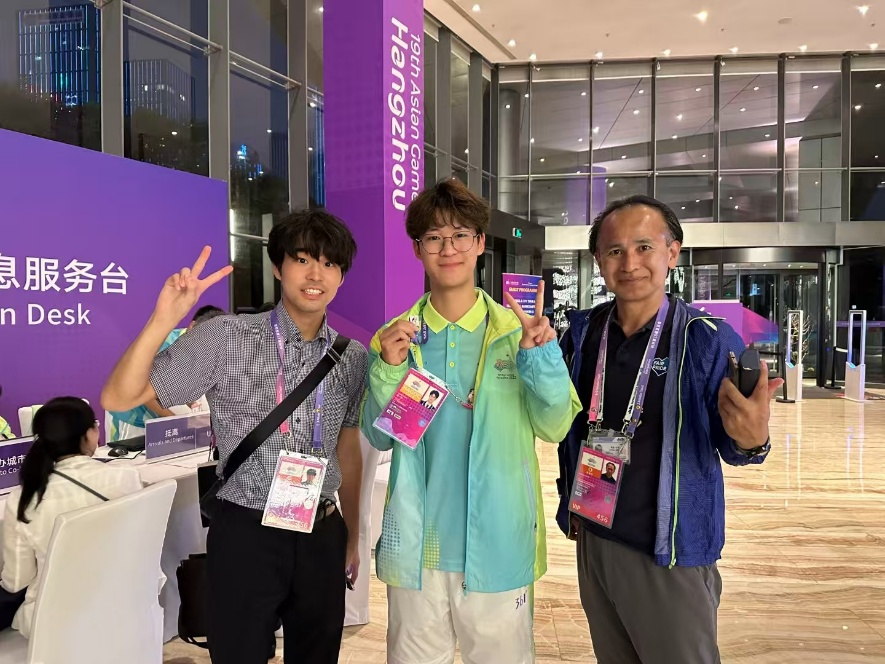
Beyond the campus, Zhang has demonstrated a profound sense of responsibility through volunteer work and social initiatives. During the 19th Asian Games, he served as a volunteer in vehicle dispatch and guidance. On one occasion, a Japanese guest was stranded on the street, unable to provide clear location details. Working through a spotty phone signal and blaring background noise, Zhang patiently clarified the specifics bit by bit and successfully arranged transportation for the guest. After the Games, he was deeply touched to receive a handwritten thank-you note penned in halting Chinese. This experience reinforced his conviction that meaningful service goes beyond rigidly following procedures, and it hinges on empathy, adaptability, and a sincere commitment to solving actual problems.
That same summer, Zhang took part in a volunteer teaching program at Qiushi Middle School in Jingdong, Yunnan Province, where he taught courses in Mathematics and English. Confronted with students who had weak academic foundations, he and his team revised their teaching strategies to adopt more interactive, engaging approaches. They also conducted home visits, which allowed them to gain a deeper understanding of the students’ living and learning environments. These diverse service experiences helped him realize that genuine service is problem-driven, rooted in patience and sincere human connection.
Looking back on his university years, Zhang reflected that embracing uncertainty has been the theme of his undergraduate journey. He firmly believed that trial and error are not obstacles, but rather stepping stones to self-discovery. He credited ZJUI’s international environment with open, diverse opportunities for growth. By anchoring himself in solid academic work while stepping outside his comfort zone to engage in research, volunteer service, and athletic activities, Zhang has gradually clarified his passions and carved out a development path that aligns perfectly with his strengths and aspirations.
▲