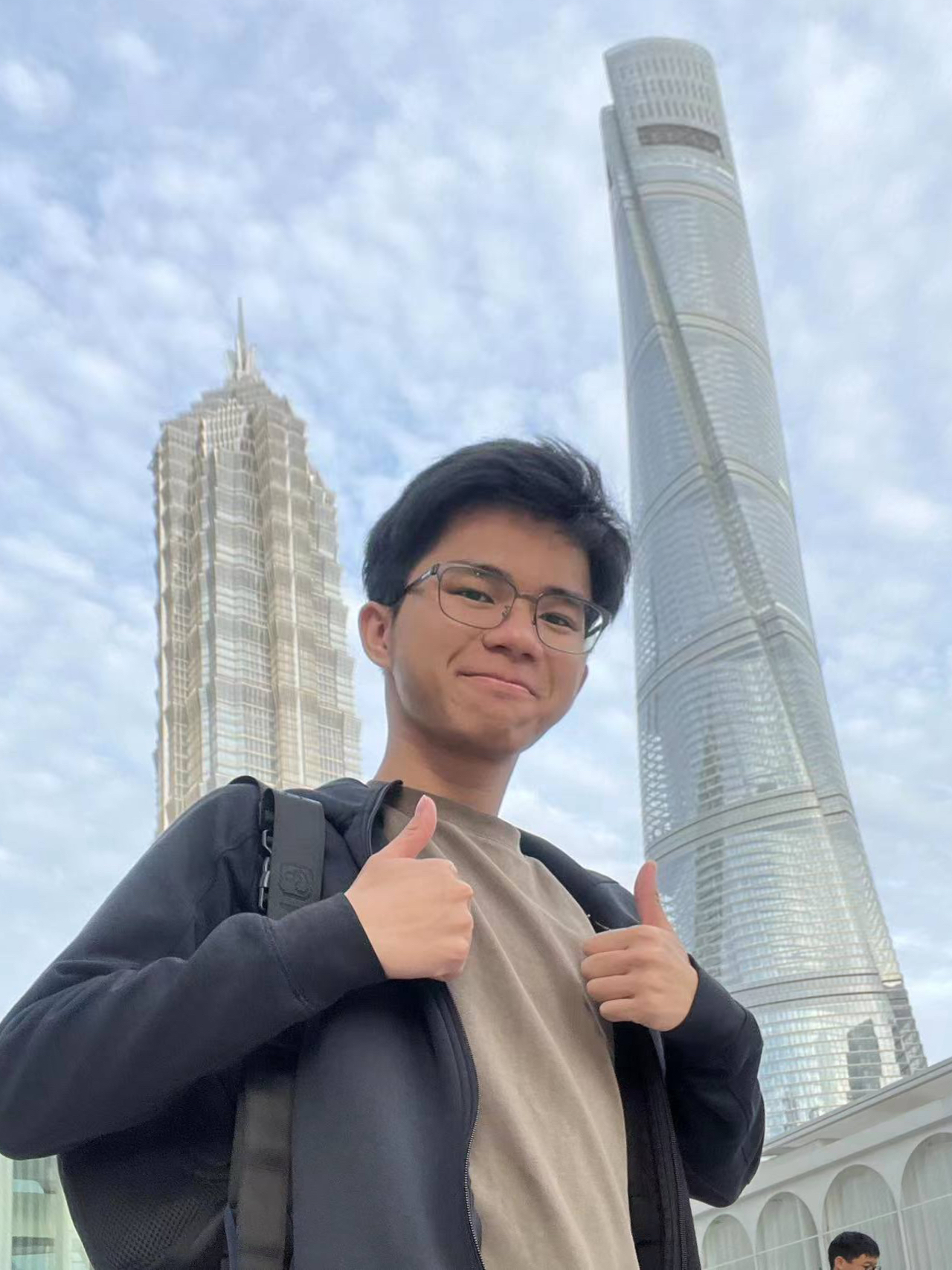
Richie Tjuahdi, Class of 2026 in Electronics and Computer Engineering at ZJUI. He engaged in the optimization project of the RSHub research service platform, delivering a high-quality and efficient user experience; participated in WAMECO Connect, an international solid waste trading platform, contributing to the construction of a global waste management ecosystem; and proactively volunteered at the cultural festival of a local primary school. From sharing Indonesian traditional stories to organizing interesting folk custom interactions, he built a bridge for cultural exchange between China and foreign countries for the children, making the charm of multiculturalism accessible to all. Proficient in English and Indonesian, with his Chinese continuously improving, Richie not only uses language as a bridge to convey cultural warmth but also maintains an unwavering enthusiasm for exploration.
As an engineering student, Richie adeptly turned ZJUI’s high academic standards into a growth catalyst. He split major tasks into "daily small sprints," drafted "decision logs" pre-experiments, and polished code comments for clarity, rejecting rote memorization to actively debate ideas with professors and peers, striving to grasp knowledge’s essence.
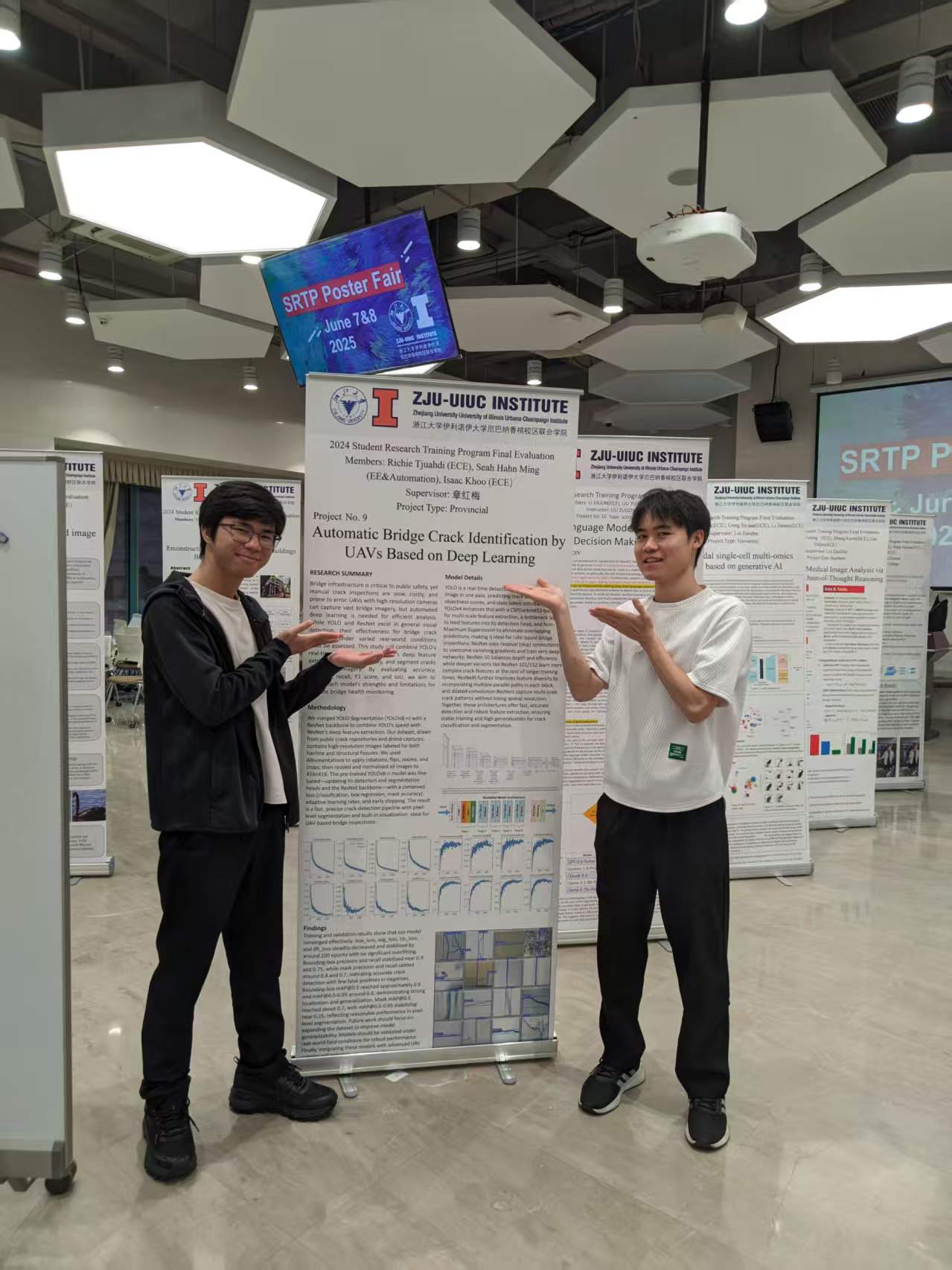
To him, ZJUI’s courses are all valuable, with CS101 (Introduction to Computing: Engineering & Science) and CS225 (Data Structures) as his "foundational mentors." CS101’s professor, mindful of international students’ adaptation challenges, offered flexible deadlines and laid his programming foundation. CS225 taught him to "think through complexity before coding," a mindset that later optimized his choice of data structures/models in internships and research. This solid foundation and scientific thinking acquired through coursework have also laid a solid groundwork for his academic exploration. In the provincial-level SRTP (Student Research Training Program) crack detection project, he constructed and trained U-Net and YOLO variant models based on the ResNet backbone, participating deeply in all key stages throughout the process, including data annotation, data augmentation, and overfitting control. These experiences not only enabled him to master the full-cycle iterative methodology from product prototype to mature product but also broadened his research horizons and achieved a leap in experimental efficiency.
Beyond the classroom, Richie has consistently proactively seized practical opportunities offered by ZJUI. From research service platforms to student entrepreneurship projects, he has continuously honed his core competencies in real-world professional scenarios.
During his sophomore year, he devoted himself to the RSHub research service platform project led by ZJUI Postdoctoral Researcher Fang Yiwen. In the project, Richie recognized that researchers are often pressed for time, needing platforms that cover core research scenarios while avoiding time-consuming complex operations. Centering on users’ actual needs, he strived to build a professional service tool that is "effective and easy to use." Technically, he proficiently utilized React, a core front-end development framework, to construct a flexible, responsive user interface, ensuring researchers enjoy a smooth experience when viewing data and accessing functions. Simultaneously, he integrated Docusaurus, a documentation tool, to organize platform logic and operational steps into a clear, well-structured, and easily searchable system, enabling first-time users to quickly get started through the guides.
To ensure the platform truly aligned with research workflows, Richie went beyond pure technical development and took the initiative to interview researchers across different fields, and he accurately identified pain points in high-frequency scenarios. Addressing these issues, he continuously optimized operational paths and simplified unnecessary interaction logic.
Ultimately, the RSHub platform co-built by Richie and his team is more than just a technical product, it is a practical service website tailored to research needs. It solves the collaboration challenges of research teams, serving as a "reliable assistant" for efficient work. Additionally, by simplifying operations and improving documentation, it significantly lowers the entry barrier, allowing researchers of all ages and technical backgrounds to navigate it with ease, truly "reducing workloads and boosting efficiency" for research.
During his junior year, Richie proactively joined the project "WAMECO: Digital Waste Management Solutions," led by Monish Mithra Waran Maheswaran, Class of 2025 in Automation jointly cultivated by ZJUI and the College of Control Science and Engineering, Zhejiang University. Collaborating closely with the team, he deepened their expertise in digital waste management and leveraged cutting-edge technologies to develop WAMECO Connect, an integrated international solid waste trading platform incorporating consulting, assessment, transaction, and tracking functionalities, helping innovate the full-lifecycle solid waste management model and advance global sustainable development efforts.
Faced with the project's novel technical ecosystem, Richie proactively tackled the Svelte framework, quickly mastering its core applications and completing technical adaptation. He addressed user pain points such as slow page loading and cumbersome operations through code optimization, component reuse, and request simplification, significantly enhancing the product's performance and user experience.
Within the team, Richie adhered to a goal-oriented approach, collaborating deeply with peers. He took the initiative to coordinate with back-end colleagues to clarify data interaction protocols, led the integration of front-end and back-end development outcomes, and voluntarily identified and resolved functional bugs during joint debugging. He contributed actively to key phases including requirement communication, technical implementation, and product iteration, ensuring efficient project progress throughout.
Upholding the core philosophy of "creating products that balance practicality and usability," he focused on refining interface interaction details and conducted continuous iterative optimizations based on user feedback. Ultimately, working hand-in-hand with the team, he successfully transformed the initial conceptual prototype into a stable, user-friendly international solid waste trading platform.
"The greatest gain is ZJUI’s interdisciplinary, international collaboration," Richie shared, also praising its valuable research practice opportunities for further studies. As graduation approaches, he plans to pursue applied machine learning in China or Singapore. "ZJUI gave me not just knowledge, but the courage to collaborate globally and confidence to turn passion into expertise," he reflected.
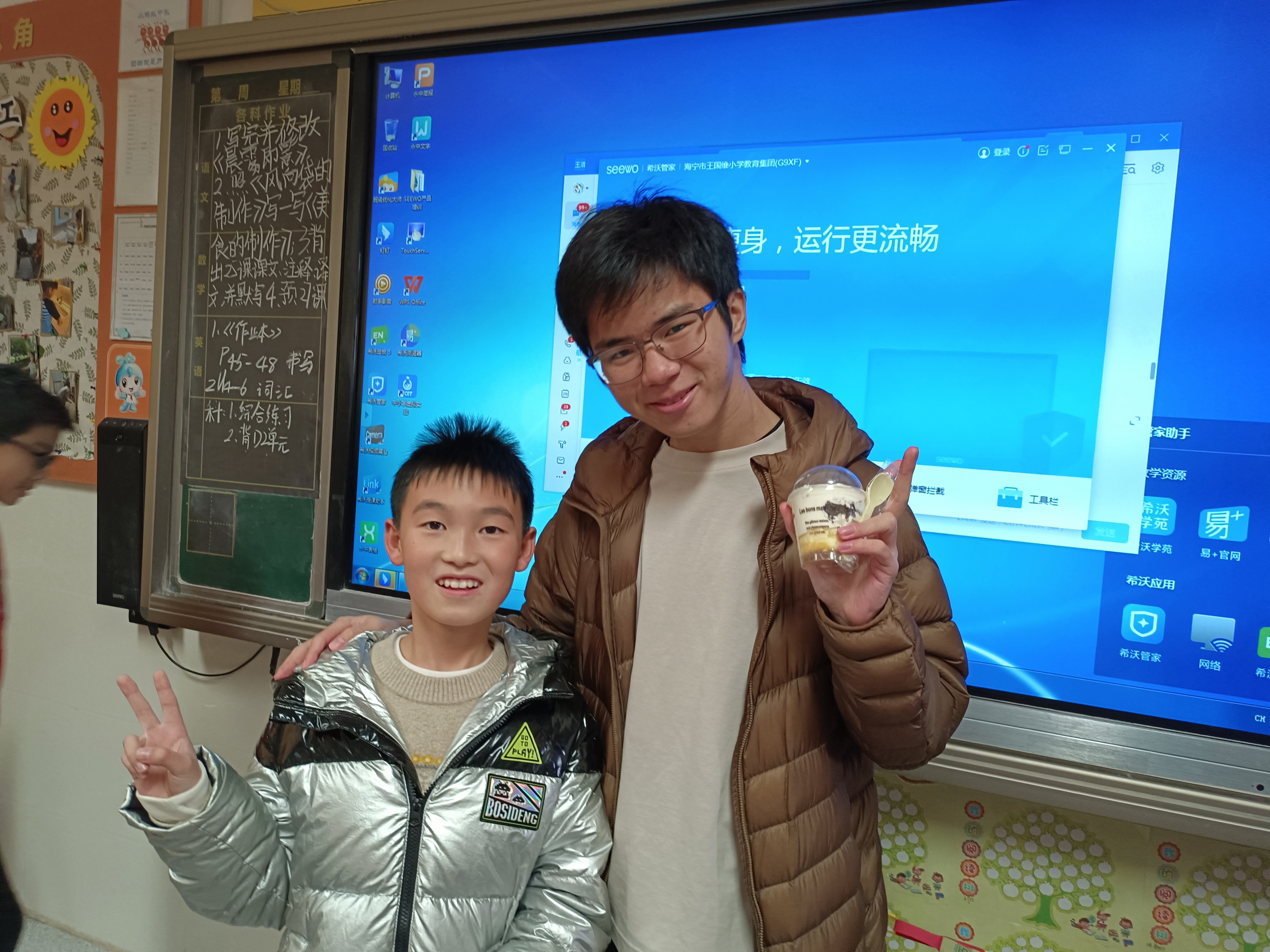
During his time at ZJUI, Richie was more than a dedicated student, he took the initiative as a "cultural ambassador," building a bridge between Chinese and Indonesian cultures with sincerity. In his junior year, he readily accepted an invitation to volunteer at Haining Wang Guowei Primary School Education Group’s cultural festival, seizing it as a chance to deepen his understanding of Chinese local culture and share Indonesian customs.
At the event, he learned to make dumplings from teachers and patiently taught children to string rock sugar gourds. Between activities, he used simple Chinese and English to share stories of Indonesia’s Eid al-Fitr and satay, showed hometown photos, and listened eagerly to the children talking about Spring Festival traditions. The most touching moment came when kids gathered shyly for autographs and photos. "Their pure excitement made me grasp the true meaning of cultural exchange," he recalled. He realized it lies not in grand slogans, but in daily interactions. As an international student, Richie saw himself as both a learner of Chinese culture and a communicator of Indonesian culture, committed to breaking barriers with sincerity and showcasing his hometown’s charm.
Beyond academics and volunteer work, Richie vividly embodied cultural integration through meaningful experiences. At the International Campus’s "Indonesia Month" event, he performed with Angklung, Indonesia’s traditional ensemble instrument. To showcase his hometown’s culture vividly, Richie and his teammates rehearsed rigorously after class for weeks, polishing rhythm and coordination. Their harmonious music deeply resonated with the audience, planting Indonesian cultural charm in hearts. For Richie, the Angklung carries profound hometown memories, deepening his understanding of cultural inheritance and filling him with cultural pride.
Also, he joined the campus billiards club and competed in the doubles tournament, partnering with an Armenian international student. Their complementary personalities fostered quick teamwork, and they competed alongside students from various countries and local Chinese peers. The atmosphere was warm and friendly, with all upholding fair play, cheering for successes and encouraging each other in defeat, highlighting sports’ borderless charm and cross-cultural warmth.
These experiences enhanced his teamwork spirit, and made him realize: cultural communication is never one-way, and sports transcend nationalities. Sincere, equal interaction breaks down cultural and language barriers, letting diverse civilizations coexist and shine on ZJUI.