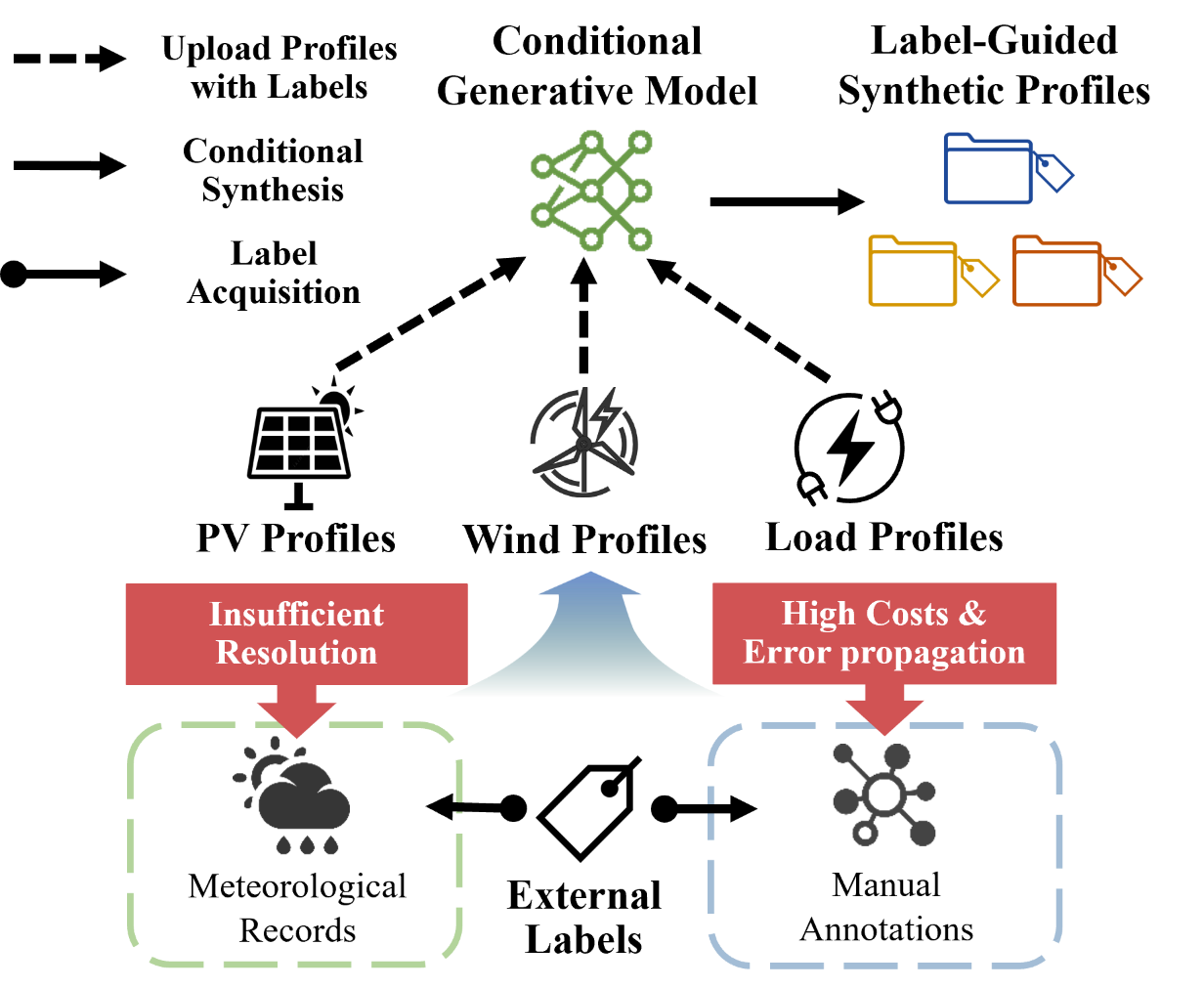
A research team led by Associate Professor Diao Ruisheng and Assistant Professor Hou Qingchun at the Zhejiang University–University of Illinois Urbana-Champaign Institute (ZJUI) reported advances in the generation of time-series data for electricity demand and renewable energy. The work was conducted under a research project of China Southern Power Grid titled "Key Technologies for Integrated Intelligent Planning of Large-Scale Onshore and Offshore Wind Power."
The study "Label-Free Conditional Synthesis of Load and Renewable Generation Profiles via Unsupervised Latent Disentanglement" was published in Applied Energy, an international journal in the energy field.
▲
The first author is Qiao Tiantong, a 2024 doctoral student in Electrical Engineering at Zhejiang University, and the corresponding author is Associate Professor Diao Ruisheng at ZJUI. Other authors include Assistant Professor Hou Qingchun at ZJUI, Wang Anqi, a 2023 doctoral student in Electrical Engineering at Zhejiang University, Lu Xun, a professor-level senior engineer at Guangdong Power Grid Co., Ltd., a subsidiary of China Southern Power Grid, and Cao Jinye, a 2024 doctoral student in Electrical Engineering at Zhejiang University.
▲
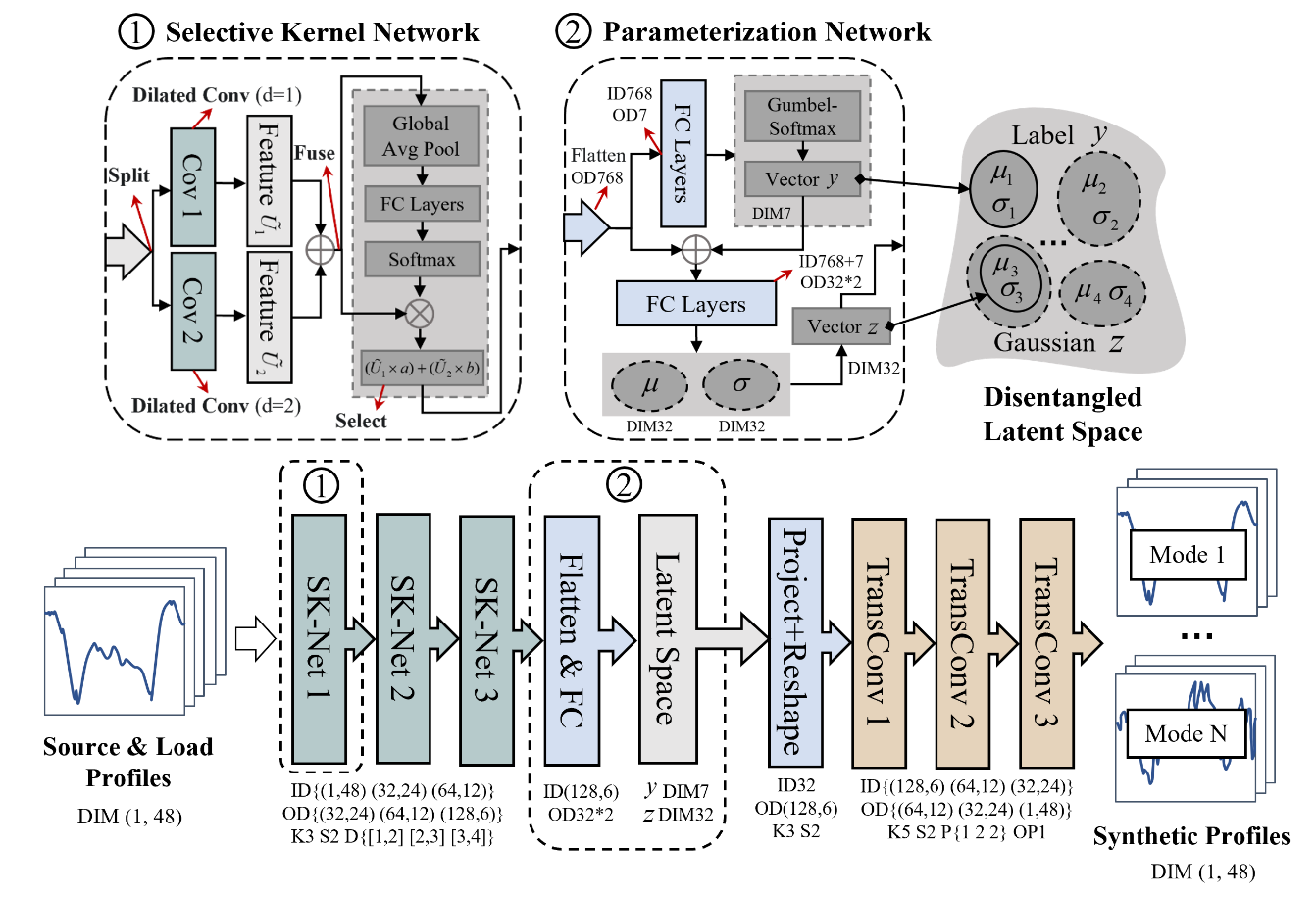
To address these limitations, the research team developed an end-to-end Selective Kernel Gaussian Mixture Variational Autoencoder, or SK-GMVAE. The model uses a Gaussian mixture prior to separate discrete operating patterns from continuous random variations in raw time-series data, and a selective kernel network dynamically adjusts its receptive field to capture both broad intraday trends and short-term fluctuations. Together, these mechanisms allow SK-GMVAE to discover operating patterns, select a target mode and generate corresponding power profiles without weather labels or manual annotation.
The team evaluated the method using real-world datasets covering residential electricity demand in the United Kingdom, 14 wind farms in eastern China and distributed photovoltaic systems in Australia. The datasets span user, generation-site and substation aggregation levels, with temporal resolutions of 5, 15 and 30 minutes.
▲
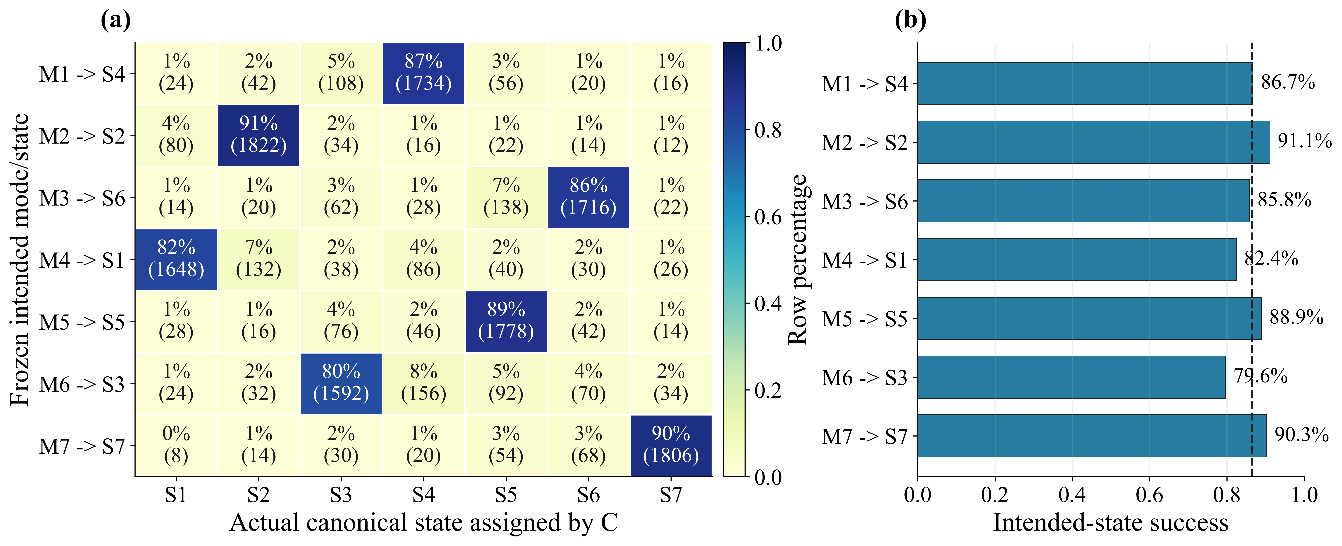
Results showed that SK-GMVAE can consistently identify structural patterns in load, wind-power and solar-power profiles. On the residential load dataset, the model achieved an average success rate of 86.4% in generating profiles for specified latent operating modes, with individual-mode success rates ranging from 79.6% to 91.1%.
The researchers also assessed whether the synthetic profiles preserved key operational characteristics, including peak demand, peak time, daily energy, load factor, valley time, peak-to-valley difference and the 95th-percentile ramp rate. Across most of the seven operating modes identified by the model, the generated profiles closely matched the real data and accurately reproduced peak-and-valley behavior, overall energy levels and rapid ramping characteristics.
The findings indicated that SK-GMVAE can identify and generate operating patterns without external labels, and preserve important physical and statistical characteristics, offering a potential approach to data augmentation for power-system planning, operation and risk analysis when real-world data are limited.