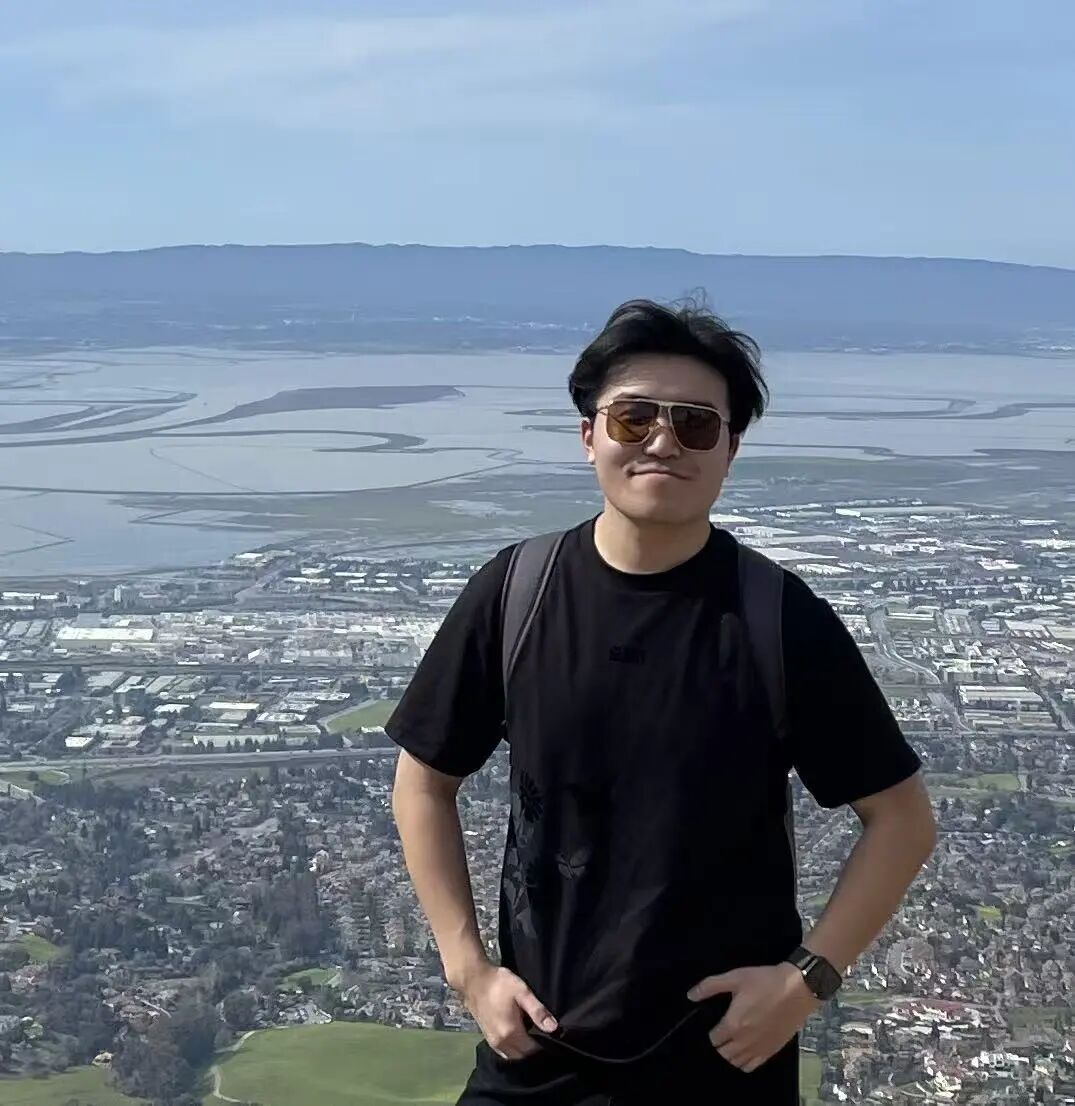
Huang Jiayuan is a graduate of the Class of 2021 in Computer Engineering at the Zhejiang University–University of Illinois Urbana-Champaign Institute (ZJUI). From ZJUI to Carnegie Mellon University and Microsoft Bing, his path has been guided by a consistent approach to problem-solving: identify the real question, break down the complexity, and turn ideas into practical solutions.
Today, Huang works as a machine learning engineer on the Microsoft Bing team. Leveraging data insights and model optimizations, he elevates the search experience and has helped roll out generative AI features, including search result overviews, to hundreds of millions of users worldwide. His work sits at the intersection of research and engineering, demanding careful tradeoffs between accuracy, efficiency, reliability, and user experience.
The disciplined work habits he relies on today took root during his time at ZJUI. He often reflects onRHET 105: Writing and Research, an undergraduate course that required over 25 pages of research writing and multiple rounds of revision.
“What I took away from that course went far beyond writing itself,” he said. “It taught me how to build an argument, scrutinize the logic behind it, and iterate on it continuously.”
The process felt tedious at first, but its true value became apparent once he joined research teams. Whether designing a model, interpreting experimental findings, or preparing a feature for launch, Huang learned to challenge his own assumptions, spot gaps in reasoning, and verify whether the data actually backed his conclusions.
This rigorous mindset shaped his earliest research endeavors. In his sophomore year, Huang joined ZJUI’s Student Research Training Program (SRTP) under the supervision of Professor Wang Hongwei, working on fault data analysis and knowledge graph construction for intelligent operations and maintenance. It was his first end-to-end research experience, walking him through every step from problem framing to experiment execution and result interpretation. The work culminated in the paperKnowledge Graph Construction for Intelligent Maintenance of Power Plants, presented at the 16th International Conference on e-Business Engineering (ICEBE 2019), where it was honored with the Best Paper Award.
“That project taught me how to take a vague, open-ended question and gradually narrow it down into a well-defined research problem,” he said.
A subsequent summer research stint with Associate Professor Xie Pengtao at the University of California, San Diego, solidified his passion for the field. The work led to the paperStructured Self-Supervised Pretraining for Commonsense Knowledge Graph Completion, which Huang published as first author in Transactions of the Association for Computational Linguistics(TACL) in 2021.
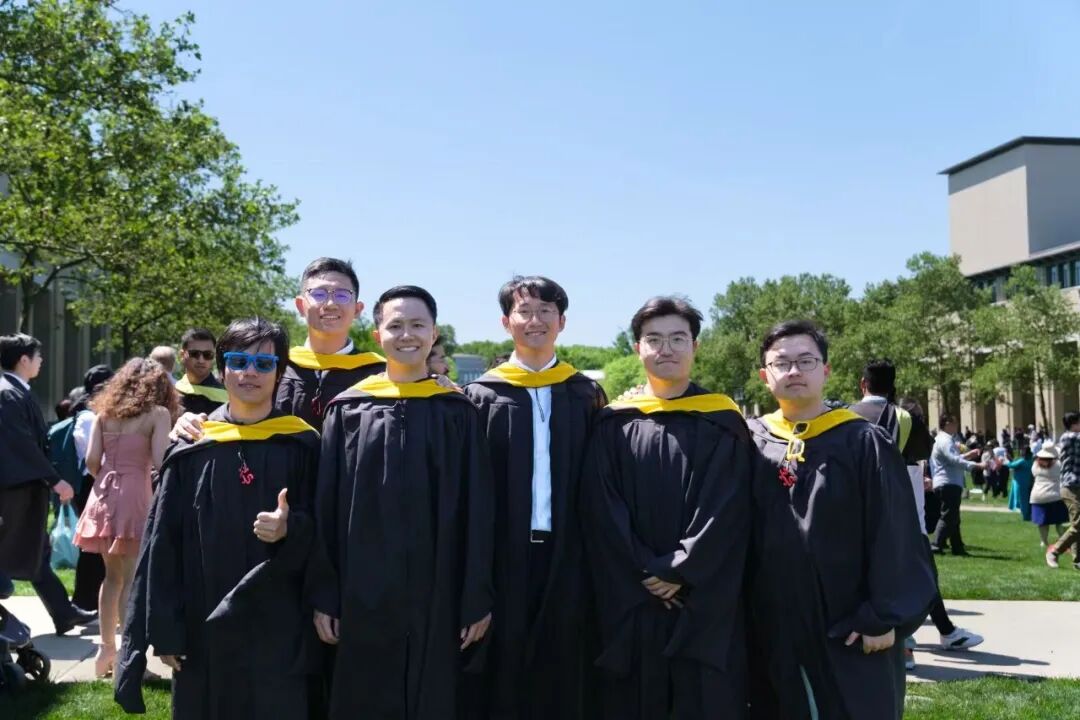
After earning admission offers from multiple overseas universities, he chose Carnegie Mellon University (CMU) to pursue his graduate degree.
At CMU, he balanced rigorous coursework with internship recruiting and full-time career preparation. His engineering foundation from ZJUI helped him adjust to the university’s hands-on learning style, but the faster pace and higher bar presented a fresh set of challenges. A successful project had to prove a concept worked while also tackling implementation, reproducibility, and reliability in real-world settings.
Under the supervision of Adjunct Professor Jiang Lu, Huang focused on automated poster layout generation. Generative models were far less mainstream back then, and training a model to grasp the relationships between visual elements and generate cohesive layouts was a formidable challenge. The project pushed him to look beyond experimental metrics and ask whether a model truly understood the task’s constraints and whether its output would deliver real-world utility.
This mindset became even more critical after Huang entered the tech industry. “In academia, progress is typically measured by assignments, papers, and project reports,” he said. “In industry, technical work has to ship into a live system and ultimately move the needle on user experience.”
▲
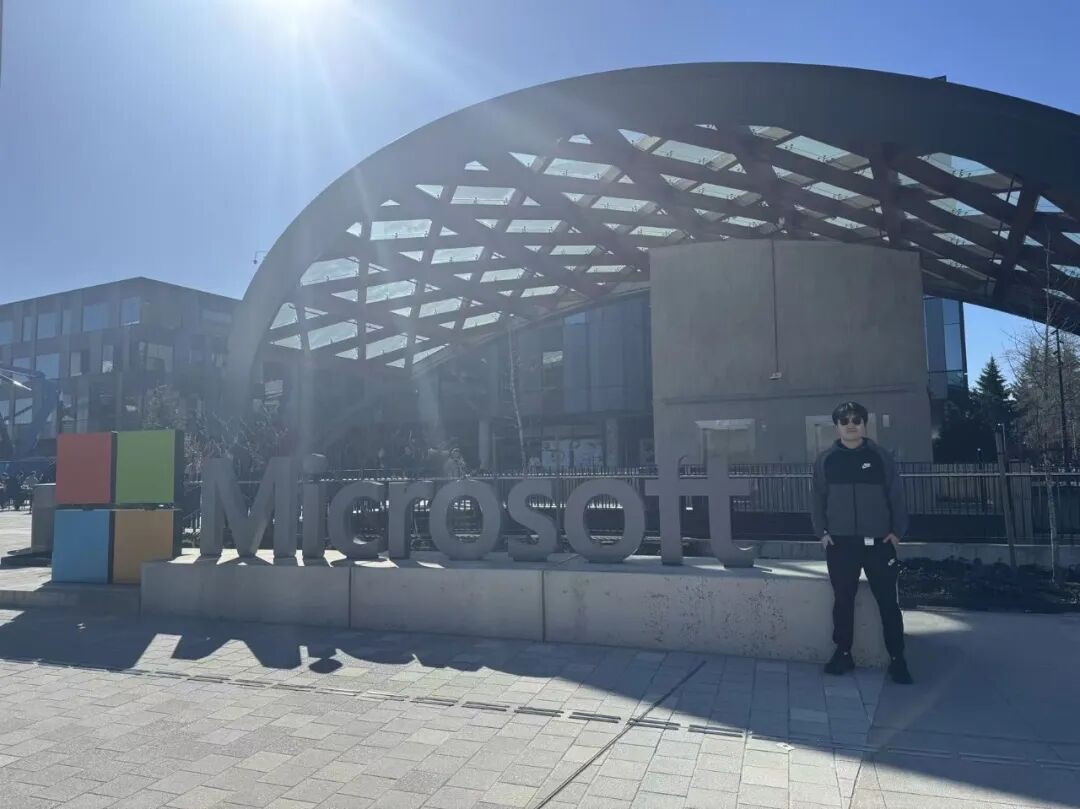
At Microsoft Bing, Huang’s scope of work spans signal discovery, experiment design, model training and evaluation, post-training for lightweight models, and translating research insights into production-grade improvements.
“A high-performing model is just the starting line,” he shared. “Its real value lies in becoming a product feature that delivers meaningful improvements to the user experience.”
Search result overviews are a prime example. Traditional search engines return a list of links, leaving users to sift through and piece together information on their own. An overview, by contrast, curates information around the user’s query and delivers a more holistic answer. Rolling out a feature like this requires rigorous validation. At Bing’s massive scale, the team must strike a balance between accuracy, timeliness, and usability, all while ensuring results help users rather than introducing new confusion.
The inherent uncertainty in this work has also taught Huang just how vital team culture is. At Microsoft, unexpected outcomes spark open discussions about what happened and what the team can take away. This culture of openness fosters experimentation and knowledge sharing, and it has also helped Huang grow into a more proactive communicator.
“It took me a while to learn to speak up confidently,” he said. “I eventually realized that listening and voicing your own perspective are mutually reinforcing. When you seek to understand others and articulate your own judgment clearly, conversations become far more productive.”
▲
Huang believes advances in search technology are reshaping the skill sets people need to thrive. As intelligent systems take over more information-gathering and routine analytical tasks, he encouraged students to build enduring expertise, either by deeply understanding users and their real-world needs, or by cultivating the technical depth required to build and optimize the underlying systems.
Years of studying and working abroad have also shaped his perspective on what it means to work in a global environment. To Huang, it demands professional depth, adaptability, and the ability to collaborate across cultural boundaries.
“I’m deeply grateful for the international environment ZJUI provided,” he told us. “Four years of learning in English-taught, diverse classrooms, combined with project-based learning, equipped me to collaborate effectively with people from a wide range of backgrounds. It also helped me transition much more smoothly into graduate school and the professional world.”
Looking back on his journey, Huang encouraged current students to stay patient amid rapid technological change and invest in knowledge and skills that compound in value over time.
“Go deep, and strive to understand how things truly work,” he said. “Four years fly by. If you’re willing to put in the effort, what you gain from ZJUI may far exceed your expectations. I hope every student makes the most of these years and walks away with no regrets.”