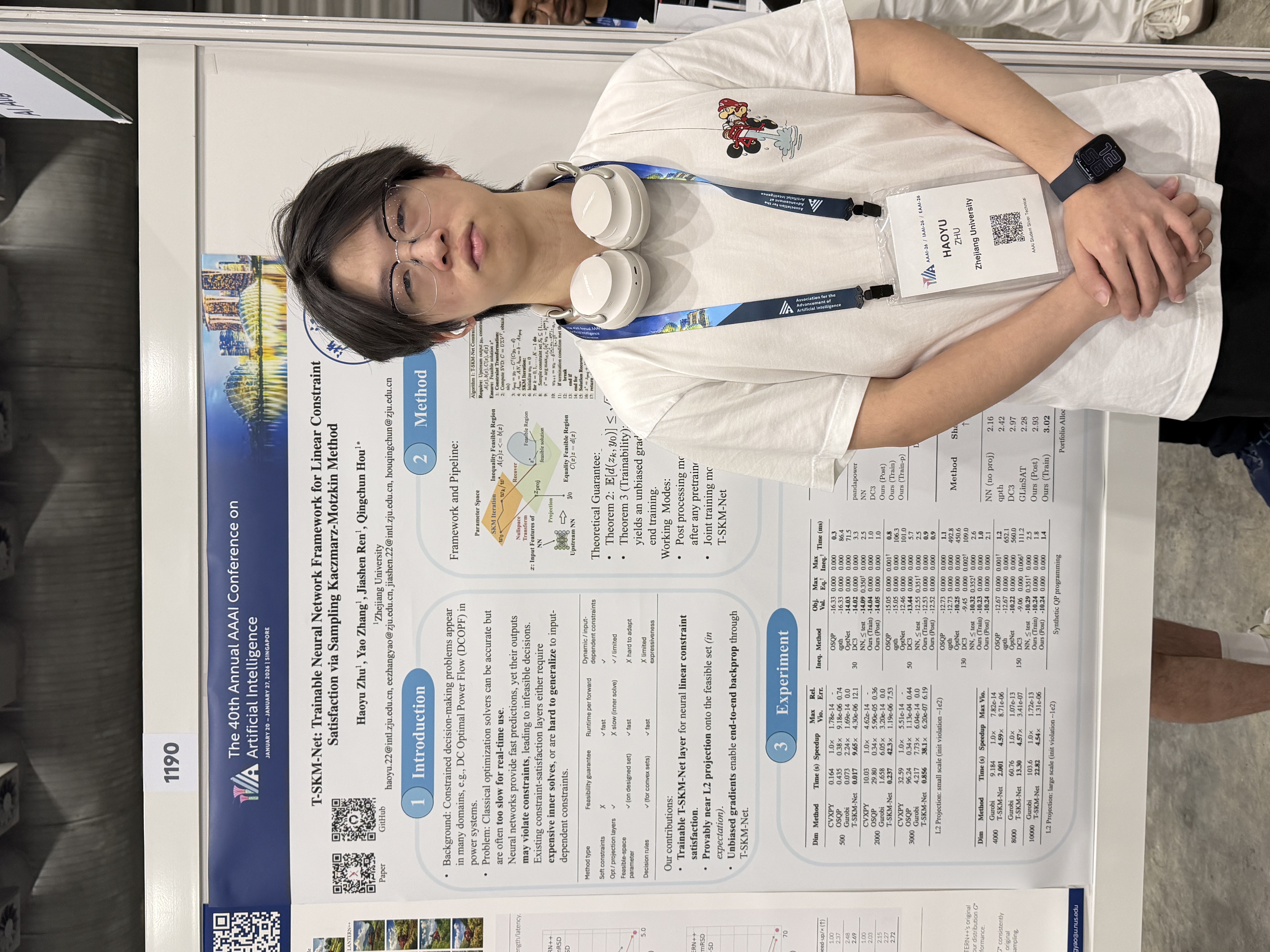
Zhu Haoyu, Class of 2026 in Electrical Engineering at ZJUI, has shaped his undergraduate journey through intellectual curiosity, bold choices, and sustained effort. Driven by a keen interest in the interdisciplinary field of computer technology and electrical engineering, he transferred from Civil Engineering to Electrical Engineering, an academic pivot that laid solid groundwork for his later research output. He went on to publish a first-author paper at AAAI 2026, a top-tier international conference. He is now preparing to pursue a direct-entry PhD in Electrical Engineering at Zhejiang University.
Zhu's journey was hardly preordained. As he explored ZJUI's interdisciplinary curriculum, he became increasingly interested in intelligent computing, optimization and decision-making, and their engineering applications. The intersection of electrical engineering and computer science opened up broader possibilities for exploration and gradually helped him identify the direction he wanted to pursue.
By his first year, Zhu had already ranked among the top students in his Civil Engineering program, demonstrating a strong capacity for learning across both foundational and interdisciplinary fields. His strong academic performance reflected not only his consistent initiative in learning but also his broad engagement with and thoughtful consideration of knowledge both within and beyond his discipline. Yet excellent performance alone did not convince him that the field was the right fit.
“Earning top marks doesn’t always mean a discipline is the right fit for you,” he explained. After reflecting on his interests and long-term aspirations, Zhu formally transferred to Electrical Engineering in his sophomore year. The transition came with its share of hurdles, including a brand-new curriculum, foundational gaps, and the pressure of catching up with peers who had been in the program from day one. Rather than framing himself as behind, Zhu poured extra hours into core courses, sought supplementary resources, collaborated with classmates, and turned to faculty for guidance whenever needed. This approach not only kept him among the top performers in his program but also cultivated a learning habit rooted in grasping first principles instead of memorizing problem-solving templates.
Drawn to the intersection of intelligent computing, optimization, and electrical engineering, Zhu joined the lab of ZJUI Assistant Professor Hou Qingchun. His research centers on linear constraint satisfaction in neural networks, culminating in his project T-SKM-Net.
Through his research, Zhu identified a longstanding challenge in real-world engineering applications. While neural networks can generate solutions rapidly, he found that their outputs may violate strict physical constraints in safety-critical domains such as power system optimization, robotics, and autonomous driving. Traditional optimization methods, by contrast, guarantee feasible solutions but often come with prohibitive computational costs.
To bridge this gap, Zhu and his research team developed T-SKM-Net. As a trainable neural framework, it refines raw neural network outputs to ensure strict satisfaction of both linear equality and inequality constraints — combining computational speed with guaranteed feasibility. In applications like DC optimal power flow, where systems must satisfy power balance and line capacity limits, Zhu and the team demonstrated that the framework enables fast, reliable decision-making.
▲
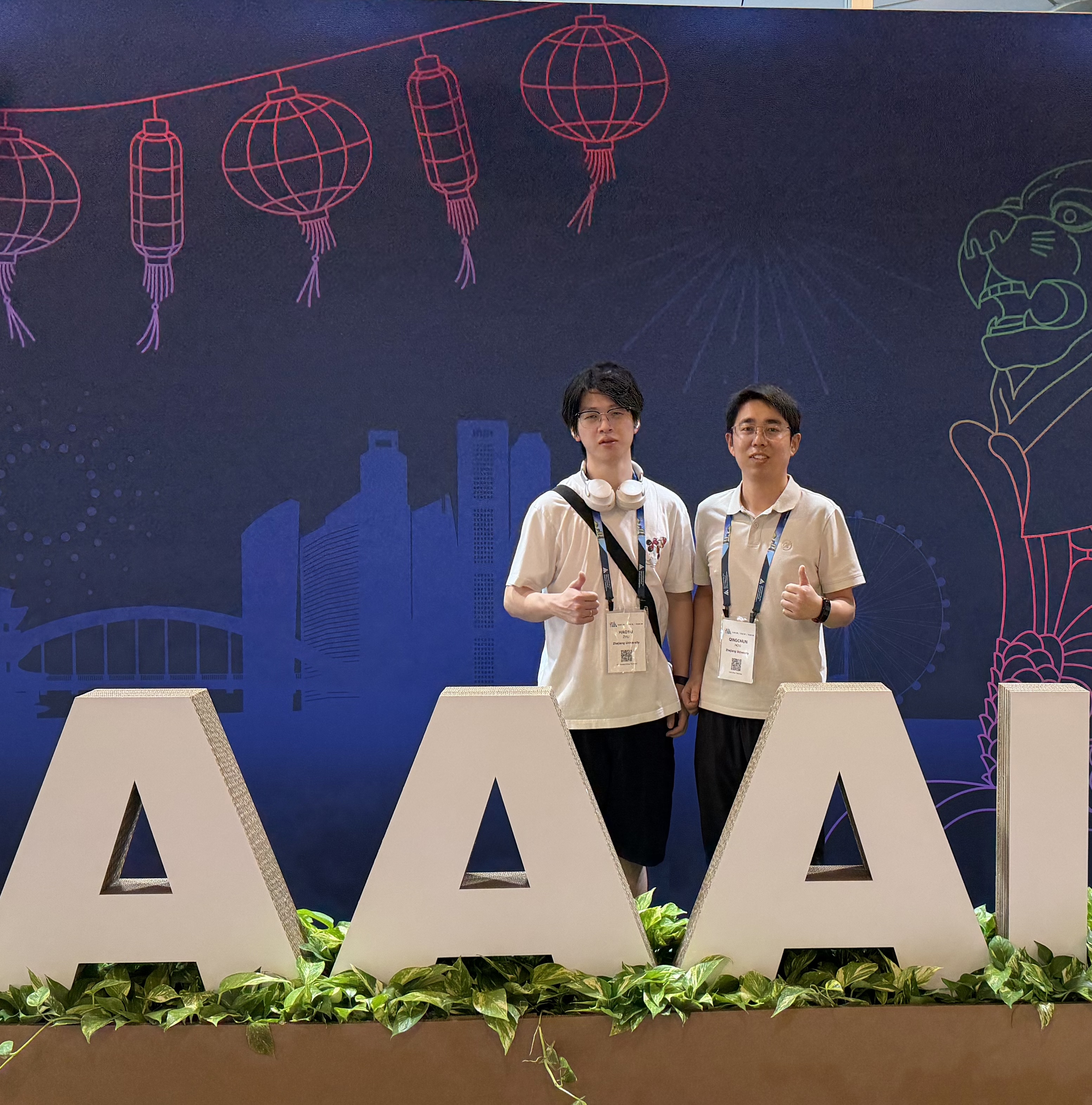
Published as a first-author paper at AAAI 2026 under the title T-SKM-Net: Trainable Neural Network Framework for Linear Constraint Satisfaction via Sampling Kaczmarz-Motzkin Method, the project gave Zhu his first complete end-to-end research experience, spanning problem formulation, methodology design, experimentation, and manuscript drafting. The process was far from linear. Promising ideas often fell short in practice, and unexpected results didn't always come with ready explanations. Over time, Zhu learned to embrace uncertainty and setbacks as inherent to the research process.
Assistant Professor Hou's guidance proved pivotal. Rather than handing down direct answers, he encouraged Zhu to interrogate why a problem mattered and what set their work apart from existing research. These conversations helped Zhu move beyond a coursework mindset and begin cultivating the perspective of an independent researcher.
▲
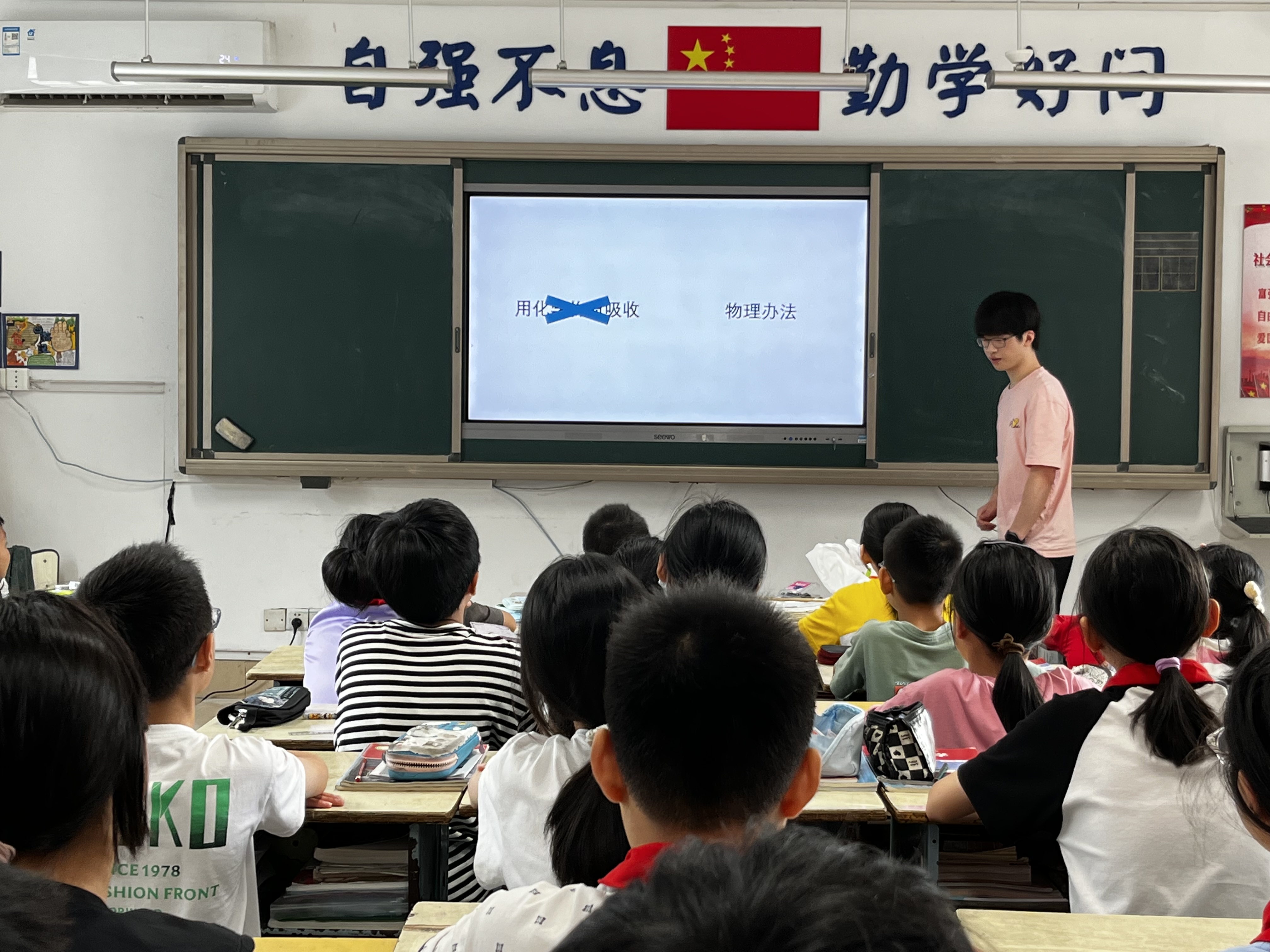
Zhu's undergraduate experience extends well beyond the classroom and lab. In the summer of his sophomore year, he volunteered as a science teacher at a primary school in Shengzhou, where he learned to distill abstract scientific concepts into simple, engaging lessons. His students' candid questions often pushed him back to first principles and drove home the idea that communication is an essential part of true understanding.
He also maintains a healthy work-life balance. Table tennis helps him decompress after intensive research sessions, while music provides another creative outlet. An enthusiastic singer, Zhu has performed at the Grassland Music Festival of the International Campus, Zhejiang University. For him, the rigor of research and the creativity of music complement one another, keeping him grounded through demanding semesters.
After graduation, Zhu will continue his work as a direct-entry PhD student in Electrical Engineering at Zhejiang University under Assistant Professor Hou's supervision. Looking back, his journey has been shaped not by a rigid plan, but by reflection, adaptation, and steady commitment. From Civil Engineering to Electrical Engineering, from classroom learning to independent research, Zhu is poised to keep exploring new frontiers in his field.