Chen Haowen, class of 2026 in Mechanical Engineering of ZJUI, underwent a remarkable four-year transformation from a textbook-focused problem-solver into an inquisitive, analytical explorer. Having secured coveted offers from both Massachusetts Institute of Technology (MIT)’s Master of Engineering in Manufacturing and Stanford University’s Master of Science in Civil and Environmental Engineering, he ultimately chose Stanford to pursue advanced research at the intersection of fluid transport, thermal management, and water-energy systems. Nurtured by ZJUI’s globally focused academic ecosystem, he built a rock-solid engineering foundation, tackled challenges with systematic thinking, and developed a truly global perspective, carving out his own unique path.
When Chen first arrived at ZJUI, he saw mechanical engineering as little more than drafting precise CAD models and acing exams. But as he delved deeper into coursework and hands-on projects, he realized real engineering problems never boil down to single textbook concepts.
Research is never a straight line, every breakthrough comes after countless trials and errors. During his summer research project on oil mist separation systems with ZJUI Associate Professor Cui Jiahuan, Chen Haowen faced his first major challenge. Simulating the full model was extremely computationally intensive—each iteration took days to run, bringing the design process nearly to a standstill. After adjusting dozens of parameters on his own with no success, he did not work in isolation. Instead, he humbly sought advice from Associate Professor Cui and experienced PhD students in the lab, learning to strike a balance between model simplification and computational accuracy. He ultimately optimized the model using sliding mesh and periodic boundary conditions, significantly cutting simulation time and getting the stalled project back on track.
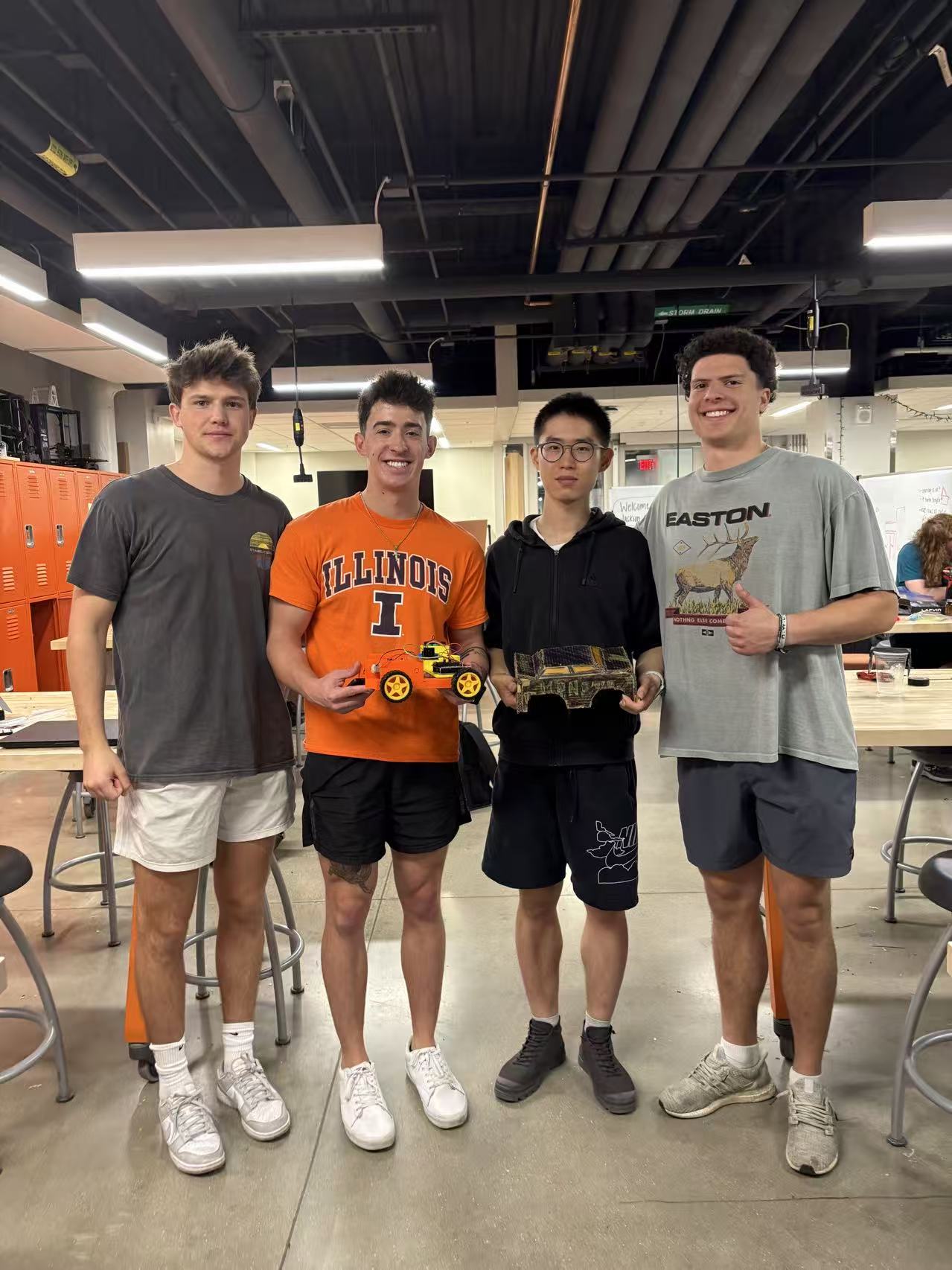
The experience showed Chen how valuable it can be to seek advice—a lesson that became even clearer during an overseas exchange, when he worked on a capillary-driven seawater desalination experiment. At one point, unexpected fluctuations turned a clear experimental curve into a scatter of irregular points. He spent a week checking the code, the theoretical model, the setup, and each step of the procedure, but still could not identify the cause.
▲
He later brought his observations and troubleshooting notes to his advisor. Together, they traced the issue to the sample’s initial wetting condition and immersion method, both of which were affecting data stability. Once those details were corrected, the experiment quickly got back on track.
These two experiences shaped Chen's core research philosophy: seeking advice is never a sign of weakness, it is an essential part of scientific training. You only truly learn problem-solving approaches when you come to discussions with well-thought-out specific questions, not just looking for a quick answer.
ZJUI’s culture of cross-disciplinary collaboration freed Chen from the silos of traditional mechanical engineering. His projects spanned robotics, smart agriculture, industrial fluid systems, desalination, and materials science, each uncovering new connections between fields. It was this interdisciplinary mindset that made him a standout candidate for top graduate programs. After weighing his options, he chose Stanford to dive deeper into porous media flow, thermal management, and water-energy systems, with the goal of addressing global water scarcity and energy challenges.
▲
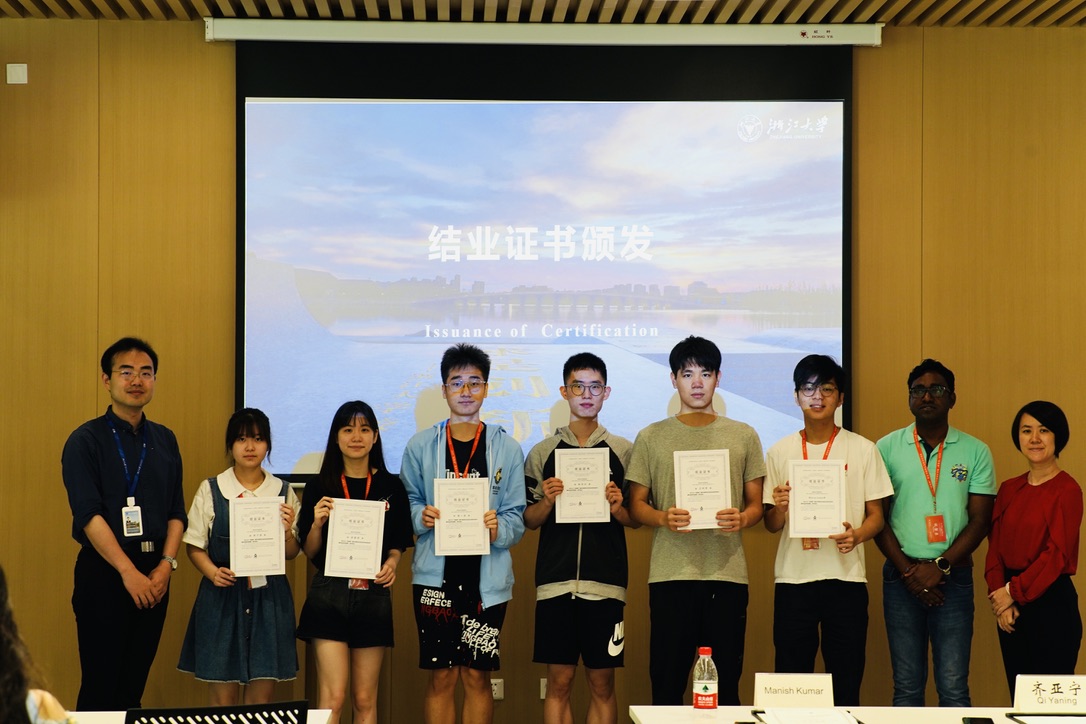
As the student leader of the first Zhejiang–Hong Kong–Macau University Residential College Exchange and Mutual Visit Program of International Campus, Zhejiang University, he worked with students from HongKong University and University of Macau on cultural activities and research projects, gaining firsthand experience with different educational systems and campus cultures.
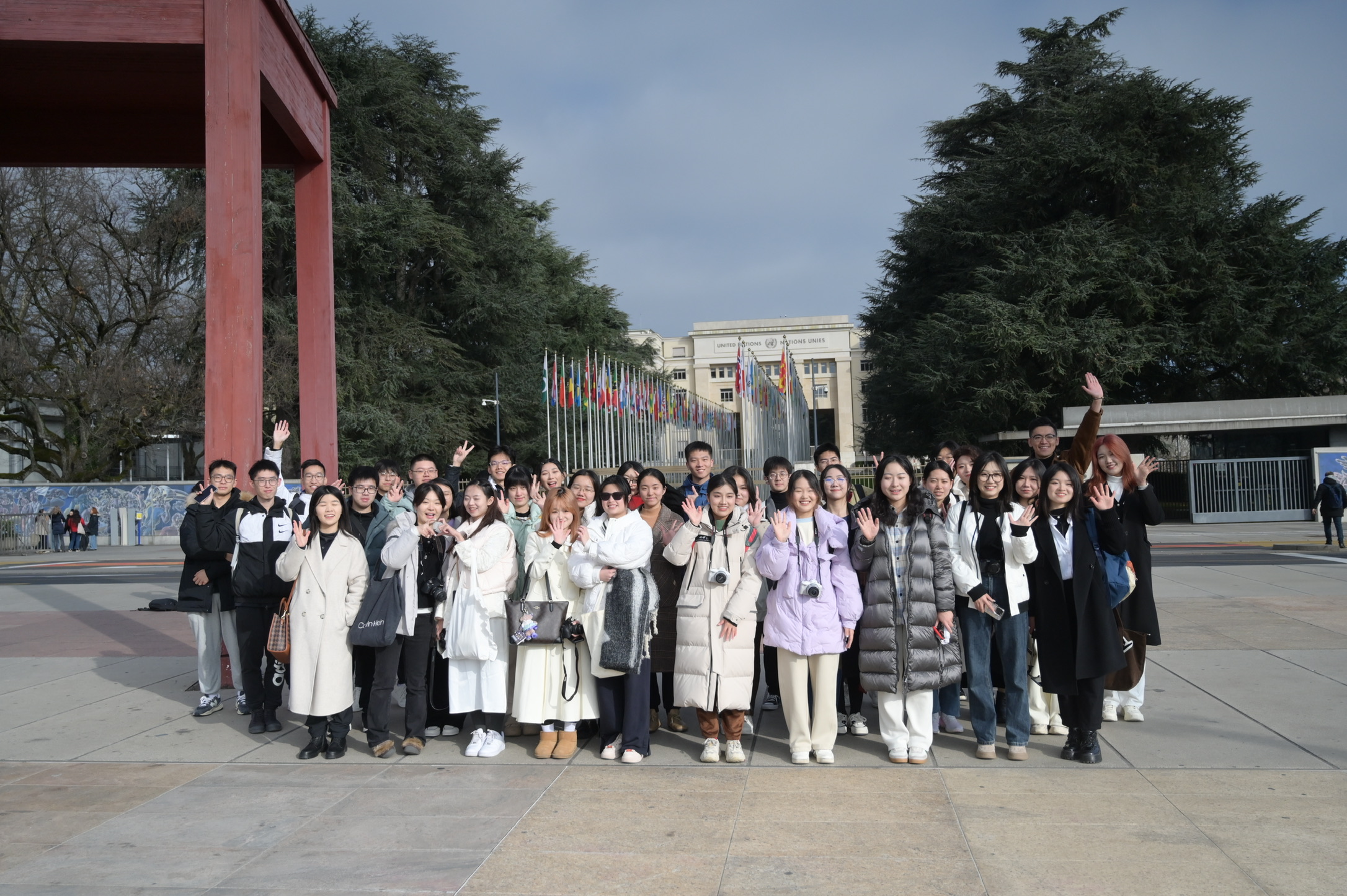
Beyond campus, Chen broadened his perspective through Zhejiang University’s “New Youth Global Competence Program,” visiting the United Nations Headquarters in Geneva and several international organizations, including WHO, IEC and UNHCR. His visit to UNHCR deeply impressed him, making him realize that engineering should ultimately serve people and improve lives. Exchanges with young participants from more than 20 countries during the simulated “Green the Globe” international conference further showed him that global challenges require international cooperation, inclusive dialogue and sustainable solutions.
“As engineers, we cannot simply focus on technical breakthroughs in the lab,” Chen said. “We also need to look at the world, consider the social impact of technology, and think about how international cooperation can help technology benefit everyone.”
Nurtured by ZJUI’s culture of diverse innovation and global collaboration, Chen is growing into a new-era engineer with strong technical expertise, a global perspective and a profound sense of social responsibility. Next, he will take the knowledge and growth he gained at ZJUI to Stanford University for further studies, aiming to contribute the wisdom and strength of Chinese youth to solving the global water scarcity and energy crises.
▲