Recently, a kick-off meeting for 2026 Zhejiang Province’s "Pioneer, Leading Goose + X" Science and Technology Program in the field of low-altitude economy —Key Technologies and Equipment for Intelligent Drone Take-off and Landing Facilities for Urban Logistics Multimodal Transport— was held at the Smart Urban Future Laboratory of Zhejiang University–University of Illinois Urbana-Champaign Institute (ZJUI). The project is led by Professor Lee Der-Horng of ZJUI. The meeting invited industry experts from China Civil Aviation Airport Construction Engineering Co., Ltd. and China Post UAV Co., Ltd., with more than 30 attendees including core members of the project team present.
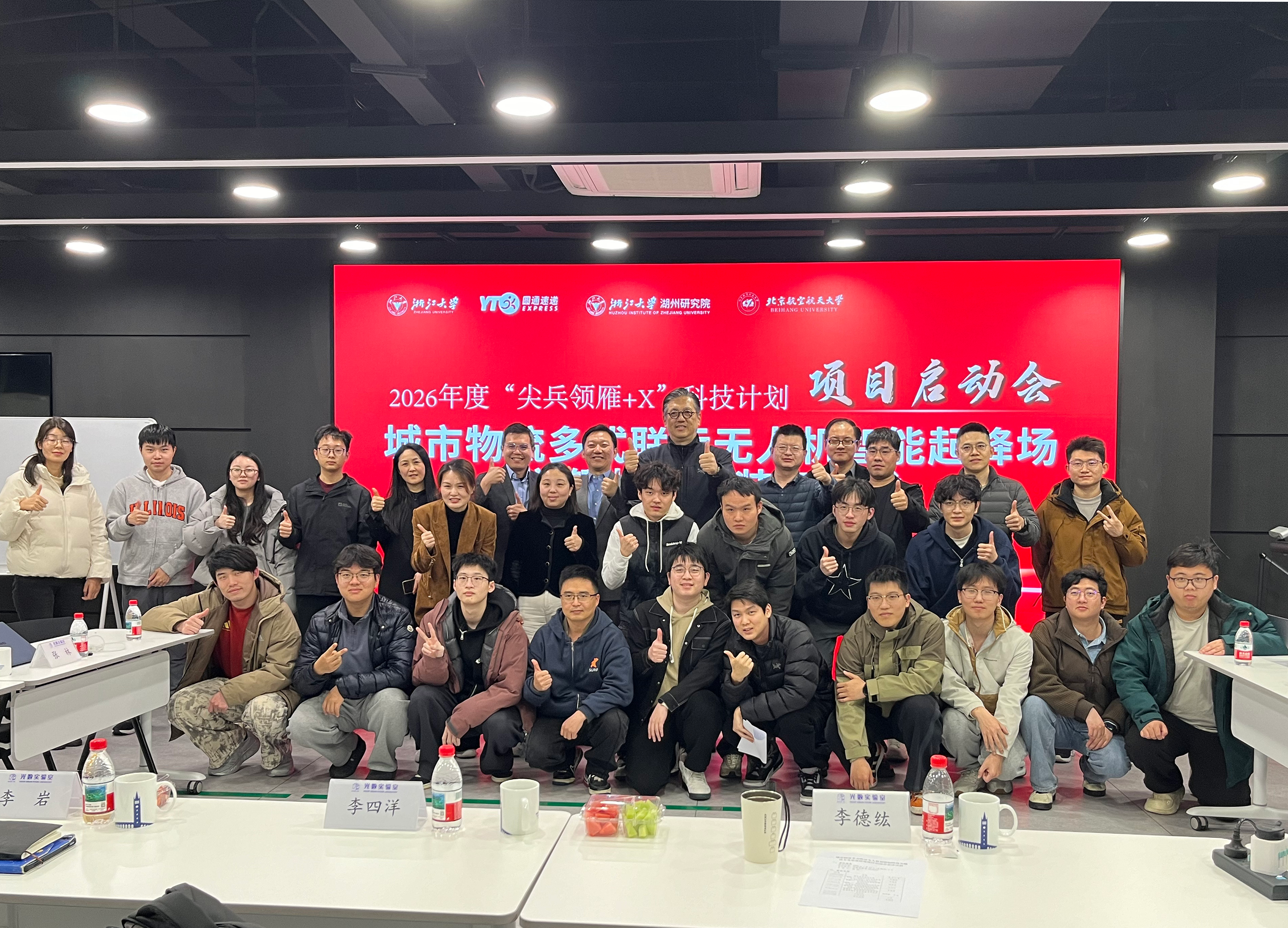
▲
This project unites a cross-disciplinary academia-industry team, with core partners including the Huzhou Institute of Zhejiang University, Hangzhou Yuanlai Technology Co., Ltd. (an affiliate of YTO Express), and the Hangzhou International Innovation Institute of Beihang University. Leveraging complementary strengths in fundamental research, engineering implementation, and industrial application, the team aims to advance the development of general-purpose infrastructure for urban low-altitude logistics in complex urban environments.
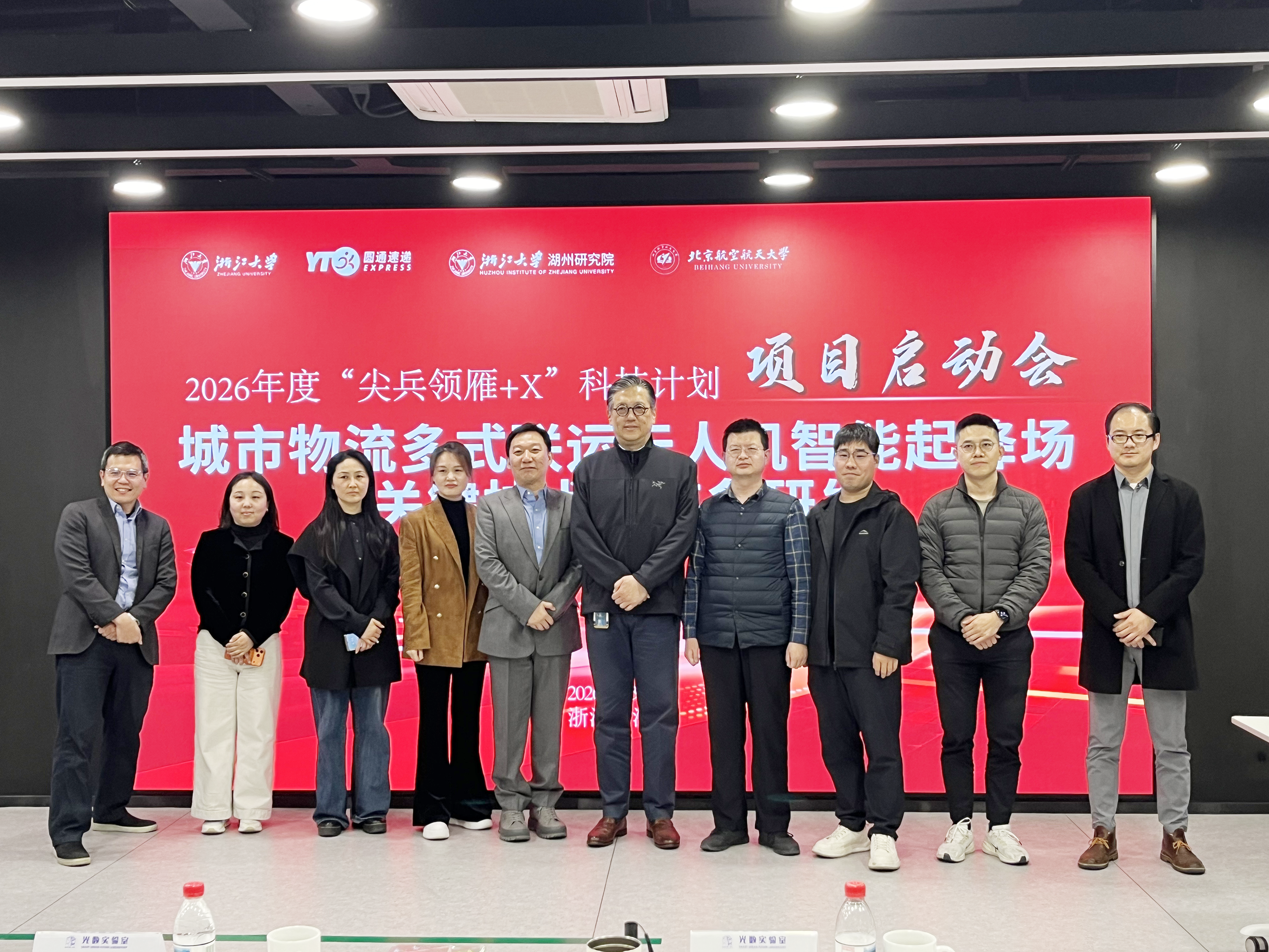
▲
During the kick-off meeting, the project team laid out the full research framework, core technical priorities, innovation roadmap, and phased implementation plan for the project. It will target core technical bottlenecks in urban low-altitude logistics, with key R&D focuses covering modular intelligent take-off and landing systems, autonomous UAV operations, rapid battery-swapping solutions, air-ground multimodal coordination systems, and the development of industry standards and technical frameworks.
Academic and industry experts in attendance emphasized that research must be closely aligned with real-world application requirements, while upholding technical compatibility, forward-looking design, and engineering feasibility. Looking ahead, the project’s outcomes are expected to provide robust support for the standardized development of low-altitude logistics infrastructure, accelerate large-scale commercial adoption across the industry, and contribute to the advancement of national low-altitude economy development strategy.