From January 12 to 13, 2026, the Institute organized a delegation of master’s and doctoral students on a visit to Beijing under the theme “Exploring Technological Frontiers and Empowering Innovation-Driven Development.” The delegation visited the China Academy of Information and Communications Technology (CAICT), Microsoft Research Asia (MSRA), and the Xiaomi EV Super Factory, engaging in in-depth exchanges with three representative institutions at the forefront of technology and industry.
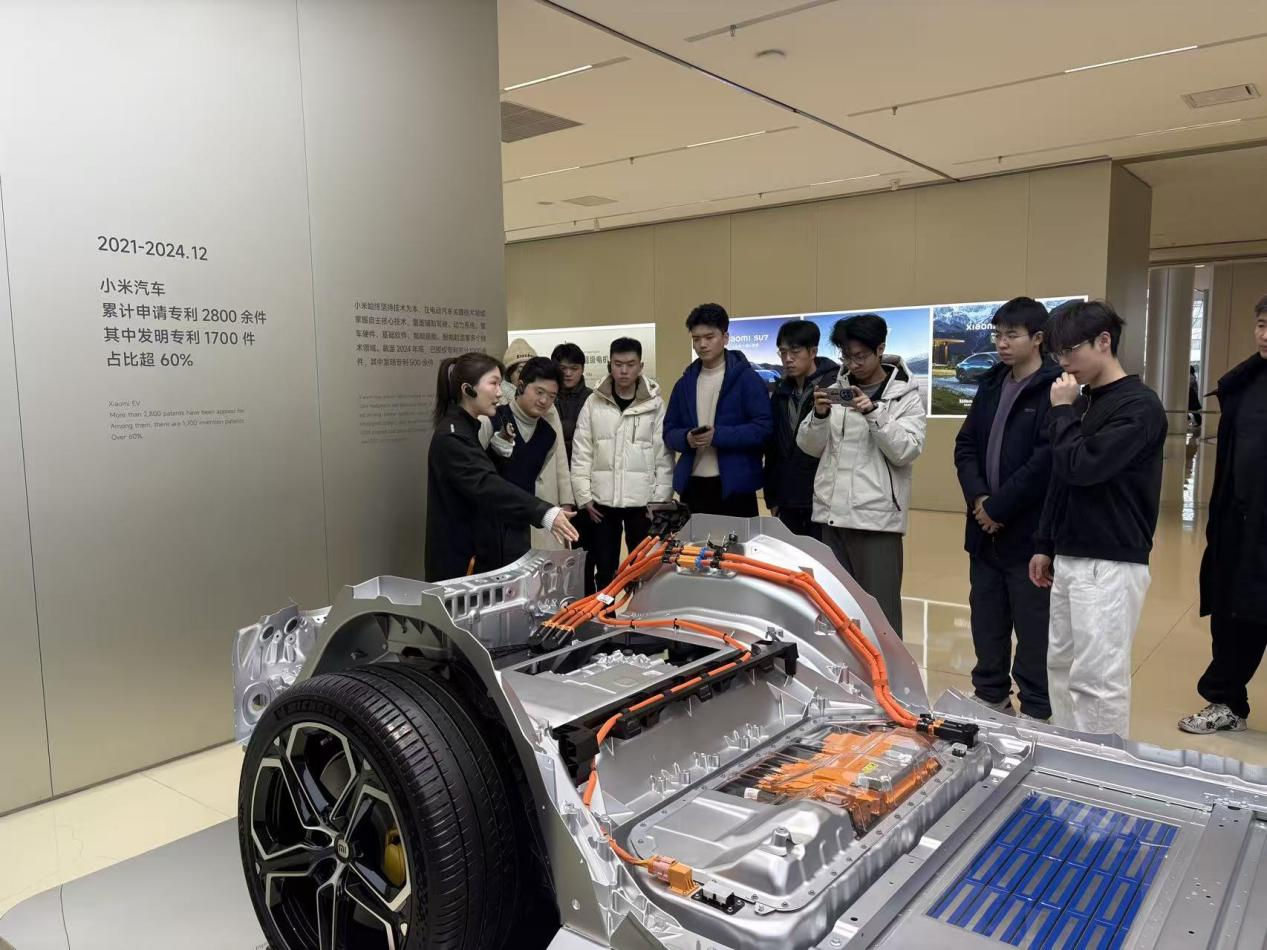
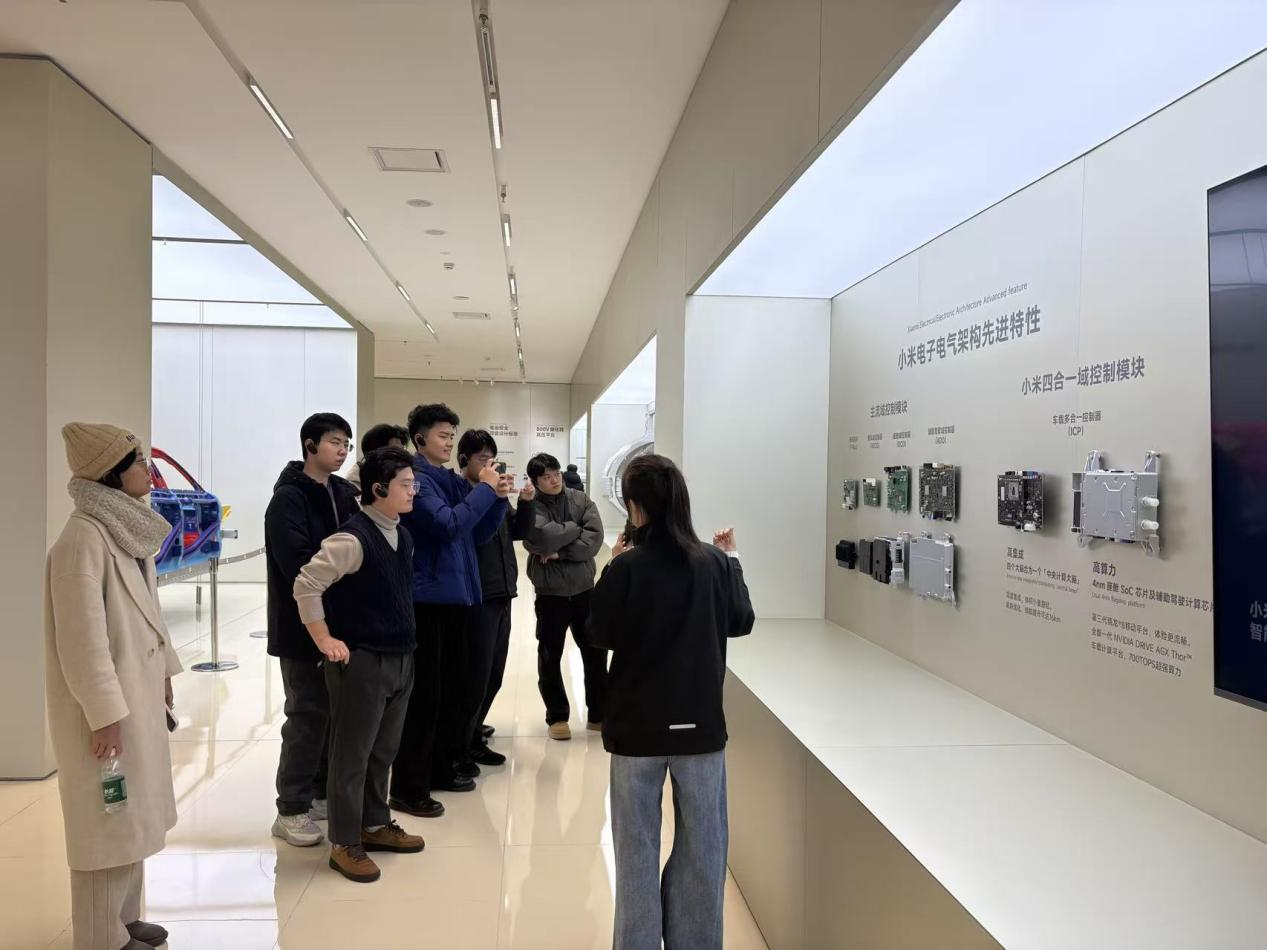
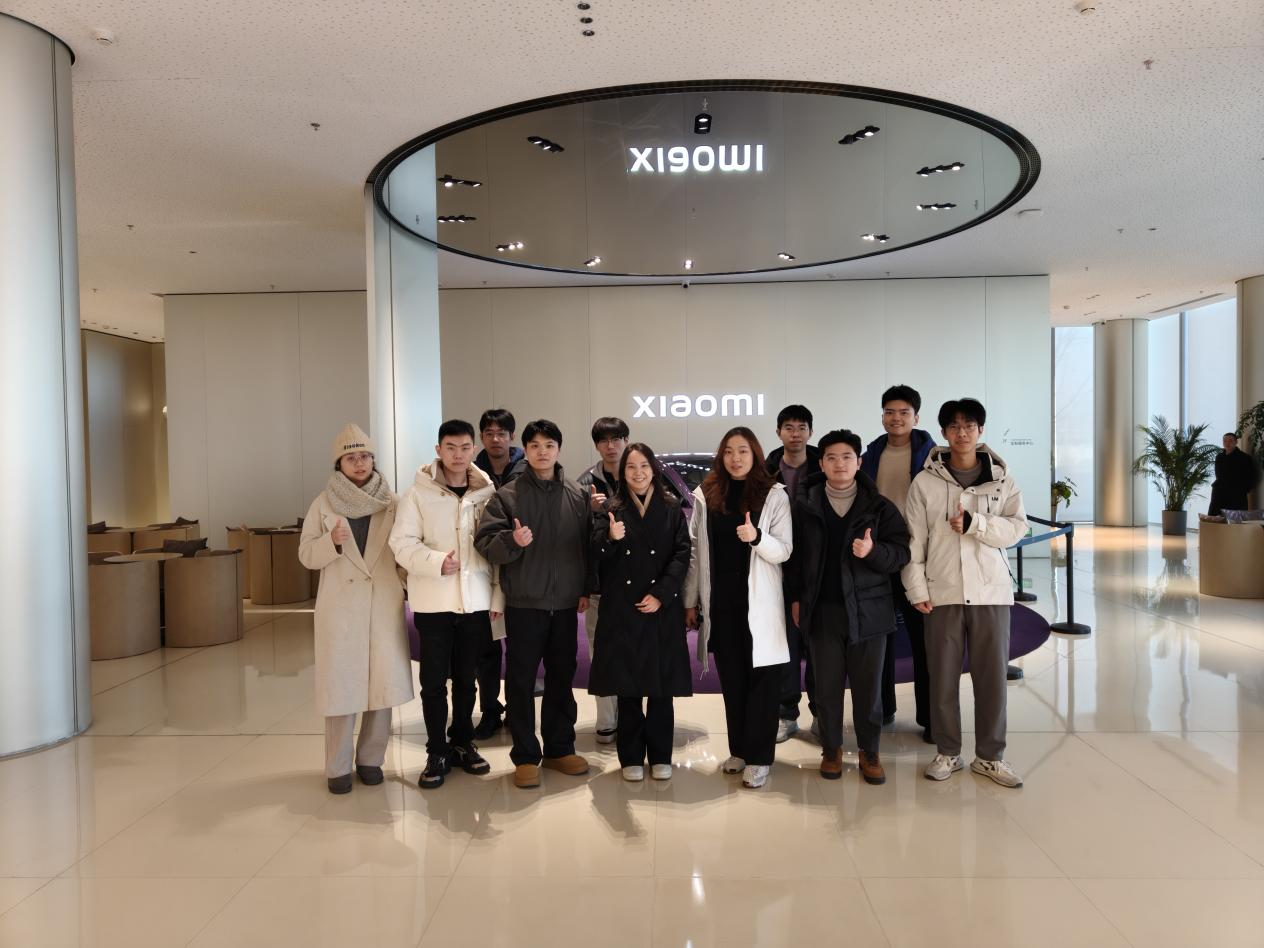
On January 12, the delegation’s first stop was the Xiaomi EV Super Factory. Accompanied by on-site staff, students toured key production areas and highly automated smart manufacturing lines, following the precise process through which vehicles such as the Xiaomi SU7 are assembled from individual components into completed cars. Through firsthand exposure to the manufacturing floor, participants gained deeper insight into Xiaomi EV’s design philosophy, production systems, and its integrated “Human–Car–Home” ecosystem strategy. They also developed a clearer understanding of Xiaomi’s advances in core technologies, including in-house motor development, large-scale integrated die-casting materials, and intelligent driving systems.
Faculty members and students also took a test ride in the Xiaomi SU7 Ultra, gaining a first-hand feel of its performance and driving dynamics. The visit underscored the pivotal role that technological innovation plays in propelling the transformation and upgrading of the manufacturing sector.
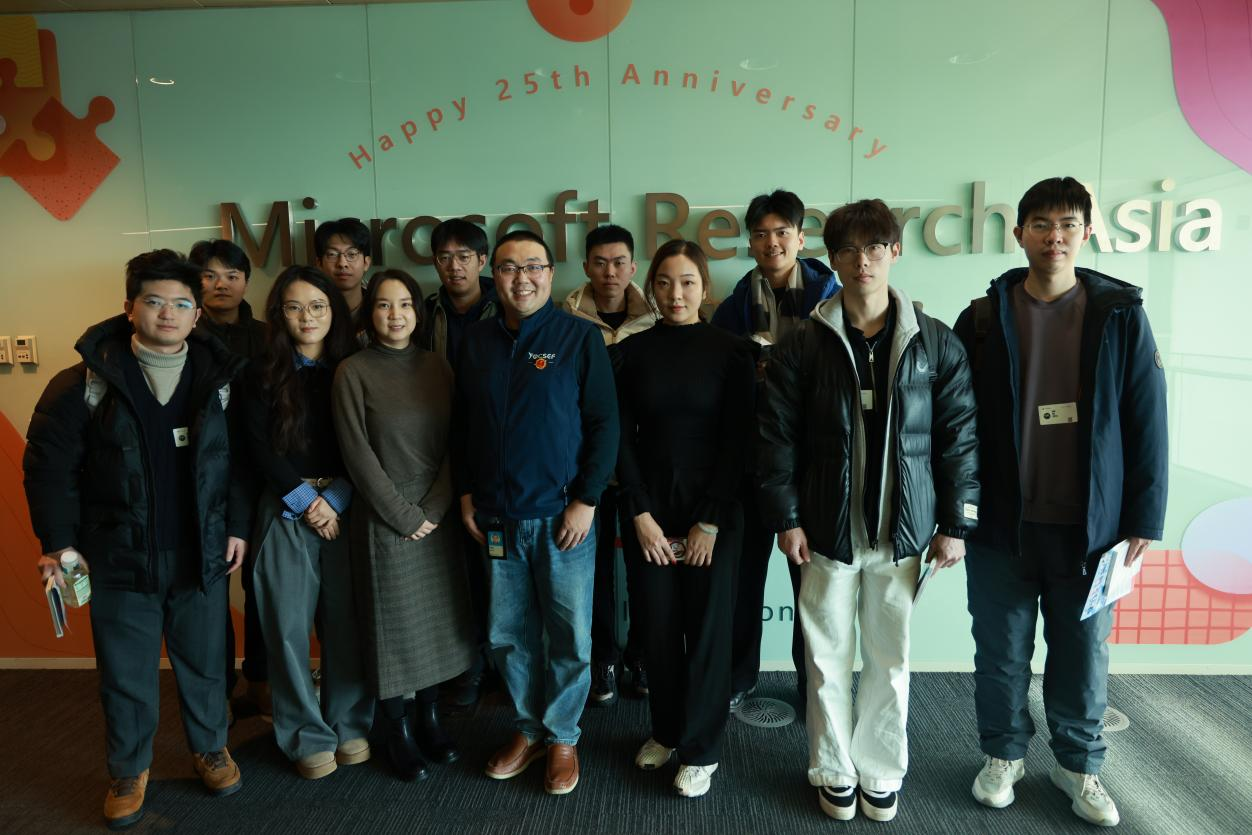
On the morning of January 13, the delegation visited Microsoft Research Asia. The program began with a tour of the MSRA Innovation Center, followed by an overview of its development and scholar cultivation initiatives presented by Chen Hao, Academic Collaboration Manager at MSRA.
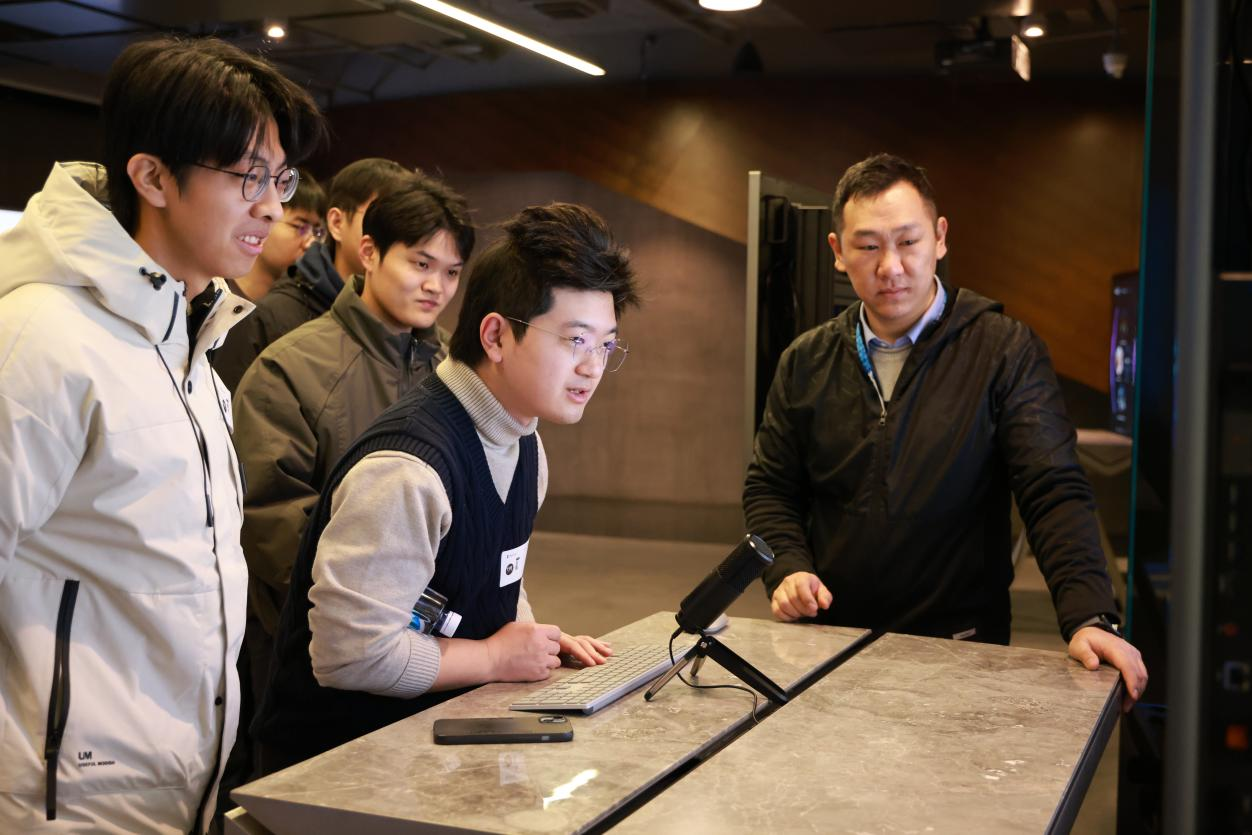
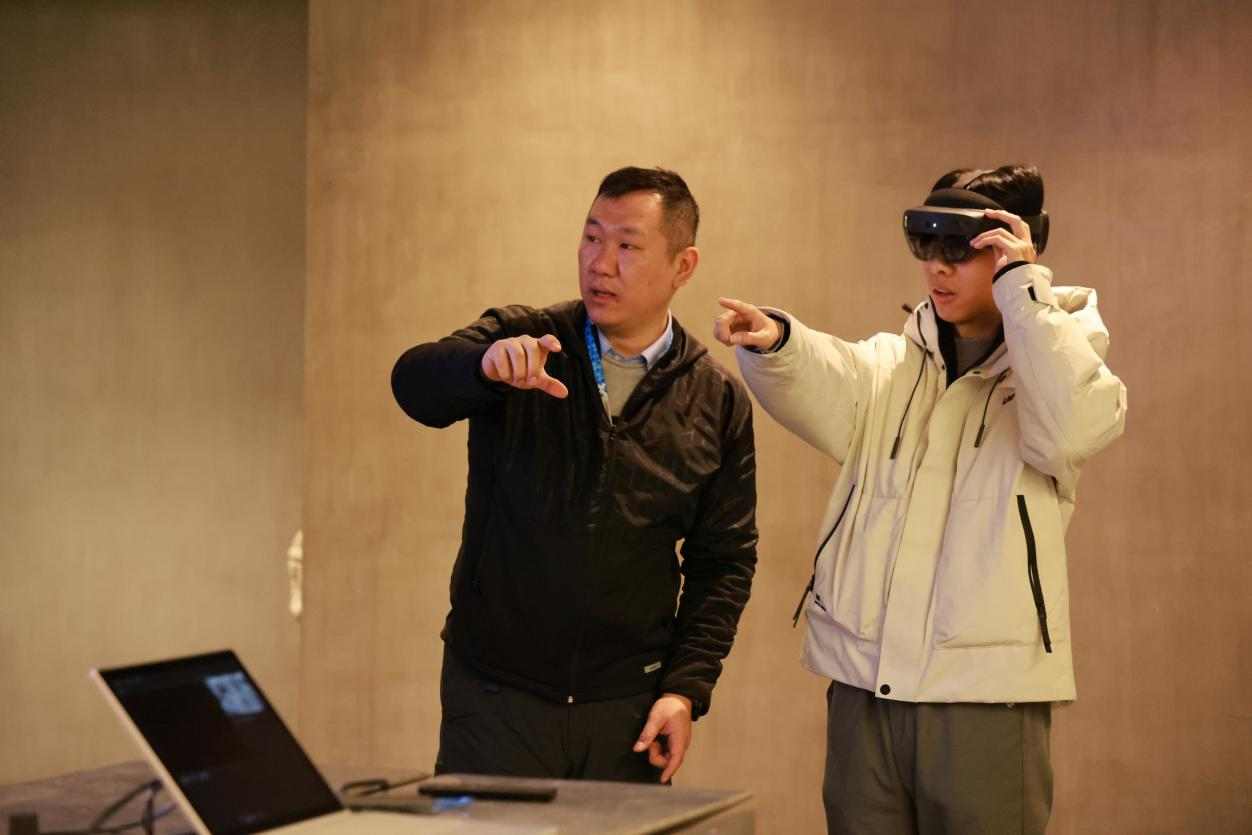
During the technical sharing session, Dr. Deng Yu introduced three major research breakthroughs. The first was TRELLIS.2, a 3D generative model based on a novel “O-Voxel” sparse voxel representation. By overcoming bottlenecks in complex shape modeling, the model efficiently represents high-resolution 3D assets with a minimal token count, enabling rapid generation of high-quality 3D models with physically based rendering materials from a single image. The second was the robotics learning project VITRA, which builds large-scale datasets from human activity videos, addressing the widespread challenge of limited high-quality data and significantly enhancing the generalization capability of robotic grasping. The third was CLIP-Fusion, a cross-modal fusion model that achieves deep semantic alignment between text and images, providing key technical support for the industrial deployment of multimodal interaction technologies.
These cutting-edge achievements offered students a vivid illustration of the close integration between fundamental research and real-world applications, broadening their academic horizons and encouraging deeper reflection on interdisciplinary research pathways and closer alignment with industry needs.
Later that afternoon, the delegation visited the China Academy of Information and Communications Technology. During a tour of the CAICT history museum, students reviewed the evolution of China’s information and communications industry and gained a clearer understanding of CAICT’s pivotal role in shaping and supporting the sector. At the subsequent symposium, Sun Chunhui, Deputy Director of CAICT’s Human Resources Department, delivered opening remarks and introduced the Academy’s overall profile. Assist. Prof. Ma Hanzhi from ZJUI then presented the Institutes’ distinctive strengths in discipline development and student cultivation, as well as its recent achievements in student placement and research collaboration.
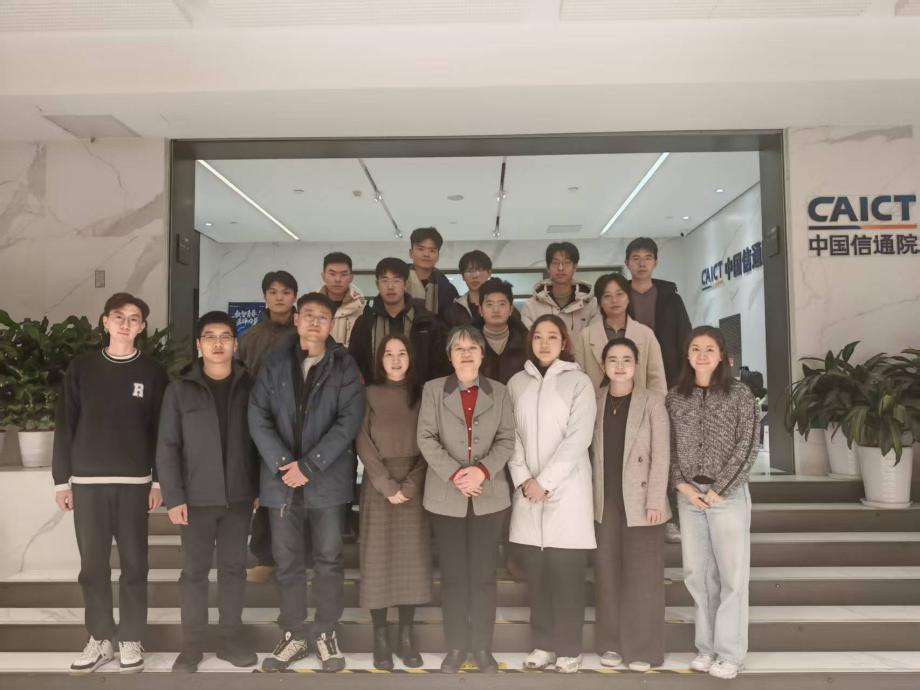
This was followed by presentations from Lv Min, Deputy Director of R&D Planning Department at CAICT Telecommunication Terminal Labs; Prof. Fang Chao, Chief Engineer; and Senior Engineer Cheng Yang, both from the Innovation and Development Department of the Institute of Artificial Intelligence. They shared insights into their respective organizations’ core functions, research priorities, and practical contributions to government decision support, industry guidance, and public services.
During the open discussion session, students held in-depth exchanges with experts on topics ranging from communications standards and industrial policies to next-generation network technologies and career development. These discussions deepened participants’ understanding of the central coordinating role and think-tank value of national research institutions in building a modern industrial system and fostering the healthy development of the digital economy.
This intensive two-day visit offered our graduate students a rare first-hand learning and exchange platform. The students gained close exposure to diverse practical scenarios from innovative product R&D and cutting-edge technology to industrial policy support, and sparked research inspiration, clarified industrial needs, and strengthened their mission to drive social development via tech innovation through interactions with experts from top domestic technology firms and research institutes. The event effectively bridged academic theories and industrial practices, bolstering the Institute’s cultivation of outstanding engineering students with global vision, innovation capacity and social responsibility.