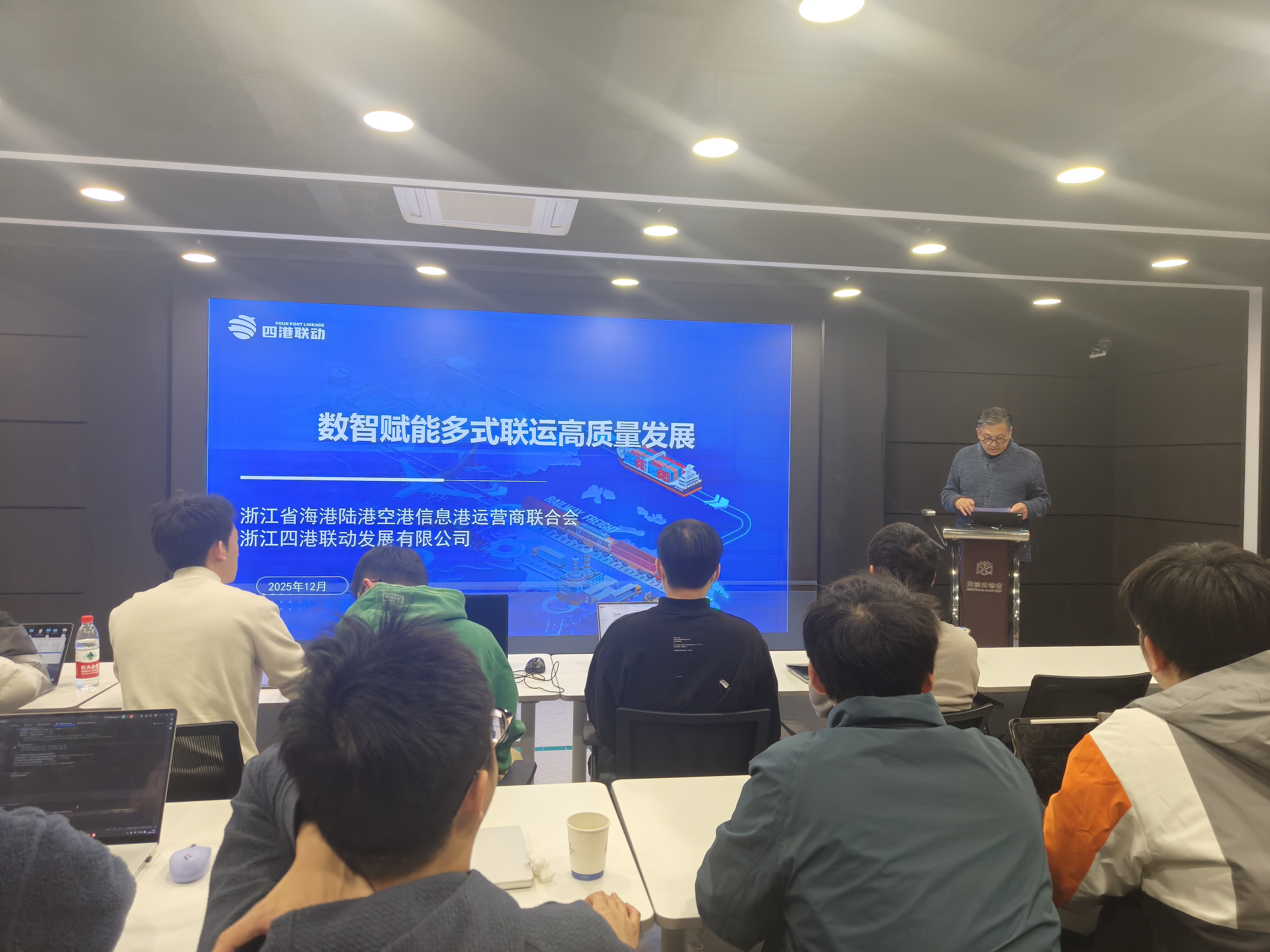
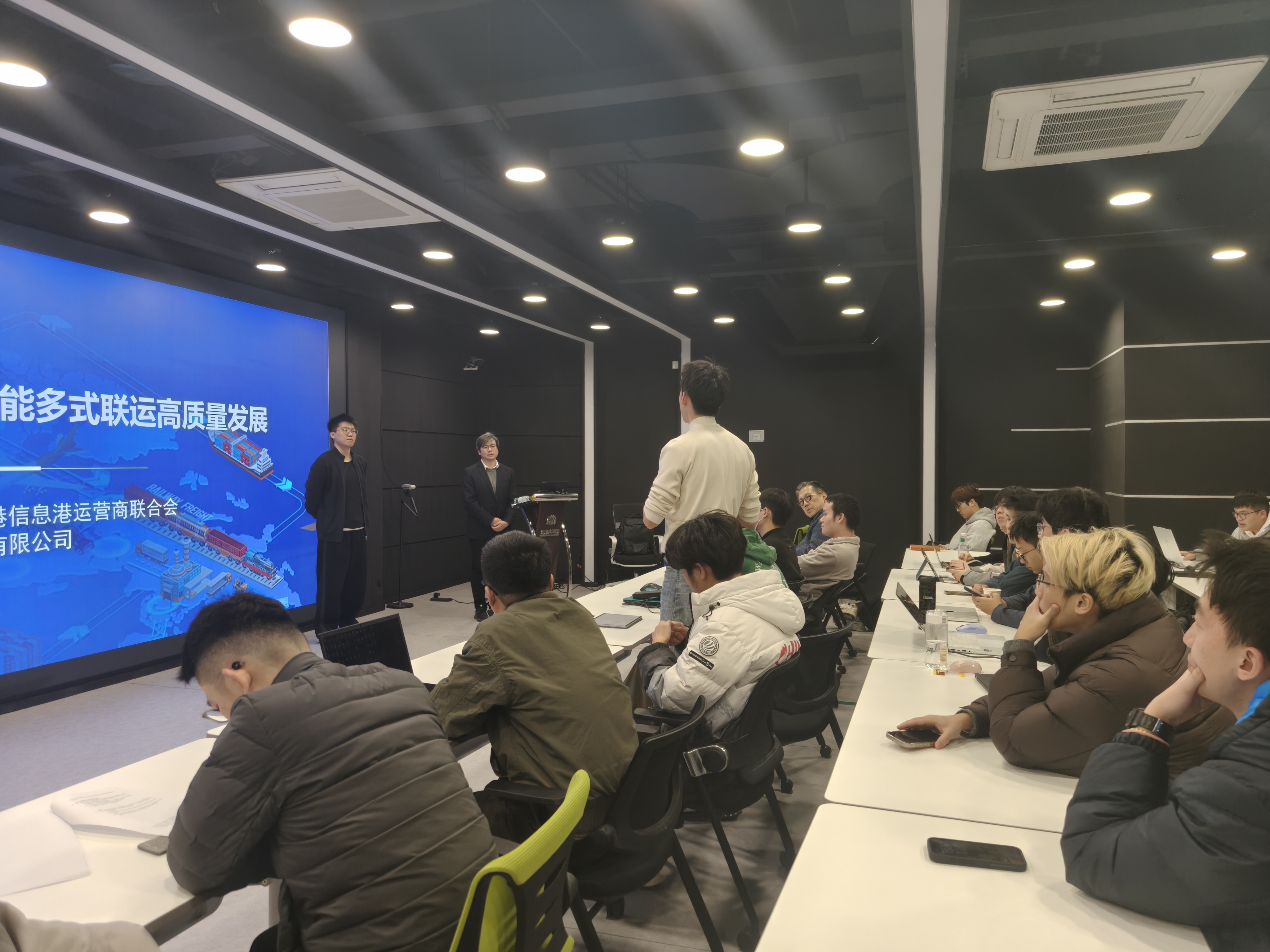
On December 12, 2025, the Sixth Innovation Workshop of the Smart Urban Future Laboratory at International Campus, Zhejiang University concluded. The workshop was hosted by Prof. Lee Der-Horng and featured a keynote lecture by Yu Bo, Senior Expert at Zhejiang Provincial Seaport Investment & Operation Group Co., Ltd. and Technical Director of Zhejiang Four-Port Linkage Co., Ltd. The lecture focused on how digital and intelligent technologies are enabling the high-quality development of multimodal transportation.
▲
As a national leader in port digitalization, Zhejiang Seaport Group has consistently driven industry transformation. Drawing on more than 15 years of experience in port and shipping digital systems, Yu Bo provided a structured overview of the strategic rationale and ecosystem design of the Four-Port Linkage initiative, which promotes coordinated development among seaports, dry ports, airports, and information ports to build an efficient, open, and integrated logistics system supporting regional economic growth.
▲
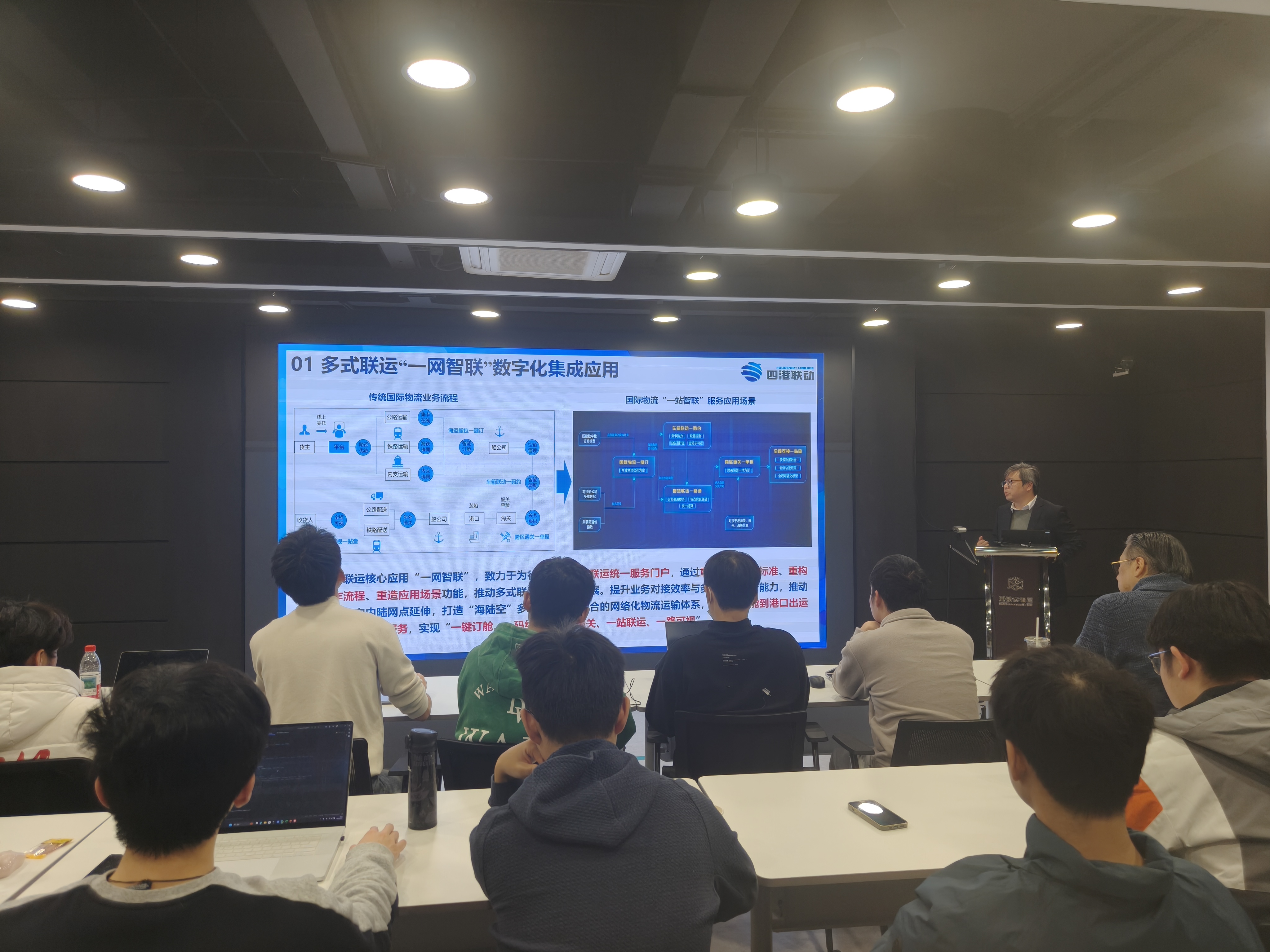
Yu further introduced the Four-Port Linkage Smart Logistics Cloud Platform, built on a One-Network Intelligent Connectivity framework. The platform delivers five core capabilities—one-click booking, one-code container appointment, single-document customs declaration, one-stop multimodal transport, and end-to-end visualized tracking—effectively addressing long-standing challenges such as fragmented processes and data silos in international logistics. To date, it has served over 120,000 users and more than 10,000 foreign trade and logistics enterprises,resulting in substantial reductions in logistics costs and improvements in operational efficiency across the full export process chain.
▲
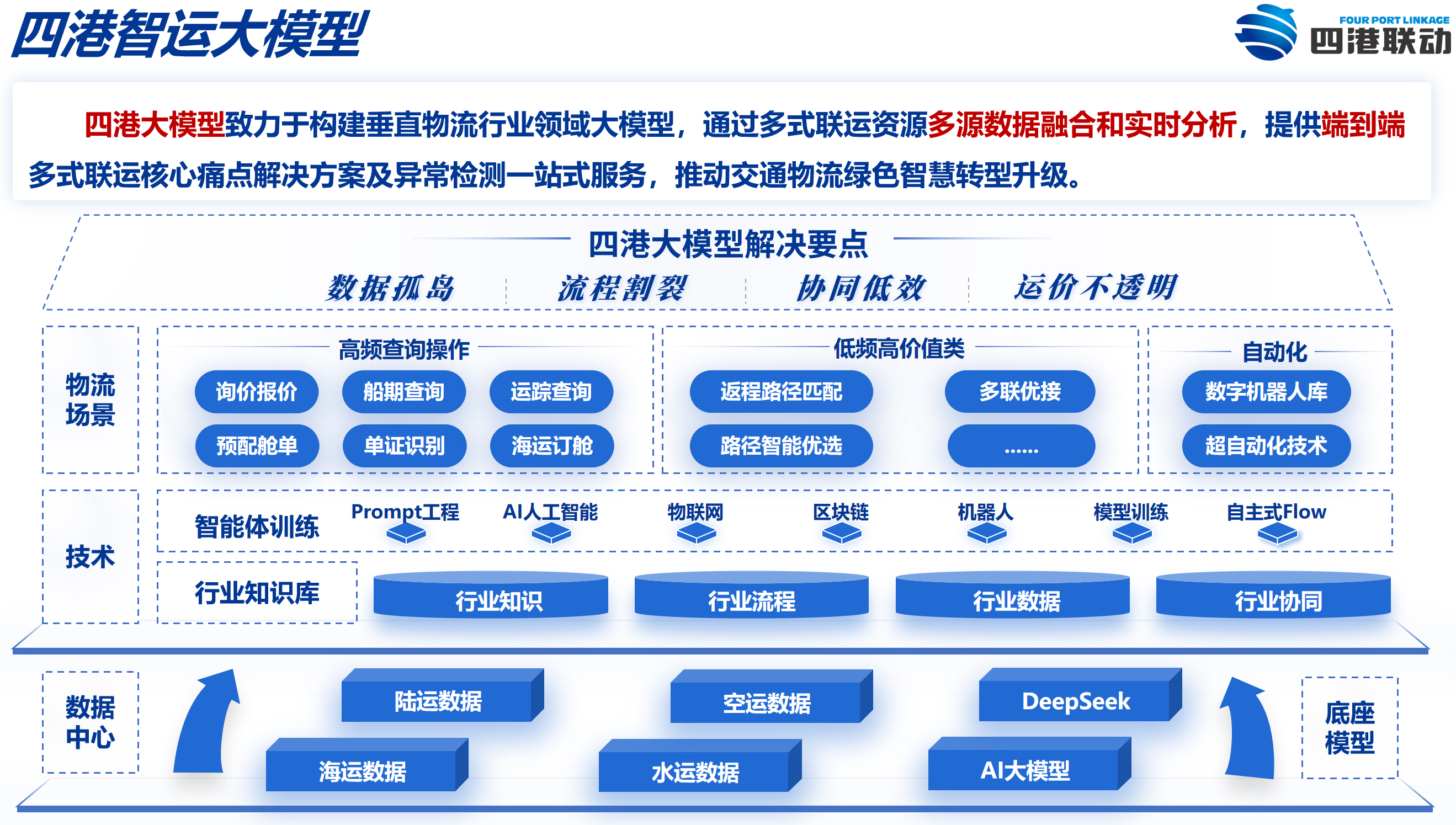
Focusing on the next stage of digital transformation, Yu highlighted the Four-Port Intelligent Transport large-scale model, which targets end-to-end decision-making rather than simple process digitization. Developed through fine-tuning on foundational models such as DeepSeek, the system integrates massive data resources and supports agent-based applications, including route optimization and knowledge-based Q&A. These applications enhance transport efficiency, reduce operational costs, and substantially alleviate labor-intensive workloads.
▲
During the interactive Q&A session, discussions centered on data security, multimodal transport network resilience, and practical deployment challenges. Yu emphasized the importance of integrating data, algorithms, and real-world scenarios, encouraging students to balance academic innovation with engineering feasibility and commercial value.
▲
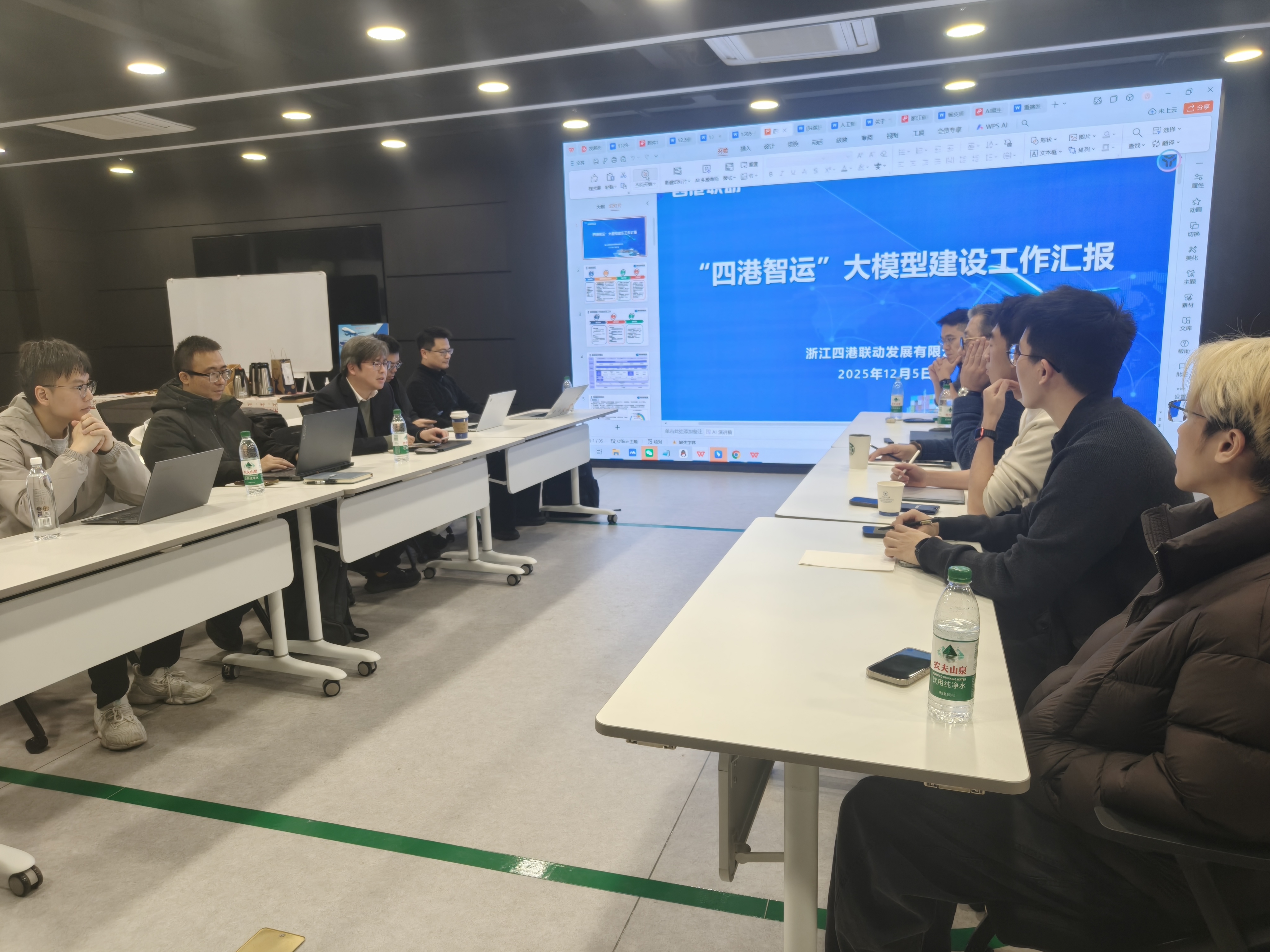
Following the lecture, Yu and his technical team met with Prof. Lee Der-Horng’s group at the ZJUI–Four-Port Linkage Joint Innovation Center to discuss large-model architecture evolution, implementation pathways, and future collaboration. This university–industry exchange is expected to advance technological innovation, deepen industry–academia integration, and support the intelligent, green, and resilient transformation of multimodal transportation.