Recently, a research team led by ZJUI Assoc. Prof. Diao Ruisheng has achieved progress in the stability analysis and control design of grid-forming renewable energy systems. The work was recently published in Institute of Electrical and Electronics Engineers (IEEE) Transactions on Sustainable Energy (TSTE), a leading Q1 journal in electrical engineering.
The paper is authored by Sun Fangyuan, a 2022 doctoral student in Electrical Engineering, as the first author, with Assoc. Prof. Diao Ruisheng serving as the sole corresponding author. Additional contributors include Zeng Ruiyuan, a 2023 master's student in Electrical Engineering, as well as Dr. Zhang Jing, ZJUI industry-affiliated supervisor and Qian Jianguo from Zhejiang Electric Power Corporation.
▲
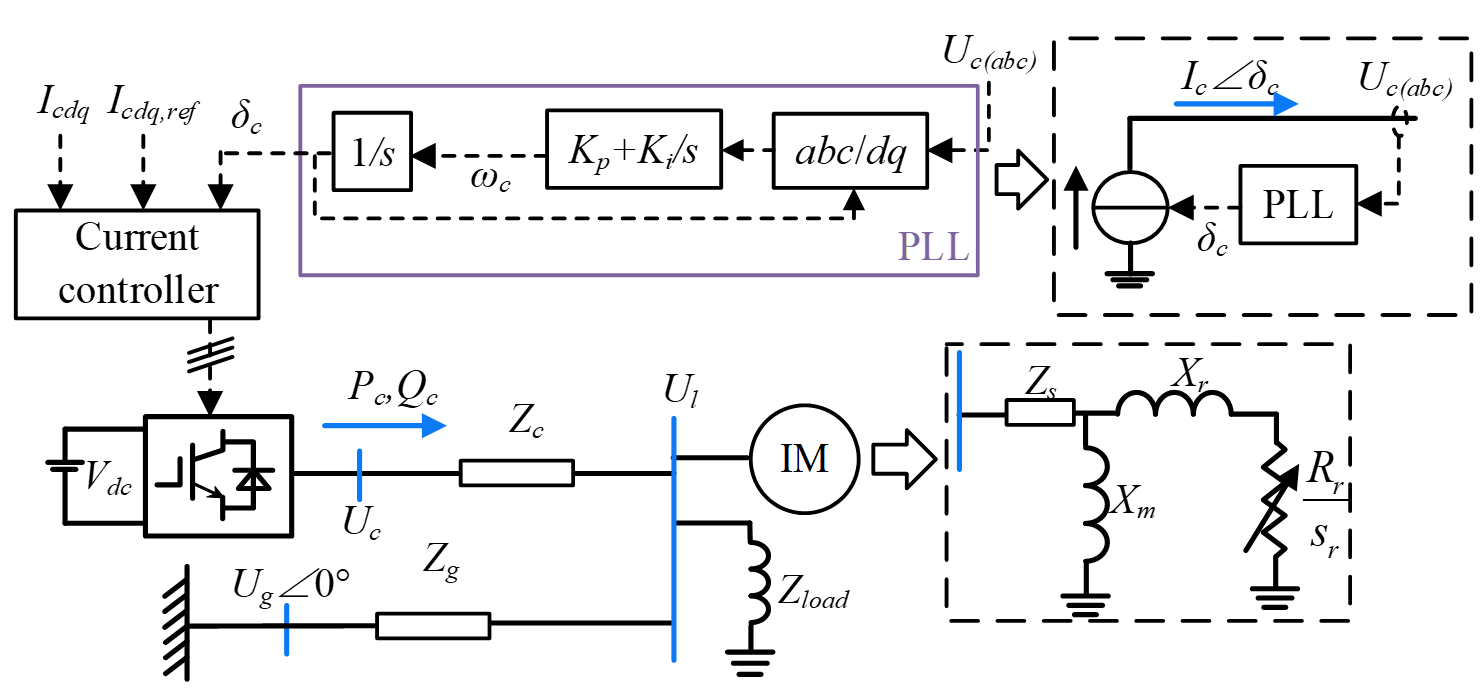
With the rapid expansion of renewable energy sources (RES) and continuous advances in high-voltage direct current (HVDC) transmission technologies, modern power systems are increasingly evolving into complex, power-electronics-dominated networks. While the diversification of generation technologies and control strategies has boosted system flexibility, it has also posed new challenges to grid security and stability. As the primary grid interface for renewable energy integration, grid-following converters play a pivotal role in shaping system voltage dynamics.
▲
In conventional power systems, transient angle stability and transient voltage stability are typically analyzed as separate issues due to their distinct time scales. However, for grid-following converters, the phase-angle dynamics governed by phase-locked loops (PLLs) operate on a much faster time scale than those of traditional synchronous machines and align with voltage dynamics. This overlap significantly strengthens the coupling between angle stability and voltage stability, rendering conventional decoupled analysis methods inadequate. In this context, the present study systematically investigates the impact of grid-following converter angle dynamics on post-fault voltage recovery under multiple fault scenarios, offering new insights into stability analysis for large-scale renewable integration.
▲
▲
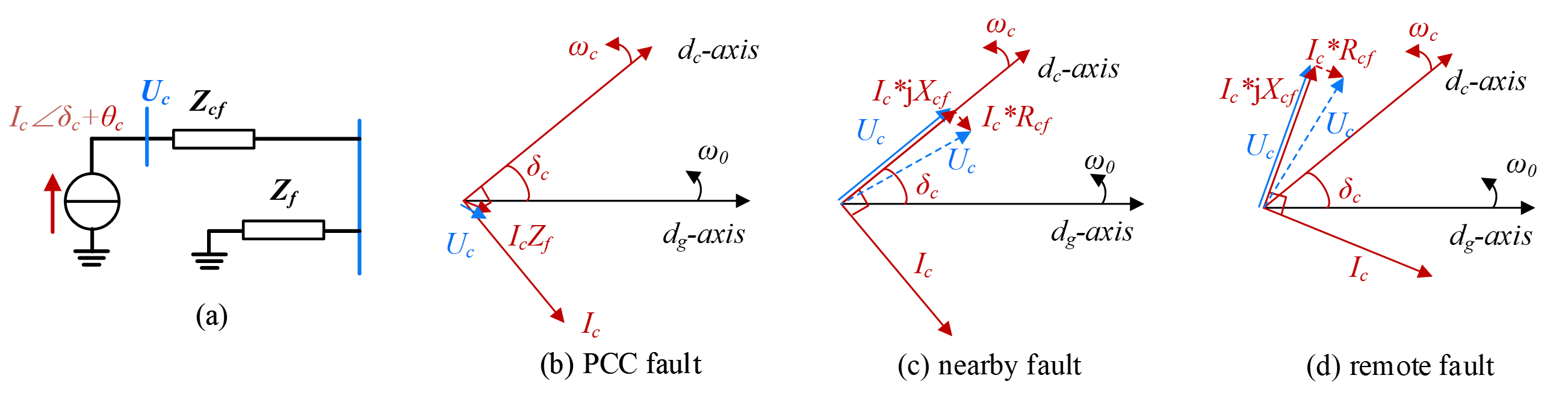
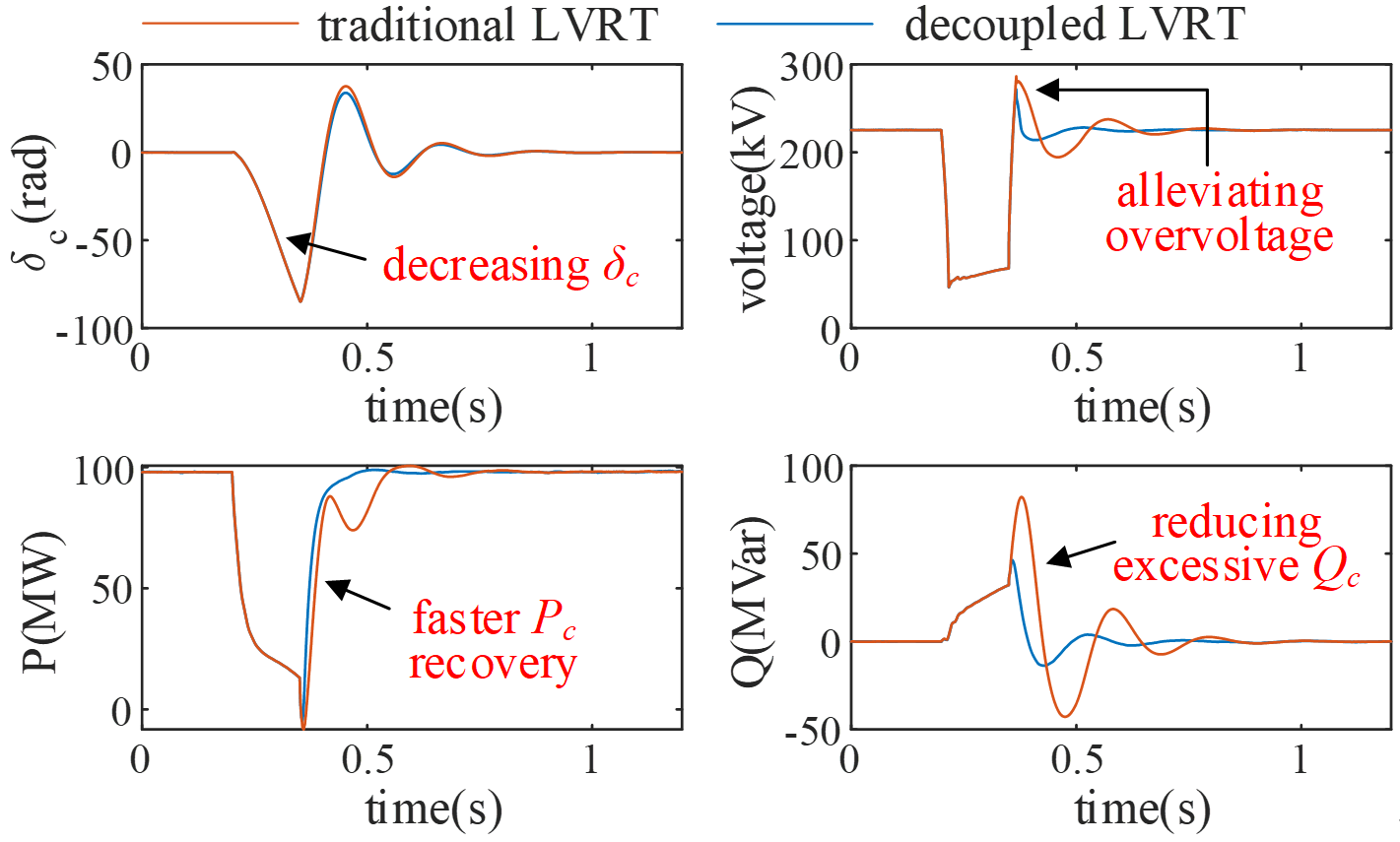
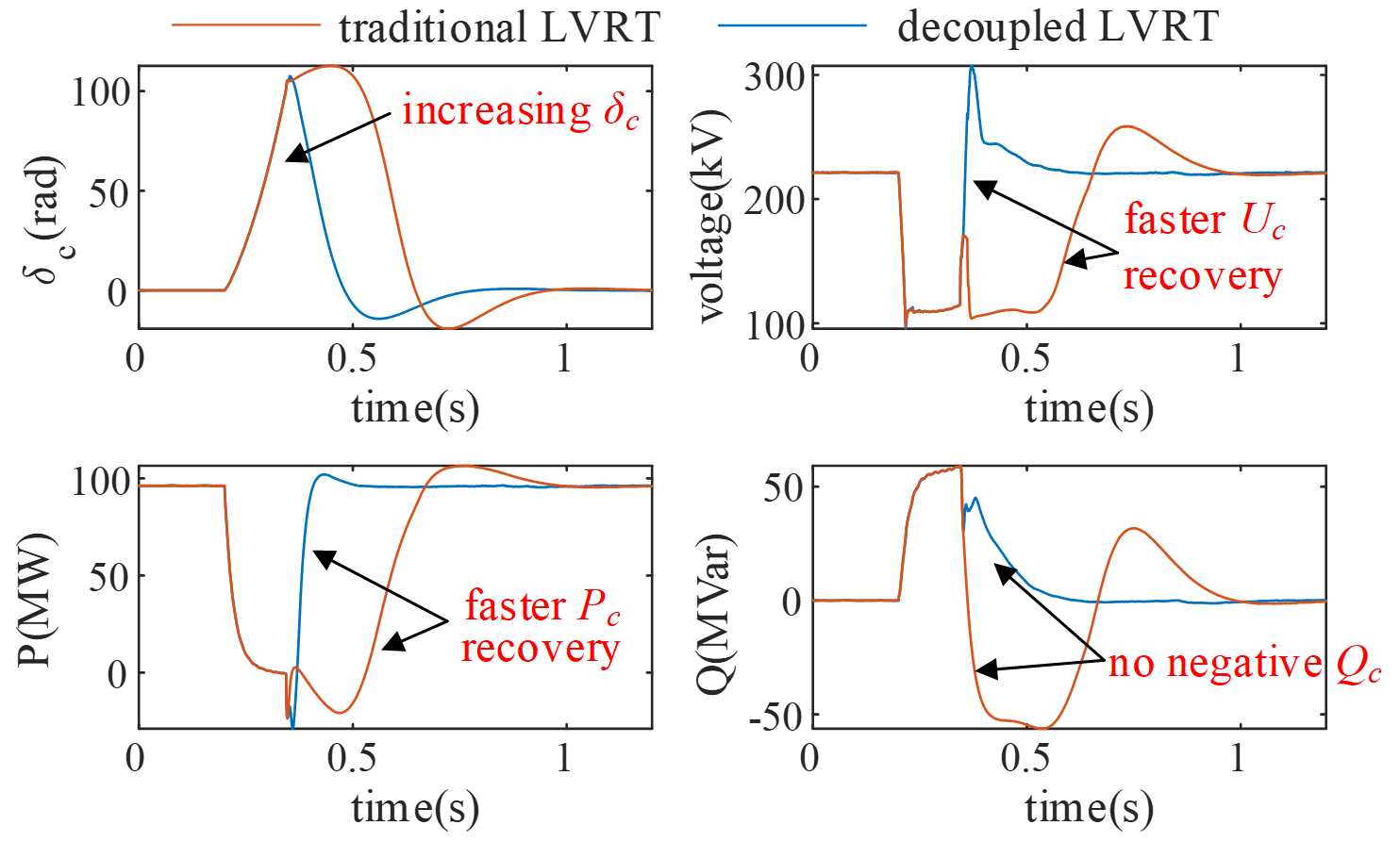
The study first incorporates low-voltage ride-through (LVRT) control behavior with PLL dynamics to deduce the angle responses of grid-following converters under faults at different locations. Specifically: when a fault occurs at the point of common coupling (PCC), the converter phase remains largely unchanged; under nearby faults, the converter phase decelerates; and under remote faults, the converter phase accelerates.
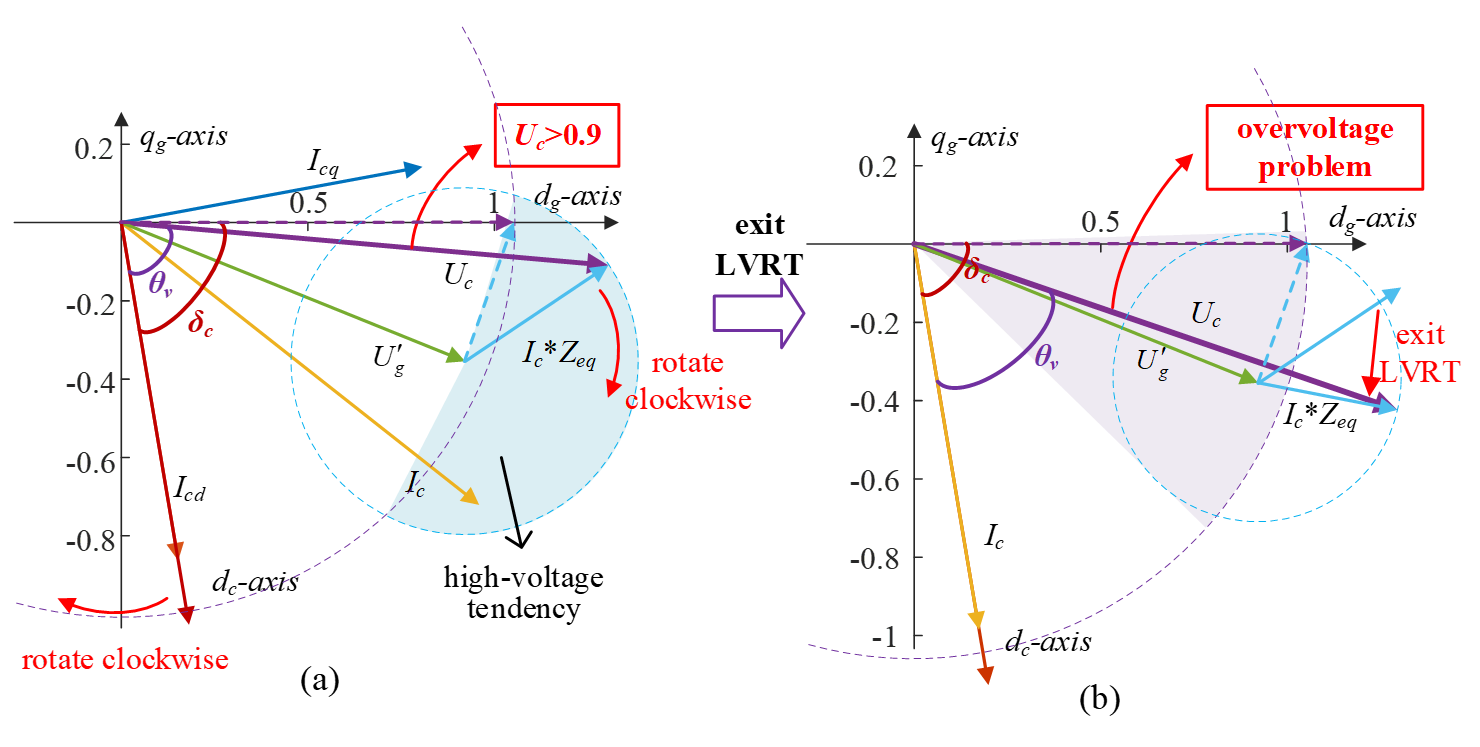
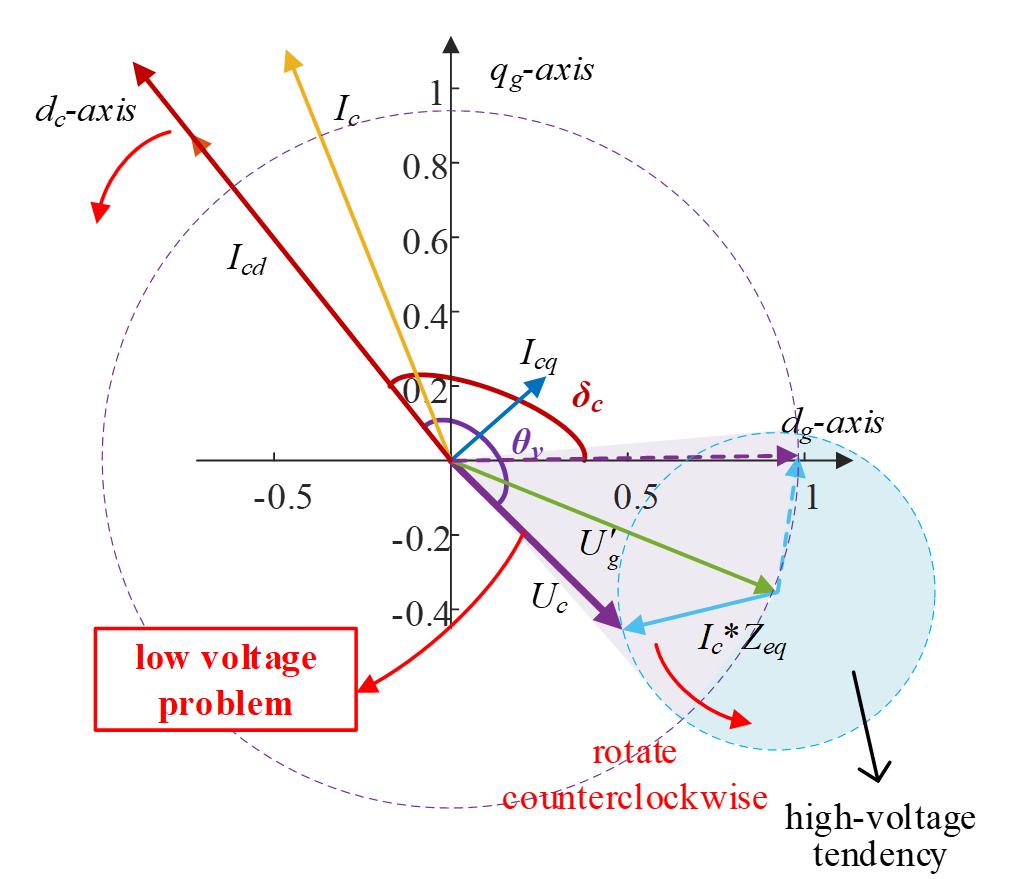
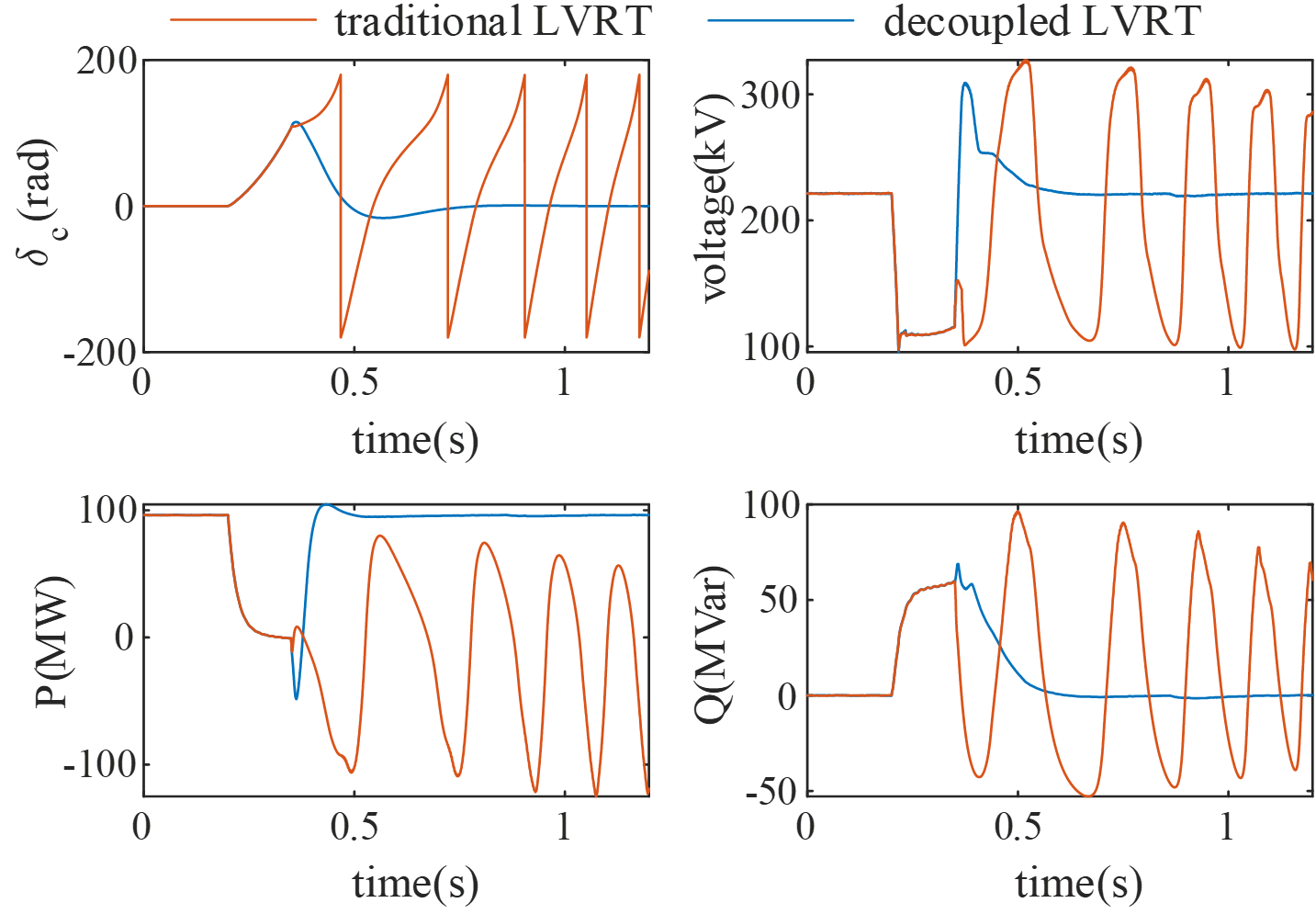
Building on this analysis, the research team further examined how these distinct angle dynamics influence post-fault voltage recovery. In the case of nearby faults, phase deceleration leads to a relatively high initial post-fault voltage and excessive reactive power injection, increasing the risk of overvoltage. Meanwhile, insufficient active power injection may also trigger DC-link overvoltage. Conversely, under remote faults, phase acceleration results in a lower initial post-fault voltage and inadequate reactive power support, slowing voltage recovery and elevating the likelihood of sustained undervoltage conditions.
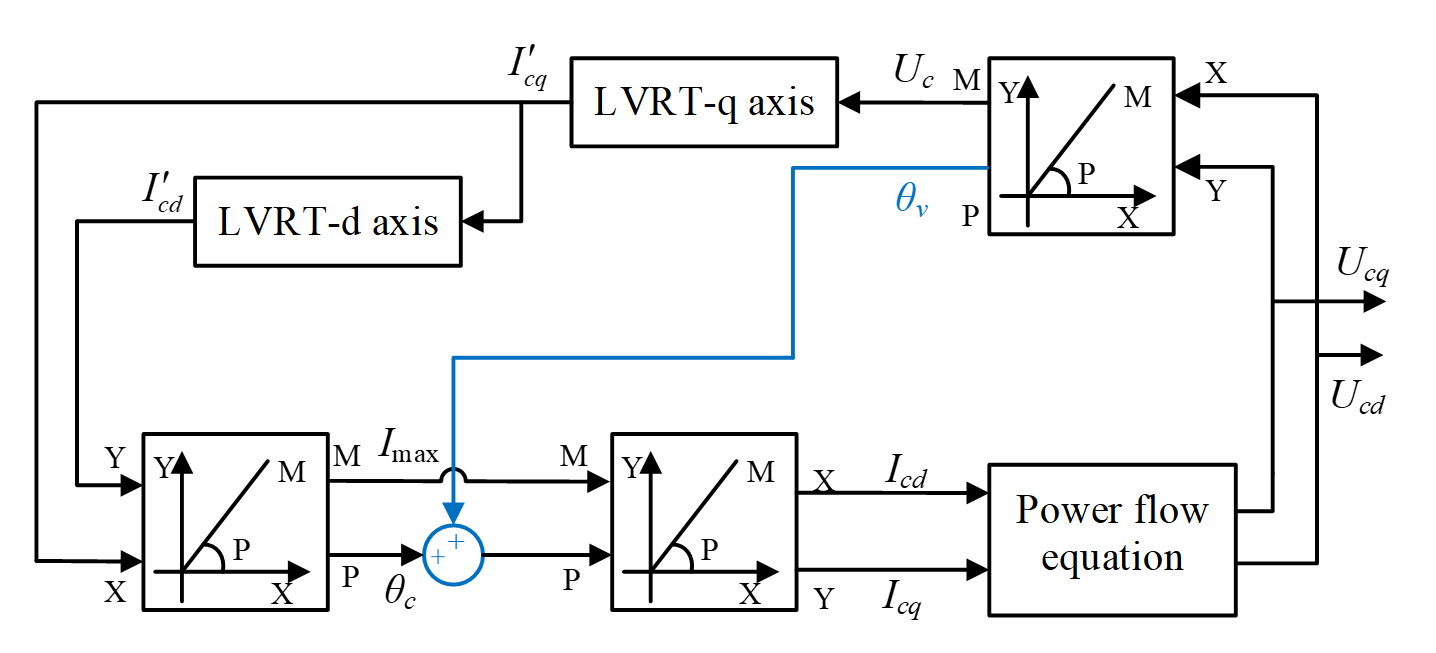
To mitigate the adverse impacts associated with these angle dynamics, the researchers proposed a power–angle decoupled LVRT control strategy that improves upon conventional grid-following converter LVRT schemes. The proposed approach was further analyzed in terms of equilibrium point existence and transient synchronizing stability to ensure it does not introduce additional security or stability risks.
The results demonstrate that the proposed decoupled control strategy not only effectively suppresses overvoltage and undervoltage issues arising from voltage–angle coupling in grid-following converters but also significantly enhances their transient synchronizing stability.
▲
▲
▲
▲