Researchers from the Zhejiang University - University of Illinois Urbana-Champaign Institute (ZJUI), including Ye Fengyang, a 2022 Master’s student in Civil and Hydraulic Engineering of ZJUI, and Wei Hanlin, a 2023 doctoral student in Structural Engineering of ZJUI, ZJUI Professor Xiao Yan, and Professor Cristoforo Demartino from Roma Tre University, have published a comprehensive review titled “Bio-based insulation materials in sustainable constructions: A review of environmental, thermal and acoustic insulation, durability, and mechanical performances” in Renewable and Sustainable Energy Reviews (IF 16.3).
The paper reviews 395 studies on bio-based insulation—derived from bamboo, wood, hemp, rice husks, and bagasse—highlighting their low-carbon footprint, thermal and acoustic properties, durability, and mechanical performance. Compared to traditional glass fiber and foam plastics, these renewable materials consume less energy in production, can even achieve near-zero or negative carbon footprints, and align with sustainable building goals.This work provides a valuable database and practical guidance for both researchers and practitioners, supporting the adoption of bio-based materials in low-carbon, eco-friendly construction.
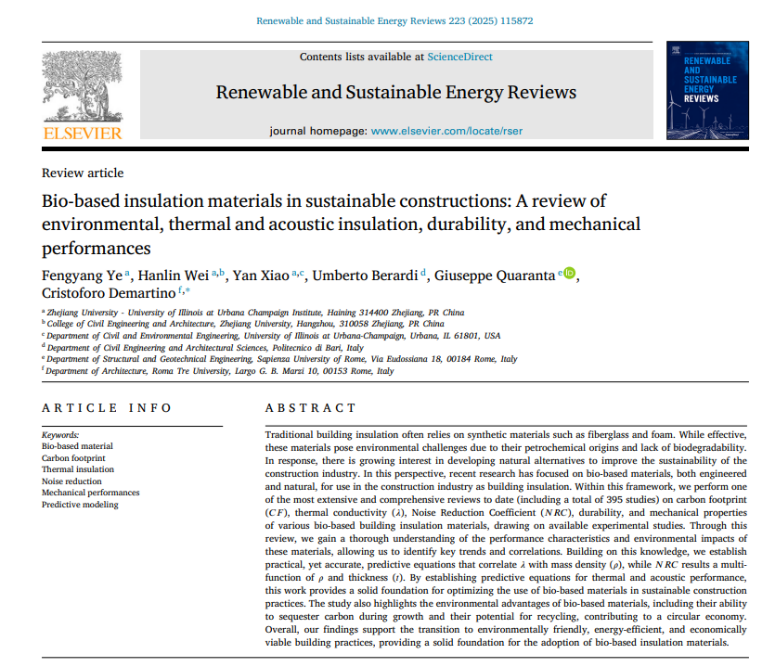
▲ The title page of the paper
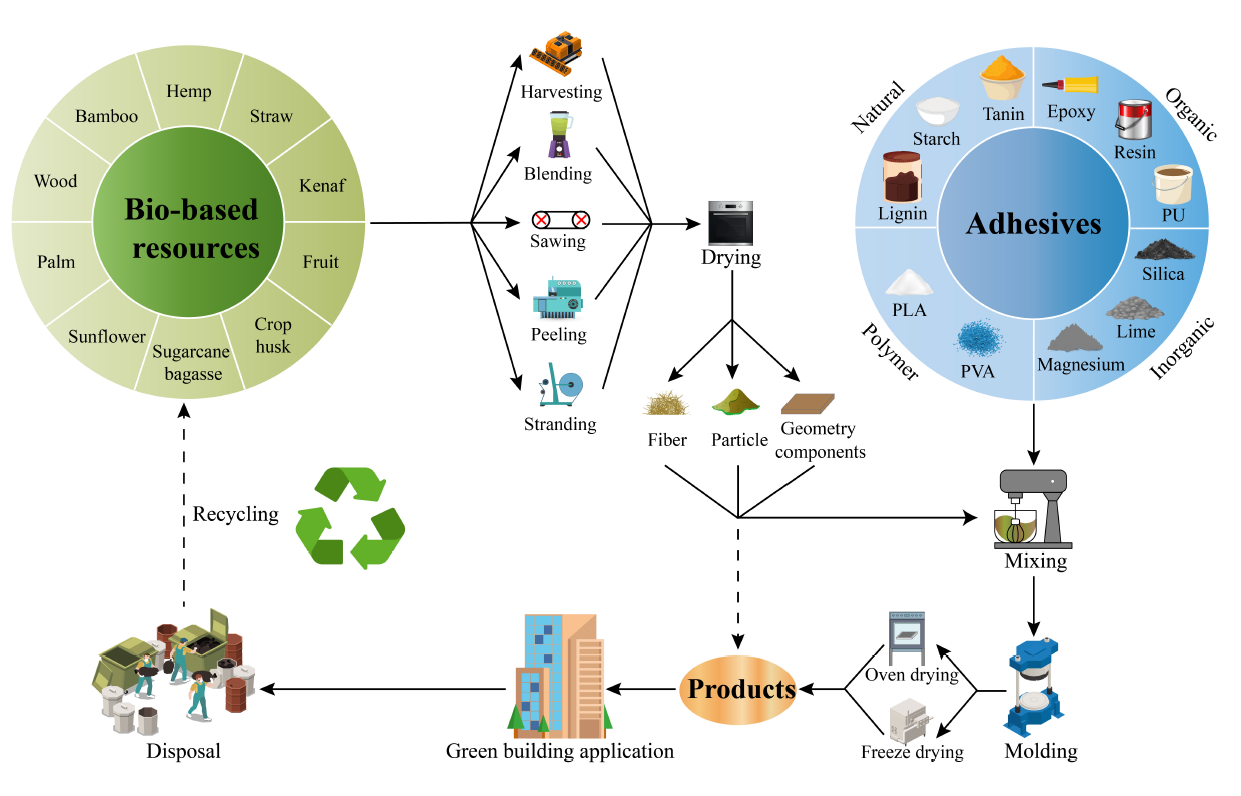
▲ Common Production Processes of Biomass Materials for Green Construction
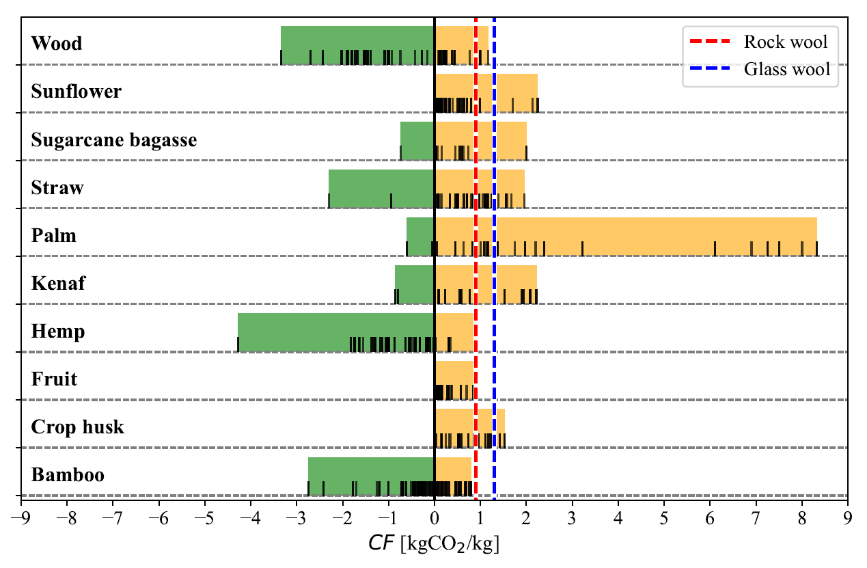
▲ The carbon footprint distribution diagram of different biomass materials shows that bamboo materials and hemp fibers are significantly lower than traditional materials such as rock wool and glass wool
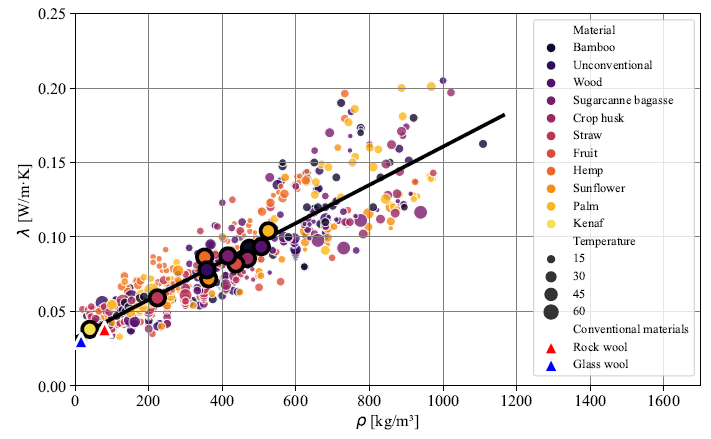
▲ Relationship between the thermal conductivity of biomass materials and material density, thickness
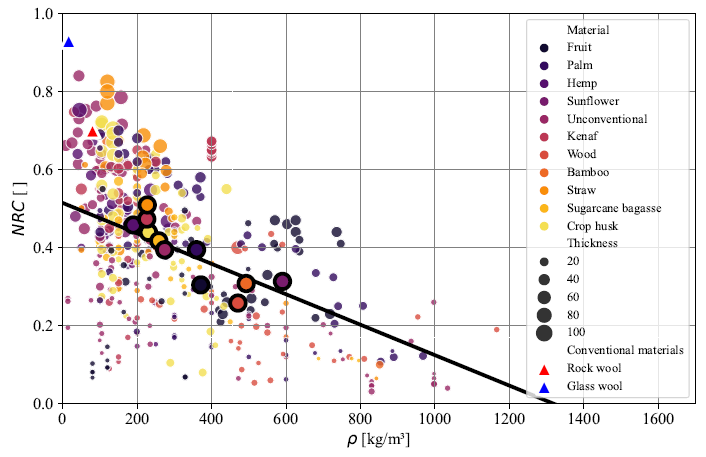
▲ Relationship between the NRC (Noise Reduction Coefficient) of biomass materials and material density, thickness
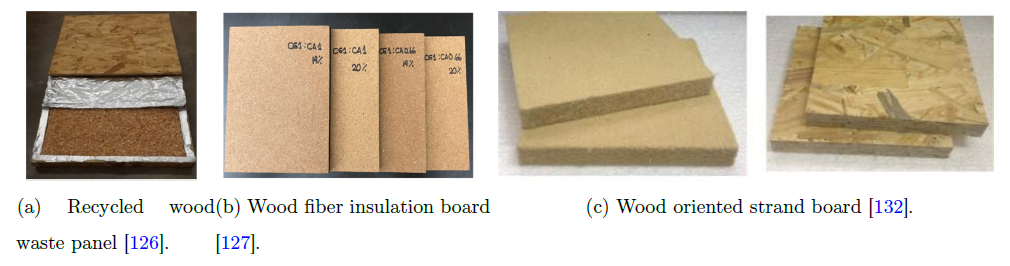
▲ Common Wood-Based Rigid Thermal Insulation Materials
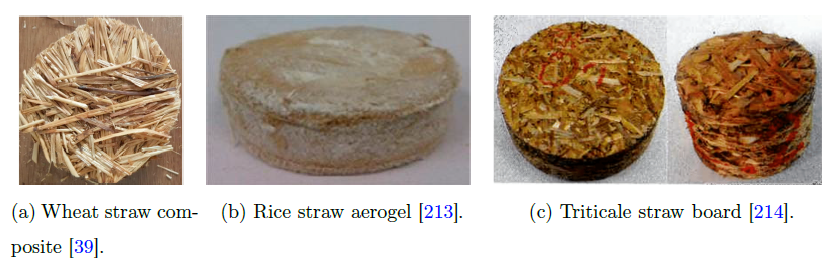
▲Common Straw-Based Flexible Thermal Insulation Materials
This study benefited from the joint efforts of the international collaborative team. Special thanks go to Professor Umberto Berardi from the Department of Architectural Science at Toronto Metropolitan University (Canada) and Professor Giuseppe Quaranta from the Department of Structural and Geotechnical Engineering at Sapienza University of Rome (Italy) for their in-depth participation and valuable suggestions.
This review not only provides academic references for the promotion of biomass materials but also offers crucial support for the low-carbon and eco-friendly transformation of the construction industry. The research team has long been committed to the field of sustainable green construction, accumulating rich experience in the R&D of bio-based building materials, performance optimization, and improvement of engineering durability, and continuously infusing innovative impetus into the green transformation of the construction industry.
In the future, the team will continue to deepen its focus on the performance improvement and engineering application of bio-based building materials, look forward to sharing more findings in subsequent work, and contribute to sustainable construction.